Sunday, March 20, 2011

Top 5 List: In Space, No One Can Hear You Go Mad

5. The Dark Side of the Moon

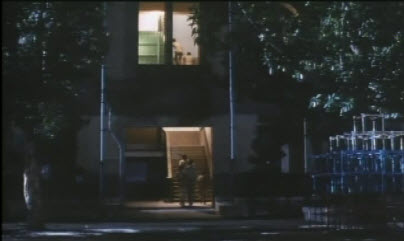
Probably the most obscure movie on this list, it's still immensely entertaining in that direct-to-video early 90's way. Written about at length here, "The Dark Side of the Moon" was directed by no one of real fame (DJ Webster) and starred no one of real notoriety. But it does seem to come from a genuine place and it does tweak the idea of madness in space into some interesting theories about the dark side of the moon, the Bermuda Triangle.... and the devil himself. The production values do lack something, but its the film's atmosphere that more than makes up for any economic shortcomings.


4. Planet of the Vampires

Now here's a really interesting film. Ever wonder how one of those Italian giallo films would play in space? Mario Bava attempts just that here with "Planet of the Vampires". Take all the visual trademarks of the wildly popular giallo genre- i.e. garish lighting, extravagantly cheap looking costumes, fog drenched settings and a distinct emphasis on obscuring the killer or killers through POV shots or off screen menace- and one gets the basic set up. But I make "Planet of the Vampires" sound worse than it is. I actually really like this film and it does build up some incredible tension while leapfrogging the idea of "madness in space" for future consumption. A crew of astronauts lose contact with their shipmates and are forced to land on a strange planet where the crew members begin to resort to mind-numbing fits of rage and violence against one another. Bava stretches out the appearance of the 'vampires' to sustain the film's thriller status while developing a unique metaphor for our modern definition of vampire. Bava's film has long been out of print, but i recently emerged on Netflix's streaming service.

3. Sphere

Ok, a bit of a cheat here, I admit. "Sphere" takes place under the ocean instead of outer space, but its emphasis on cramped confinements, lost space ships and side plots involving the 4 specialists (Dustin Hoffman, Sharon Stone, Liev Schrieber and Sam Jackson) facing their worst fears all fit into this list. I'm an unabashed lover of Barry Levinson's somewhat loopy and intellectually stuffy adaptation of Michael Crichton's novel, and the film hasn't diminished in my opinion since seeing it opening night back in 1998. "Sphere" tosses out alot of ideas- time travel, psycholgical warfare, killer jellyfish- and its oblique ending never registered with the mainstream movie-going public and that's a shame. "Sphere" still remains an under appreciated film that examines the treacherous outcome of dealing with extraterrestrial methods, even when the best minds in the world are in charge.

2. Event Horizon

For many movie fans of my generation, "Event Horizon" was THE best madness in space film to come along. Not only is it an effective science fiction tale, but an out and out horror film that managed to combine the best elements of both genres. Starring Laurence Fishburne, Sam Neill, Kathleen Quinlan and Joely Richardson, the crew is assigned to recovering a ship that was lost years earlier and then re-appears. Of course, something evil is brought aboard and each astronaut is forced to confront some of their scariest thoughts. The joy of "Event Horizon" is not in the reductive narrative, but its eerily timed scares and psychological dread. Director Paul W.S. Anderson has gone on to create some really awful muck, but "Event Horizon" has that something that still makes it relevant for this type of list.

1. Solaris (1972) and Solaris (2002)

The definitive films about the possible ill-fated effects of a lonely trek through outer space, I suppose the real master of the genre is Russian novelist Stamislaw Lem who wrote the original novel. A grounbreaking mixture of guilt, science fiction and political repression, the novel is a terrific read which gives us two very different films. Russian auteur Andrei Tarkovsky's version of the novel is ponderous and trance-inducing with its long stretches of space travel (and earthbound travel as well). Stephen Soderbergh's 2002 update runs half the length of Tarkovsky's original but has a serene style all its own. Though visually miles apart, both films retain the central idea of an astronaut growing increasingly mad by the effects of the planet Solaris. These two efforts may seem like easy additions to the madness in space genre, but they're both illuminating pieces of art that continue to expand and open up new ideas everytime I watch them.

Thursday, March 17, 2011

DVD Shout Out: It's Kind of a Funny Story

There are always those films that slip the cracks, and for me, Ryan Fleck and Anna Boden's "It's Kind of A Funny Story" is one of them. Arriving and disappearing from theaters in the blink of an eye last year,I can assuredly say that if I had seen it earlier, it would have surely ranked pretty high on my official list of the best of the year.

Fleck and Boden have amassed an incredible track record of piercing films, from the indie drama "Half Nelson" to the acutely moving minor league baseball saga known as "Sugar". So I suppose it really comes as no surprise that they hit another home run here with this modest, affectionate and sweetly engrossing film starring Keir Gilchrist as a somewhat depressed (but mostly stressed out) student who checks himself into a mental hospital and ends up helping everyone else more than himself. It all sounds horribly cliched, and there are a few moments of Wes Anderson-like whimsy in the first half that threaten to engulf the narrative, but "It's Kind of a Funny Story" also hits such high notes of honesty and cathartic energy between its characters that it comes off as something more.

And then comes this scene:


... and from there on I was hooked. Emma Roberts, the suicidal teenager who forms a relationship with Craig (Gilchrest), doesn't formulate a role full of nervous ticks or emo irrationality. It's a very human performance. And that's the real beauty of the film, which is based on the acclaimed autobiographical novel by Ned Vizzini. Even though the central setting is a mental ward and the jokes could be simple jabs at insanity, each charatcer is developed with warmth, humor and depth. There's the weird, but ultimately charming, way in which a fellow patient named Johnny (Adrian Martinez) whispers "Johnny don't phone kiss" at the end of a telephone call.... or the immense performance by Zach Galifianakis as the man who quickly befriends Craig. While the film never specifically spells out his troubles or the outcome of his problems, Galifianakis portrays Bobby as someone caught in the downward spiral of life with little idea of how to stop-gap the issues. Again, its a very human performance that displays humor, rage and complete understanding.

With a soundtrack by Broken Social Scene and Fleck/Boden's natural instinct for editing and camera movement- i.e. a glorious tracking shot down a hospital hallway as Gilchrest and Roberts try to find their way to the roof or a strong cut to her face as she blows away an eyelash he's just removed from her face- "It's Kind of a Funny Story" should not have gotten lost in the Holiday season rush last year. It's a distinct pleasure.

Monday, March 14, 2011

Revisiting the Faves: The Bed You Sleep In

"The Bed You Sleep In" ranked as one of my favorite films from 2002.

Jon Jost made what was perhaps his most accessible film with "The Bed You Sleep In", a modest drama that weaves two types of narrative filmmaking into a perfect blend of image and emotion. Known for his avant garde works of the 80's and 90's (which, sadly, very few are available on any type of home video distribution), "The Bed You Sleep In" was produced in 1993 but didn't see much of a distribution until 2002 when I caught up with it at the Dallas Video Festival. Part documentary about the slow Pacific Northwestern life of dwellers along the Oregon coast and part searing family drama, "The Bed You Sleep In" stars Tom Blair as Ray, a lumber mill owner besieged by all types of bad luck. A recent government initiative to tax a certain type of wood threatens his livelihood and business. He's affronted by a young wandering preacher (Thomas Morris) who warns of dire future consequences if he doesn't change his ways. Then, in an unnerving shift in tone, Ray comes home one day to find his wife, crying and distraught over the letter written by their daughter who's away at college. It levies particularly harsh blame at the feet of Ray. Crafted like an intimate novel, the remainder of the film plays out like a complicated guessing game of guilt and refusal, working itself out through its characters' slow-speech pattern and trance-like dissolves. It's certainly a Jost film.


As previously mentioned, "The Bed You Sleep In" feels as if its broken into two distinct parts. For the first hour or so, Jost is content to establish mood and place through long, static exterior shots of the unique Northwestern town where the film takes place. From the rusted steel of street barriers to a gentle running stream between a rain-soaked landscape, "The Bed You Sleep In" could be taken as a tourist advertisement for the area's very Zen like exteriors. In the film's most bravura set-piece, Jost examines the minutia of the town's greasy spoon diner through an elegant, four minute tracking shot that pivots and turns 360 degress around every corner of the restaurant, eavesdropping on the customer's conversations and displaying the complex actions attributed to serving the dishes behind the counter. At first, this may seem like cinematic gamesmanship (which Jost is very adept at, by the way), but it serves a purpose as well. "The Bed You Sleep In" takes its time and seems to absorb the very lifestyle of Ray, mapping out his comfort zone so when the bomb drops later, we fall into the tragic circumstances. Basically, its the inaction of a travelogue film turning radically active later.


The consequences, as foreshadowed by the wandering preacher, do come home to roost for Ray, and Jost handles it with the rigor in which he handles most everything in his career... a slow dissolve with Ray's face covering the blue tinted windhsield of his car as he drives. "The Bed You Sleep In" doesn't aim for tragic melodrama, but it very nearly gets there in its own unique way.

"The Bed You Sleep In" is available on DVD.

Friday, March 11, 2011

New Stuff, Finally

The Adjustment Bureau

George Nolfi’s directorial debut, “The Adjustment Bureau”, is an involving and slightly loopy love story that works itself out through the enormous chemistry between Matt Damon and the lovely Emily Blunt. Essentially a tale about the choice between free will and the more darker-themed tones of a matrix-like web of higher authority, the film never misses a beat. Emily Blunt, who I’ve admired for several films now, lights up with the screen with every appearance and its on the interaction between her and Matt Damon that the film wins the viewer over. Basically, this is a sci-fi story with heart. When things get downright other worldly at the end, I was pulling for Blunt and Damon. But the real star here is the Philip K. Dick story that “The Adjustment Bureau” is based upon. Dick continues to provide Hollywood with a wealth of ideas based on his intelligently progressive short stories and “The Adjustment Bureau” (adapted by ex-screenwriter Nofli himself) retains the verve of science fiction while maintaining an emotional core that doesn’t feel out of place in the slate of good modern love stories. A very nice way to start out my early movie-going year.

Hall Pass

Maybe I should have waited to write the above line before succumbing to the slight urge to see the latest Farrelly Brothers movie, “Hall Pass”. I would say their career is long beyond the apex of “There’s Something About Mary”, or does that film simply live in my memory for its groundbreaking use of gross/shock humor in the mid to late 90’s? Either way, they try to regain their comedic maestro crown again with more shock humor, including penis jokes, frontal male nudity and a sneezing scene that could give the hair gel scene a run for its money. The problem… none of it even made me snicker. It all feels like the film is trying way too hard to push the limits, which seems to be the fault of so many comedies today. Owen Wilson, Jason Sudeikis, Jenna Fisher and the incredibly funny Christina Applegate seem wasted as the married couples taking a breather from each other in order to reclaim their golden days of being single. The most touching moments in this film have to do with the realizations that everyone is passed their prime, especially when the guys’ first night out on the town ends up as a gorge-fest on food at the local Applebees… something we can all relate to. Less relatable is the idea that a golden beauty like Nicky Whelan would be attracted to Owen Wilson… or maybe even that Applegate would have married a guy like Sudeikis? I’m analyzing “Hall Pass” more than it deserves. Pretty awful.

Cold Weather

Aaron Katz, whose previous features “Quiet City” and “Dance Party USA’ where introspective additions to the DIY movement of current independent filmmaking, ups the ante a bit with a low-fi thriller of sorts in “Cold Weather”. Cris Lankeneau is Doug, a Portland, Oregon native stuck in a dead end job with an affection for Sherlock Holmes novels. When his ex-girlfriend visits town and promptly disappears, Doug enlists the help of his sister (Trieste Kelly Dunn) and friend Carlo (Raoul Castillo) to investigate the matter. Katz’s interest here resides less in a tidy resolution to the mystery aspects of the film, which makes it a defiantly proper “mumble core” movie in which atmosphere and awkward silence is more of a preoccupation than narrative cohesiveness. “Cold Weather” is a challenging film, none more so than the fact that Katz so eloquently builds up momentum in its thriller aspect only to disappoint with an anti-climactic finale that has one scratching their heads. I’m all for oblique endings (see “No Country For Old Men”), but “Cold Weather” leaves one with very little to savor after its abrupt ending.

Tuesday, March 08, 2011

Children Of War: Edward Yang's "A Brighter Summer Day"

In the annuls of ironic film titles, Edward Yang's 4 hour masterpiece certainly takes the cake. Taking place in the summer of 1959 and the following year, Yang's film is autobiographical in the sense that his family lived through the same turbulent times. Yang's family was displaced from China into Taiwan during the late 40's and the film's slow-evolving burst of violence is based on an actual incident. Everything in between is immersing and, at times, overwhelming. "A Brighter Summer Day" does focus on one central family (and essentially a young boy named Sir) as they face problems both intimately and politically.

Released in 1991 and growing marginally over the next few years where it received critical support slowly when it was shown at various film festivals or Yang retrospectives, "A Brighter Summer Day" has been my number one sought after film for several years now and it doesn't disappoint. It's length is almost necessary... observing a sprawling group of students and street gangs as they fall in love, fight with each other, deal with domestic problems within their families and, perhaps most importantly, swoon with Elvis Presley records and diligently decipher the lyrics. Still, the street gang violence eventually overtakes as the crux of the film, with its many young child stars evolving from innocent bouts of fistfighting and gangster posturing to bats and samurai swords. Yang quietly belies the fact that the children's seething angst mirrors the unhappiness of their parents resentment for leaving their homeland for an uncertain future.


Like the films of Hou Hsiao-Hsien, "A Brighter Summer Day" is an instinctual film. Yang never rushes any shots, resorts to simple camera movement and gentle dollies to enhance the narrative, and allows the lingering strands of his multiple stories to breathe. For example, one of the surface characters is gang leader Honey. He's only mentioned for the first two hours or so, and when he does finally arrive on-screen, his name is never mentioned but the viewer gets an immediate idea of his presence. And while the many gang fights can be disorienting as to their root cause (and Yang doesn't help matters by obscuring most of them at night time or during a driving rainstorm), what's important is the gradual impact they have on Sir (Chen Chang) and his impressionable group of friends. Thrown into the mix are several girlfriends to the gangs that only raise the hormone and jealousy level, eventually causing the roof to blow off in shocking ways.

Yang would make several more films after "A Brighter Summer Day" dealing with some of the same issues of cultural and political displacement. Of course, 2001 would bring him international acclaim with his powerful film "Yi Yi". That would be the last film he would make, passing away from cancer in 2007. I can't imagine a more inspiring way to memorialize a life in "A Brighter Summer Day". It's full of so many gentle moments amid the violence and it lovingly recreates the excitement of discovering rock and roll music like few films. Our first loves may not result in the type of violence that spews out in Sir, but the feeling of uncertaintly and the desire to simply blend in are universal themes and "A Brighter Summer Day" crystallize it.

Friday, March 04, 2011

Produced and Abandoned #9

Ten more titles deserving a commercial DVD release.

1. The Bed Sitting Room (1969)- Richard Lester's post apocalyptic... comedy? Avant garde absurdest drama? I've only heard it described as an extremely loony affair and I just know I have to see it. Update: looks like its available on Netflix Instant Play and a showing is scheduled on TCM later this month.
2. Ministry of Fear (1944)- Fritz Lang's nightmarish film is odd, but highly effective. The first half of this film plays like a 40’s David Lynch movie- including a suburban carnival that takes place at midnight, an eerie entrance for a blind man on a train and a seance sequence that ends in murder. Once the plot (concerning Ray Milland being mistaken for a spy and hunted by a shadow NAZI organization) is defined, “Ministry of Fear” becomes a little more commercial in its second half. Still, fans of Lang deserve to have this available.
3. Puzzle of a Downfall Child (1970)- Jerry Schatzberg's psychological drama about a model (Faye Dunaway) having a nervous breakdown leads the pack of under-represented Schatzberg on DVD, followed by "The Seduction of Joe Tynan", "Street Smart" and "Sweet Revenge".
4. The Stone Tape (1972)- British television show that scared the shit out of me as a kid. I found a copy recently, and while it's not as terrifying as I remembered, its primal exploration of ghost phenomenon recording devices and bare-bones chills (ohh that high pitched scream) manage to create an entertaining viewing experience.
5. The Stolen Children (1992)- Gianni Amelio would make waves a few years later with his well regarded 1995 film "L,America", but "The Stolen Children" ranked in quite a few lists in '92 and took home the Grand Jury Prize at that year's Cannes Film Festival.
6. Mickey One (1965)- It's still a shame that Arthur Penn's ode to the French New Wave isn't readily available. Warren Beatty gives a fairly vapid performance, but part of that's the point. As a nightclub performer mixed up with the mob, Penn's black and white cinematography continually offers something new and the use of disorientation and dream sequences giddily recall Fellini. Sure, "Mickey One" can be found quite easily on cable, but it would still be nice to own the DVD.
7. Kid Blue (1973)- One more of the lost Dennis Hopper films of the 70's by veteran TV director James Frawley, its narrative recalls the story of a young man (Hopper) who arrives in a small Texas town and becomes involved with seduction and crime. I've often read this is yet another under seen revisionist western in the loosest of terms. It also stars Peter Boyle and Warren Oates.
8. Many Wars Ago (1970)- Another Francesco Rosi makes the list. I admire this Italian director so much, yet so little of his work is available. I'm not holding out much hope for this one either, as google searches yield very little besides an obscure San Francisco screening 5 years ago. I suppose I should be glad there's at least one print out there. This film tracks the disastrous results of an Italian army unit's attack during World War I. Also known as "Not Another War".
9. Little Fauss and Big Halsey (1970)- "A story of two motorcycle racers, the inept, unsuspecting Little Faus (Micheal J.Pollard) and the opportunistic, womanizing Halsey Knox (Redford)".... from the imdb.com description. Go to any MIA DVD movie list and this title shows up over and over and over....
10. Dudes (1987)- Antone else besides me remember this movie from the VHS cover? Jon Cryer and someone else dressed as cowboy and indian?

Monday, February 28, 2011

These cd's are breaking the bank

I've already purchased, downloaded, or otherwise cribbed more music in the first two months of this year than I did in all twelve months of last. Unlike Hollywood, the music biz has a knack for front loading the early months of the year with typical blockbuster results. A few items to be aware of... that is if you share my taste in music.

Yuck. Yuck is both the band name and the title of their debut album. Read any blog or review of their music and the inevitable mention of Dinosaur Jr or Sonic Youth are repetitious, yet undeniable. At a compact 48 minutes, their album is immensely entertaining and full of talent to burn, evoking that nineties sound of slurring guitars and lazy lyrics like old pros.


The Twilight Singers. Been a fan of Greg Dulli since The Afghan Whigs... a band that was all the rage in the early nineties (and whose phenomenal album "Gentlemen" still stands the test of time as a crushing collection of dread-filled love songs and anguish). I'm glad Greg hasn't gone softly into that sweet night, still tooling around in various outfits and still screaming his lungs out. The Twilight Singers have been producing some great, obscure music since the early 00's and their latest is due out next week. The parts I have heard are just as radiant as anything else they've completed.


And the best....cover.....ever of a Bjork song by Dulli and company:


Not to mention new releases from Mogwai as well as And You Will Know Us By the Trail Of The Dead that have yet to be released from their packaging. Yes, my friends, I'm a child of the 80's and 90's and I still buy cd's. Plus there's a new album by this little band called Radiohead that I'm (again) fully falling in love with.

Sunday, February 20, 2011

70's Bonanza: Alice In the Cities

Wim Wenders "Alice In the Cities" could be considered the first in a long line of films that deal with the search of.... something. Released in 1974, next would come his opus travelogue film "Kings of the Road", followed years later by men and women wandering the continent in diverse efforts such as "Paris, Texas", "Don't Come Knocking" and especially "Until the End of the World". Wenders common narrative device is the travelogue film and no one does it quite like him.

Starring Rudiger Volger, "Alice In the Cities" deals with that standard 70's and 80's storyline about the adult saddled with a precocious young 'un. But the difference here is the film's utter lack of emotion. Volger does bond and seemingly come to care for the 9 year old girl (Yella Rottlander) left to him unexpectedly by a woman he befriends while waiting for a plane ride home out of New York, but Wenders style is disassociation with feelings. When the young girl leads her guardian on a wild goose chase to track down her grandmother, Volger's reaction is one of quiet frustration, followed by a stirring of his coffee and then a "ok, what next?" Like the observational exactitude Wenders shows in the film's many passing car window shots (by great DP Robby Muller), "Alice In the Cities" not only lays a profound blueprint for the sensibilities of Wenders the director, but it's a quiet film that revels in the settling relationship between two people through conversation and body language.


While "Alice In the Cities" does traverse the great shores of America, through the admitted ugliness of Amsterdam by its two lead characters and eventually into the boroughs of Germany, it's mainly an internal film about Volger's failed journalist. In the opening of the film, we see him addicted to snapping Polaroid shots of mundane items as he travels by car to New York. Once there, we learn his publisher is furious at the fact that all he has to show for his bounces around the U.S. is a box of photos. His notepad, full of "scribblings" reveals no story. He holes up in a hotel room, annoyed by the continuous rantings of TV commercials and talk radio and smashes his television set on the floor. So, naturally, the prospect of towing a 9 year old around the world with little or no direction on how to find her relatives seems like an inviting chore for Volger. And it's in this emptiness that "Alice In the Cities" begins to manifest a sincere appreciation of story. The ending, both uplifting and subtly moving, sustains the idea that the journey is often times more rewarding than the destination. As in "Alice In the Cities", this is an idea Wenders has been reworking magically for decades.

This film is not available on Region 1 DVD.

Wednesday, February 16, 2011

Regional Review: August Evening

Chris Eska's "August Evening" feels like a seminal Texas film. In capturing the humid, lazy evenings of Southeast Texas and those beautiful orange skies that temporarily pop up in the summer months, "August Evening" speaks volumes about a certain lifestyle. But things can also be hard in this idyllic setting, as the film soon reveals. After the death of her mother, Lupe (Veronica Loren) and her migrant worker father-in-law Jaime (Pedro Castaneda), leave their small shack and bounce back and forth between family members in San Antonio as they desperately try to find a place in this quickly evolving world. Lupe, once married but resistant to meeting anyone new for oblique reasons, forms a relationship with Luis (Walter Perez) that develops in patient, gentle ways.


The initial reaction to "August Evening" is to lump it in with other films that document the rough struggle of Hispanic men and women to fit into the American sideline of life. But a majority of the men and women in Eska's film have already successfully adapted and conquered the hardships of this transition. Jaime's daughter, Andrea (Grisel Rodrigues) is married to a rich white man... so busy with her own life that she doesn't even spend a day at home with her father after the funeral of her mother. And when Jaime and Lupe travel to San Antonio, she gives them shelter for a few days, but finds that putting up with two more people in their luxurious house is too much of a chore and shuttles them off to Victor (Abel Becerra), her brother. Victor's situation is just as stressful, compromised all the more when Lupe mistakenly allows Victor's youngest son to wander away from the house... a plot device that spells out just how vastly different life is from their country shack to the cosmopolitan San Antonio. The main point of "August Evening", while drawing out small sketches of personality in its well-drawn characters, is that life is hard in America, but it's even harder amongst this individual family.


Filmed in the mid-Sothern parts of Texas such as Boerne and Gonzales Texas (i.e. the hinterlands south of Austin and north of San Antonio), Eska nails the laziness these parts of the exude. And while the brilliant sunsets and humidity leak off the screen, most realistic is the sound of crickets that swells and dies off in one scene. Anyone spending any time in Texas surely understands that unmistakable chorus. Released in 2008, "August Evening" was a feature in South By Southwest that year after winning the John Cassavettes award at Sundance in January. The award, which recognizes the best feature made for under $500,000, gives filmmaker Eska a bright future, but once one watches "August Evening", the proof is right there on the screen.

Friday, February 11, 2011

What's In the Netflix Queue #31

1. Goliath- Micro indie auteur David Zellner's story about a man who finds his life coming apart. I wasn't a fan of Zellner's previous film "Dear Pillow", but this film did win some great word of mouth at the '08 Sundance Film Festival.
2. Everything's Fine- Robert DeNiro received some subtle praise for this film about a man who tries to visit and reconnect with his children. This one kinda got lost in the shuffle. I meant to watch it towards the end of 2009, then never did, then it just ended up in the middle of my queue.
3. Backtrack- One of the few films I added after the death of Dennis Hopper and the only film he directed that I've yet to see. I'm not holding out much anticipation, though, as I see the dreaded "Alan Smithee" is also attached to the thing. But damn that cast- Jodie Foster, John Turturro, Dean Stockwell....
4. Joy House- Rene Clement's mood 60's crime romance about a gangster hiding out in a mansion, falling for two different ladies... one of them Jane Fonda. Part of the Alain Delon box set released early last year.
5. Night Train To Munich- Directed by Carol Reed.... Nazis... World War 2 intrigue. I'm already hooked.
6. Femme Fatale- Giving this one a re watch. Definitely the high point for DePalma since the late 90's. I haven't seen it since watching it on opening night and wonder if it holds up.
7. Murder ala Mode/The Moving Finger- Early DePalma movie that looks to be packaged as one of those cheap "drive in" spectacular box sets... and very surprised to see such an oddity from DePalma represented on DVD. The other film, titled "The Moving Finger" sounds more intriguing though: "A rare beatnik artifact of the early 1960s, one of only a few such films made before the hippies took over Hollywood. Low budget and in b&w, it's set in Greenwich Village, with what seems like a mostly improvised script. It begins as a late film noir crime tale involving a bank robbery where only one of a group of thieves escapes with his life, as well as $90,000 in loot. Injured and on the run, he hides in a local tour bus and is soon taken in by a group of bohemians who shoot him full of morphine to ease his pain and let him sleep it off on a mattress. Mason is the head beatnik. There's also the owner of both an upstairs coffeehouse and garret, where these beatniks hang out. They, in turn, bring the tourist trade in. Although the robbery is supposed to be the main focus of the plot, it quickly turns into more of a character study featuring these rebellious bon vivants and their odd lifestyle..." Written by Richard Santoro
8. The American Friend- I'm about to go on a Wim Wenders bender. Recently, a friend gave me bootleg copies of two Wenders films that have always eluded me- "Kings of the Road" and "Alice In the Cities". Can't wait to dig into those two as well as revisiting this late 70's German New Wave masterpiece that blends American crime, comedy and film noir into a trance-inducing thing of beauty.
9. The Deep- I feel I've seen this one, but upon looking over the filmography of Peter Yates after his recent death, it was one of the few I didn't have rated. Nazi gold, deep sea diving, Jacqueline Bisset.... and all on Blu Ray as well!
10. The Sender- This is one of those shots in the dark that can either yield a tremendous experience or another early 80's trash horror flick. I added it last year during the month of October and just continued to shift movies over it. Recently, while thumbing through an old copy of Film Comment, I noticed the film listed on several "Ten Best" lists in that issue from '82. The story: "When a young man (Zeljko Ivanek) attempts suicide and fails, he's rewarded with a long-term stay in a mental hospital, where he begins exhibiting even stranger behavior. A staff psychiatrist (Kathryn Harrold) seems to be the only one willing to believe that the new patient is telepathically controlling the minds of the doctors and patients around him. But just how is he able to unleash his darkest nightmares upon them?"

Thoughts on any of these titles or ones I should add, please drop a comment.

Monday, February 07, 2011

Unintentional Double Bill: Army of Crime and The Way Back

Robert Guediguian’s “Army Of Crime” and Peter Weir’s “The Way Back” exemplify two of the most prolific and popular genre threads of the second World War: resistance and incarceration. In fact, it could almost be believed that the select few survivors in “Army Of Crime” morph into the headstrong and resilient escapees in Weir’s brutally harsh drama about seven people trekking 4,000 km to freedom.

Upon first glance, “Army Of Crime” seems like a reductive title and all the more derivative for its mimic on the great Resistance film by Jean Pierre Melville’s “Army of Shadows”. But as Guediguian’s film later offers, the title comes as an ironic pitch of freedom, taken directly from the propaganda quotes plastered on posters by the German Army. While the initial reading of the title seems to infer the Resistance group, led by Armenain poet Missak (Simon Abkarian), are condemned for their violent acts, the reading of this famous quote at their quasi trial and conviction evolves into a rally cry of patriotic crusading. Still, all that rhetoric aside, “Army Of Crime” is an immensely moving and lovingly crafted documentation of the very origins of the French Resistance, led by foreign immigrants and Franco-Jewish outcasts. There’s the aforementioned cell leader, Missak, trying to shelter his beautiful wife (Virginie Ledoyen in a great performance) from the possible consequences of his actions. He leads several young men into retaliation missions around Paris. There’s Marcel (Robinson Stevenin) a promising swimmer who can’t control his hatred of the German Army and carries out solo assassinations by himself. His fourteen year old brother Simon (Leopold Szabatura) is also caught up in the violence. The sensitive young Thomas Elek (Gregoire Leprince-Ringuit) discovers just how hard it is to throw a grenade into a brothel. Like “Army of Shadows”, Guediguian’s film tracks a myriad of characters where deception and snitching is only a step behind. But whereas Melville’s film was a hermetic examination of the militaristic structure of the Resistance, “Army Of Crime” backs up a few years before there was a strong structural foundation. “Army Of Crime” also does a terrific job of showing the hard consequences this rag-tag band of freedom fighters brought upon their families. The mother of Thomas Elek doesn’t partake in crimes herself, yet she loses her business when the collaborating French police ransack her restaurant. Her only comments on the situation resonate when, after seeing Thomas come home late one night, she remarks that she knows he’s safe now that he’s home and she’s glad his actions are part of a larger conscience. While “Army Of Crime” largely concerns itself with the well edited and exciting sequences of violence and subterfuge, it also carries an enormous amount of respect and emotion for the more mundane details in these people’s lives.

Fatalistic from the very opening scene, there’s little doubt for the livelihood of this small Resistance group in “Army Of Crime“. As the end credits suggest, only three of the men and women survived the war in concentration camps. “Army Of Crime” is a hugely overlooked entry in the genre of World War 2 Resistance films. Shown as part of the Rendezvous With French Cinema series in New York in March of last year, it received a marginal release in theaters but has found its way onto a sunning Blu-Ray edition.

Peter Weir’s “The Way Back” gives a select few of these imprisoned people a small slice of hope. As the film opens, young Janusz (Jim Sturgess) has been condemned as a Party conspirator by his very own wife and sentenced to the harsh confines of a work camp in Siberia. He struggles through daily life until an escape plan falls into his sights. With an aging American (Ed Harris), a violent Russian thief (Colin Farrell) and several others in tow, Weir’s film is a trip though the most uninhabitable part of the Eastern world as the men travel towards freedom in Mongolia and then eventually India. Partly financed by National Geographic, Weird does his best to frame the film in a stately manner, revealing the incarceration by nature with extreme force. His main visual trope, though, does work as he commonly pans around the edge of a mountain or sand drift to reveal the characters slogging through an endless sea of blowing snow or heated sand dunes. While the characters themselves are mostly stock, “The Way Back” is an invigorating tale of survival that never holds back easy sentiments. There are key deaths and grisly ideas hinted at (think cannibalism). The ending is a bit stretched, yet it somehow works and adds depth to the main character of Janusz and the single-minded determination of his group of escapees to die free men.


Perhaps the best link between both films here is the enduring wish to give familes a reprieve from the seemingly hopeless environment of Europe during World War 2. For Missak in “Army Of Crime“, it’s the simple wish that his wife will survive and have a child. For Janusz, his long trip is all about redemption and forgiveness. Yes, both films place themselves in the murky and amoral times of war, but as “Army Of Crime” and “The Way Back” show, the only tangible motivation is the preservation of human life for generations to come.

Friday, February 04, 2011

Cinema Obscura: Girl Of Time

While I wasn't a huge admirer of Nobuhiko Obayashi's smash cult success "House" late last year, his work has been on my radar now. Anytime a virtual unknown is rediscovered and given a proper Blu Ray Criterion release, my cinematic senses spike. Obayashi has had a long and varied career and with the second film I've been able to track down entitled "Girl Of Time", its clear Obayashi loves creating modern fairy tales that blend extra terrestrial leanings and robust (sometimes awkward) humor.

Released in 1983, "Girl Of Time" (aka "The Little Girl Who Conquered Time") spins the same type of story involving innocent students becoming embroiled in something sinister... this time without spinning decapitated heads and eerie cats. In fact, "Girl Of Time" feels like one of those movies that would have fit nicely into the Disney channel's Saturday night stable of mildly weird kid movies i.e. "Something Wicked This Way Comes" or "The Peanut Butter Solution". It's sweet at times, visually unique at others, but ultimately moving in its depiction of young girl Kazuko (Tomoyo Harada) who, after school one day, accidentally breathes in the fumes of a broken chemical in her school's laboratory. She soon realizes that she's living one day ahead in time, able to see future calamities and save them from happening to her classmates. She has a crush on an older boy who isn't what he seems to be, continually disappearing to pick flowers. All of this is handled with a delicate, languid pace that develops the relationship of Kazuko and her two male friends with a gentleness. The sci-fi aspect of the film is hinted at, but the real motivation seems to be that awkward stage of budding young love that disorientates space and time naturally.


"Girl Of Time" is not available on Region 1 DVD, but if one looks hard enough and wishes to develop their viewership of a challenging Japanese filmmaker, it can be found.

Thursday, January 27, 2011

Faves of 2010

20. The American- Anton Corbjin’s lackadaisical hit man procedural felt so out of touch with modern films when it was released earlier this year, perhaps that ‘from-outer-space’ feel remains why its one of the best films of the year. As the elusive, monotone hit man in a foreign land trying to carry out the proverbial “one last job”, Clooney owns every scene of this film, his age and handsome good looks seething with honesty throughout the moody affair. I know it sounds cliché, but if Jean Pierre Melville were still making movies, this would be it.

19. Tron: Legacy-A post-punk electro design style mixed fashionably into a revolving world of neon colored suits, sterile Kubrickian sets and a multi-layered 3D world that continually fascinates. But all these dynamic visuals wouldn't be more than candy coloring if it weren't for the performances of Jeff Bridges, Olivia Wilde, Garrett Hedlund and (especially) Martin Sheen providing a beating heart underneath the technological effects. This is Disney yes, but "Tron: Legacy" maintains a perverse streak in the way the camera frames Wilde seductively posing on a couch or Martin Sheen hamming it up as some sort of carnival ringleader named Zeus. This is erotic and esoteric stuff for a modern blockbuster.

18. Winnebago Man- Beginning as a documentary on the history of the internet’s viral video craze, Ben Steinbauer’s film soon tumbles through a bevy of emotions as the actual Winnebago man is found and a unique relationship forms. At times uncomfortable and unnerving, Steinbauer doesn’t resort to faux/fiction tricks ala “Catfish”, training his camera on something more truthful and real. And the ending- as the Winnebago Man comes face to face with a packed theater house full of “fans”- strikes just the right balance of unease and raw emotion.

17. Morning Glory- Roger Michell is an interesting director, taking standard genre fare and tweaking them into little gems. “Morning Glory” is yet another wonderful surprise. Granted, a majority of the film’s success hinges on Rachel McAdams high-strung, perky performance as a TV producer grasping at straws at a basement-run early morning news show, and for me, she won me over. Even more amazing, though, are the supporting performances by Harrison Ford (as a gruff, been-there-done-that anchor who had me groaning at first, then joyously caught up in his role the next minute), John Pankow as McAdams’ suffering assistant, Jeff Goldblum who delivers every single line with precision and even Patrick Wilson as the love interest who steps outside the usual boundaries of the rom-com archetype. “Morning Glory” is witty, warm and very funny- just watch the background in certain scenes and see the weird extras milling around. I love it when a film totally exceeds my expectations like this.

16. I Am Love- Lush and elegant telling of one industrialist Italian family’s turbulent affairs in both capitalism and love. Greatly endowed to the works of Visconti, director Luca Guadagnino displays a rare talent for balancing both the mundane (cooking) and the manic (sexual temptation). Tilda Swinton as the matriarch gives another riveting performance in a film that boldly veers from picturesque topography to simmering emotions of guilt deftly.

15. Never Let Me Go- Despite the somewhat detached and cerebral critical reaction to Mark Romanek’s “Never Let Me Go”, I found it to be hugely moving experience. Adapted by the great (and under appreciated) Alex Garland from a much beloved novel, “Never Let Me Go” places a sensitive love triangle within an alternate history science fiction tale. Carey Mulligan, Keira Knightley and Andrew Garfield are tremendous as the group of young people facing a shaky future. When the film requires each one to wilt literally and figuratively, their eyes hold the screen. They give brave, heartbreaking performances. “Never Let Me Go” is a film about a distorted past and present day in Britain where medical science has prolonged human life to over 100 years and the school of Hailsham is born where children are cultivated for much darker purposes when they grow older. Just like our own youthful days, urban legends are born (such as idea that if a child wanders beyond the boundary, they will end up with their hands and feet cut off) and weird ideas for survival are propagated later in life. The scene where the adult Mulligan and Garfield approach a supposed “art dealer” to grant a wish is handled with delicate intelligence, as is the entire film.

14. A Prophet- Jacques Audiard’s epic prison tale deserves the lauds. Starring Tahar Rahim as Malik, “A Prophet” charts his ascension from lowly prison inmate to eventual drug kingpin with brutal exactitude. Each step in this progression is shown in increments, giving us a fully realized (and at times mystical) journey. Each shot seems destined to express an emotion and that final scene is as telling as the door slamming shut on Michael Corleone in “The Godfather”.

13. Winter’s Bone- Director Debra Granik’s second film is a slice of down-on-their-luck life that succeeds in presenting a young girl's scary waltz through a white trash netherworld of meth cookers and trouble-makers in the Missouri backwoods. Like her debut feature, "Down To the Bone", Granik seems completely in tune with a female versus the world attitude. In that film, relative newcomer Vera Farmiga gave an exhilarating performance as a single mother carrying on two lives... one of affection and dedication to her daughter and the other as a struggling drug addict. In "Winter's Bone", Jennifer Lawrence could be Farmiga 15 years earlier, posing a steely gaze and giving a riveting performance as a 17 year old desperately trying to track down her criminal father before his bond-hopping causes her to lose her home. But Lawrence delivers only half of the film's penetrating mood and atmosphere. As secondary characters, John Hawkes, Kevin Breznahan, Dale Dickey and Lauren Sweetster inhabit their roles with straight authenticity- right down to the black fingernails and bad teeth. One never knows just exactly where a scene is headed or where Lawrence's journey through backwoods purgatory will end. "Winter's Bone" defiantly bucks the expectation, expertly written and perfectly acted... none more so than in a quiet scene with Lawrence discussing the possibility of joining the army with a recruiter who reveals the naive child behind her otherwise worldly facade.

12 Please Give- Nicole Holofcener’s Robert Altman-esque story about several people floating around the lives of antiques dealers Oliver Platt and Katherine Keener was a huge surprise. Modest in scale and tone, it’s a lovely film that feels real in its characterizations while remaining intensely funny. Rebecca Hall and Amanda Peet also give terrific performances as two sisters struggling to deal with the death of their mother and their own shortcomings when it comes to relationships. “Please Give” came and went without a blink, but one owes it to themselves to seek this one out.

11. The White Ribbon- Michael Haneke’s “The White Ribbon” is uber European, and god I love it for that. Set in the German countryside in 1914, Haneke’s latest provocation settles on the quietness before the storm. A series of strange events begin to overtake the village. A wire is set up between two trees which causes the town doctor to take a painful spill off his horse. Children vanish and are then found hanging upside down and whipped. A bird is stabbed with a pair of scissors and left on the owner’s desk. Some of these actions have direct violators, but many don’t. The casual brutality, at first, manifests itself in the children, eventually spreading to the adults. Filmed in austere black and white and full of long takes that observe simple things such as a closed door (for what feels like an eternity at times), Haneke builds a sinister atmosphere around every frame. It’s only in the end, when the narrator reveals that Germany instigated World War 1 the next day, that Haneke’s genius premise snaps into focus. “The White Ribbon” is a film that concentrates on the subconscious malcontent boiling beneath the surface. The words “Nazi” are never uttered, but its there in the cold, soulless faces of the children that in 10-15 years, they’ll be propagating some of the same merciless acts on a global scale. See it with Ingmar Bergman’s “The Serpent’s Egg” for a terrifying double feature.

10. Cyrus- Mark and Jay Duplass' "Cyrus" extends the directing duo's range with an off-kilter romance that veers wildly into several genres without falling into disarray. Part black comedy, part psychological thriller, "Cyrus" proves that "Baghead" (their previous film) was no slouch effort and these guys can walk a tightrope with the best of them. Some have derided the relationship presented in the film between John C. Reilly and Marisa Tomei as unrealistic, but as the film unfolds and we get beyond the meet-cute set up, "Cyrus" shows that both of them are potentially damaged souls who happened to intersect at the right moment. It all felt entirely plausible to me. Enter Tomei's 21 year old son played by Jonah Hill (featuring probably his best performance yet) who makes it his goal to usurp their relationship in quiet (but altogether devious) ways and "Cyrus" morphs into a shaggy dog comedy with a black heart.

9. Red Riding Trilogy- If only more studios would take a chance in producing such an ambitious, sprawling masterwork. This trilogy, ostensibly about the murders of several little girls in England during the 60’s and 70’s, soon evolves into something much more enigmatic and probing. The murder investigation is ditched and directors James Marsh, Anand Tucker and Julian Jarrold weave tragically poignant tales of deep police corruption and human redemption. Each film builds on the other resulting in a shattering examination of a country, time and place.

8. The Ghost Writer- Roman Polanski’s quiet thriller is a subtle thing of beauty. As the lead character, Ewan McGregor is yet another cipher for mystery, adding him to a string of protagonists like Jake Gittes and Dean Corso (Depp in “The Ninth gate”) serviced to walk through a series of deeply shattering lies and deception. This time it’s ratcheted up to a political level as McGregor is assigned to write the memoirs of an ex British Prime Minister (Pierce Brosnan) and becomes enveloped in international intrigue. Pregnant with allegory- such as Brosnan leaning against his office window as if the whole world is between his arms- and filled with the precise point of view shots that parcel out hidden meaning, “The Ghost Writer” is a tour de force. It also features what is probably the first use of a GPS machine’s previous destinations function to put some pieces of the puzzle in place.

7. The Killer Inside Me- Michael Winterbottom's twisting Texas noir, "The Killer Inside Me", is a chilling and repugnant adaptation of the great Jim Thompson's pulp novel, sending waves into the pop culture universe for its unflinching violence towards two pretty starlets (Jessica Alba and Kate Hudson) and not really giving a damn about it. I use words like repugnant above in the best sense. This is a great film for the way it buries so many emotions, none more so than the quiet facade led by Texas sheriff Lou Ford (Casey Affleck) as he deviously sacrifices everything he loves to satisfy the demons within. "The Killer Inside Me" doesn't wink at the audience or service any post-modern demands for the neo-noir genre.... it's a film that simply observes it characters strutting around in the well manicured southern locations, quietly tracking the serial killer sheriff with a voice over that almost lulls one to sleep and making one's skin crawl when the inevitable violence does overtake the narrative. In the varied oeuvre of British director Michael Winterbottom, he upholds his chameleon streak with a stifling portrait of small town Texas life in the 50's as if he's always lived here.

6. The Square- Second film from the Aussie New Wave and the same group of creative artists, “The Square” is such a terrific slow-burn noir in the best sense of the word. No “neo” or post modern about it… just a good old fashioned tale of scandal, extramarital affairs and manslaughter that slides further and further down the rabbit hole of no return for its ordinary couple trying to get away.

5. Shutter Island- Martin Scorsese’s “Shutter Island” is his ode to Sam Fuller. Or maybe it’s his ode to Hitchcock. Or wait… it’s most certainly his attempt to recreate those fetishistic images of the 50’s and 60’s old haunted house pictures he absorbed as a boy. Whatever one sees as the direct influence on “Shutter Island’s” visual scheme, the fact is it’s a genre picture of the highest order. Based on a Dennis Lehane novel, Scorsese amps up the proceedings with Lynchian dream sequences that rank as some of the most evocative images of his long career, piercing bits of music that range from classical to Bernard Hermann-like, and a seemingly reclaimed appreciation for the whip pan. Leonardo DiCaprio, in his fourth outing with Scorsese, tackles his most impressive role as the Boston cop trapped on the titular island trying to wrap his brain around the disappearance of a psychiatric patient. People will say they see the “twist” coming a mile away… and that’s all fine and dandy. The real hook of the film lies in the very dark paths it takes, revealing a flawed human being on the brink of madness and with Scorsese’s camera carefully tracking the breakdown. Music and image finally merge into a heartbreaking passion play that feels at once removed and very personal for the aging auteur. Scorsese is reaching for something beyond the twist here, and it got me right in the stomach.

4. Inception- The most bracing idea behind Christopher Nolan’s trippy dream heist epic is his hauntingly resonant motif about a man trying to make amends for past transgressions. In “Memento”, Guy Pearce was trying to piece together his life and resolve the (maybe?) murder of his wife. In “The Prestige”, perhaps the most complete yet overlooked film in Nolan’s career, Hugh Jackman reboots himself to maddening proportions in order to carry out the perfect allusion, triggered by revenge and obsessive compulsive memories of his wife. And in “Inception”, it’s easy to get caught up in the nonlinear dream states that fold in on themselves, or guess exactly what that final shot means, but the most invigorating concept for me is Leonardo Dicaprio’s silent stretch of the imagination just to go home to his wife and kids. Whether any of this has anything to do with Nolan’s own emotional capacity is up for debate, but it drives “Inception” into a near cathartic experience while maintaining an equal amount of ‘wowness’ in the supporting performances (Gordon Levitt and Tom Hardy especially) and complex heist that sometimes veers into the ludicrous. Bottom line, I bought the ludicrousness because its so expertly staged and edited. “Inception” held me in complete rapture from start to finish.

3. True Grit- Even though their latest is a straight-forward genre exercise, the Coen Brothers have manufactured a rousing, emotionally satisfying western that succeeds on every level. The moment young Mattie Ross (Hailee Steinfeld) bolts her horse across the river to catch up to Rooster Cogburn (Jeff Bridges), I was hooked into the film‘s ebullient tone. The Coen Brothers penchant for snappy dialogue and humor in the most absurd of places (the scream of a man getting his fingers cut off etc) remains and it’s probably their most emotional film to date.

2. Black Swan- Like “The Red Shoes” on acid, Aronofsky’s latest is a terror psychodrama that plays like a propulsive fever dream. Natalie Portman is terrific as the dancer who succumbs to the pressures of being a leading lady and Aronofsky (much like he did with Mickey Rourke in “The Wrestler”) never falters from having his camera perched just over the shoulders of his star as she marches through reality and unreality. Sound design has always been a staple of Aronofsky films, but he takes it to a new level here in “Black Swan”, echoing laughter in odd places and firmly subverting our own perceptions of what is real and what is not. I keep thinking that Aronofosky can’t possibly match his previous film, and then he goes and does just that.


1. Animal Kingdom- David Michod’s epic tale of crime and punishment down under is a startling debut that portrays both sides of the law with frightening characteristics. From the opening black and white grainy images of a bank robbery, Michod is in firm control of character, place and mood. As the leading film in the so called Aussie New Wave, “Animal Kingdom” doesn’t break new ground- as its “Aussie Goodfellas“ tag proves, but its arrival marks the announcement of an exciting new talent pool.


Honorable mentions: Unstoppable, Valhalla Rising, The Book of Eli, Father of My Children, Spring Fever, Fish Tank, The King’s Speech

Friday, January 21, 2011

Moments of The Year '10

In conjunction with my favorite films of the year list, I offer up some moments out of 2010 films that made an indelible impression on me. Older online buddies will recognize this as a recurring event. This list is a collection of film dialogue, gestures, camera movements, moods or looks and ideas within a given scene. This list is inspired by Roger Ebert's list of movie moments as well as the once great (now dead) yearly wrap up in Film Comment. Possible spoilers so beware!


1. Floating through the entire film with a beautiful waif-like presence, the way in which Alice de Lencquesaing tries to act grown up and orders a coffee… “The Father of My Children”.

2. A camera crew roaming around the burial grounds of a killer at nigh time, running into a group of kids playing urban legends in “Cropsey”

3. Sitting in the backseat of a car, slowly fazing out of focus, a girl (Katie Jarvis) listens to Bobby Womack. “Fish Tank”

4. The percussive editing of Christian Caron’s “Farewell” and a group of spies being arrested, including the wide eyed face of a jogger (Diane Kruger) realizing what’s happening as she tries to run away.

5. A man violently slashing a cabbage patch with a scythe. “The White Ribbon”

6. The lateral pan behind a fence as Nazi soldiers are shot… just the beginning of a nightmare in Martin Scorsese’s “Shutter Island”.

7. Lizzie Caplan in “Hot Tub Time Machine” and the hug she gives John Cusack with “…maybe the universe will bring us back together.”

8. In “The Ghost Writer”, a note being passed on and on and the camera trained in almost reverent observation.

9. “Hey” as the black swan in her nightmares finally speaks to Nina (Natalie Portman). “Black Swan”

10. Here’s one that got away monologue. “Red Riding Trilogy”


11. A regular guy (Andy Garcia) doing an audition for a Martin Scorsese movie in “City Island”

12. On a rooftop, silhouetted by the setting sun, a guy consoles a girl as a flock of birds flies away. Wordless romanticism visualized to perfection in “The Exploding Girl”

13. The thrashing guitar drone as One Eye (Mads Mikkelson) tramps up a hill in one long take. “Valhalla Rising”

14. Like a beautiful matte painting, a group of scholars and priests surround a man as darkness engulfs the edges in Alejandro Amenenbar’s hugely under appreciated “Agora”

15. Rebecca Hall as a tormented mother almost melting away as she asks Eddie (Andrew Garfield) “are you gonna save me?” “Red Riding Trilogy”

16. The opening black and white surveillance camera images of a bank robbery timed to beautiful music. Just the first images in David Michod’s startling debut “Animal Kingdom”.

17. Val Kilmer oil painting an old woman modeling for him… “MacGruber”

18. “Do you wanna finish this?” and a hand on a gun on the passenger side as a sheriff (Garret Dillahunt) slowly backs away from the vehicle he’s just pulled over in “Winter’s Bone”.

19. “Secret Sunshine”- A woman wailing uncontrollably in a pew in an extreme long take, and then a hand slowly reaching out and touching her head

20. Bathed in red light, the furious struggle of a naked man (Tom Hardy) with his guards timed to The Walker Brothers’ The Electrician. “Bronson”


21. A man looking into the reflection of himself in his computer monitor screen and making a decision. “Father of My Children”

22. A fight amidst a windy garbage dump and each side rolling balls of garbage as their protection… just another absurd and totally unique shoot out scene in a Johnny To film “Vengeance”

23. The eyes of Cora (Olivia Wilde) as she sees her first sunset. “Tron Legacy”

24. In Le You’s “Spring Fever”, the boat ride shared by three people in silence as they all understand their time together will not last much longer… a longeur visualized in heartbreaking terms.

25. “You can tell me anything. Just tell me” and the seemingly caring prodding by a true beast played to scary perfection by Ben Mendelsohn in “Animal Kingdom”

26. A young girl pushing her horse into the water and treading across it as two professional bounty hunters look in on stunned silence… this ain’t your daddy’s western. “True Grit”

27. A woman (Anna Bederk) slowly dancing to techno beat, bathed in blue light, her head tilted and staring straight into the camera. Seduction and lots of food in Fatih Akin’s lighthearted “Soul Kitchen”

28. A horse riding into the frame and suddenly tripping over something invisible. Just the first evil episode in a long line of quiet atrocities. “The White Ribbon”

29. A van diving into the river.. And the 45 minutes of universe and dimension that propels from it. “Inception”

30. During a Fourth of July picnic, the quick, scared glances shared across the grass between a man and woman when they see a house fire in the distance. “The Square”

31. Probably the most unique and inventive car chase in years….a man follows the directions of a saved GPS route in “The Ghost Writer”

32. Wordless, wandering around in despair… and the way her husband picks up her shoes and tries to give them to her. “I Am Love”

33. “fuck you very much” the desperation of being stuck in a coffin and not having a very friendly operator on the cell phone. “Buried”

34. In “True Grit”, the high pitched squeal/scream as a man has his fingers cut off .

35. A man, in slow motion, walking directly into the camera as he carries the limp, lifeless body of a dead girl…. Crime and punishment in “Animal Kingdom”

36. Mack the Knife playing as a man (Tahar Rahim) walks down the street with a baby and woman in tow… and a slow line of vehicles joining in the fray. A king is born. “A Prophet”

37. Walking along a sandy, cold beach in nothing but a flannel shirt, the smile she (Alicja Bachlda) gives the man (Colin Farrell) as he returns home in Neil Jordan’s sublime modern fairy tale “Ondine”

38. A man framed deep in the left corner of the frame, through a window with a vase of yellow flowers dominating the center of the frame…. The cold blooded hit-man-thriller given a painterly point of view in “The American”. It only continues to look better from there.

39. Like something straight out of a 40’s noir, the way smoke curls around Leonard diCaprio as he stands in the center of an adorned room caught between reality and nightmare in “Shutter Island”

40. “Tastes like coconut…and metal.” “Iron Man 2”

41. An overturned vehicle after a chase, and a man running up to peer inside when he discovers something in the backseat. Just more tragedy piled on in “The Square”.

42. Tilda Swinton fighting with her son by the pool… and then…. “I Am Love”

43. The long tracking shot following two men (Geoffrey Rush and Colin Firth) as they talk, and eventually fight, along a fog-covered street in "The King's Speech"

44. Just about everything Emma Stone does in "Easy A", but especially as she spells out the word "cunt" with her peas

45. A quiet, slow tracking shot behind a parked car. As a train loudly rolls in front of the car, a shadow jumps up from the backseat to provide food for his young love. "Let Me In"

Sunday, January 16, 2011

Links and Nonsense

First up, some high-res movie stills I came across. I have to admit they don't look so grand here in this form, but if you save them to your desktop and use them as background, they really pop with color.


Secondly, some points of interest.

The blog Rupert Pupkin Speaks is a great site for all things old and new, especially his weekly tip of the hat to new releases available on Netflix's Instant View program. They also include some snappy movie posters for select films mentioned.

Furious Cinema is another site I've been directed to lately. Not only does it have Quentin Tarantino's stamp of approval, but the entries range across the map from grindhouse stuff to soundtracks to just good old fashioned edgy films.

Blogger and online acquaintance Bob at Eternal Sunshine of the Logical Mind lists his eclectic ten best.


So, all of this to say I really have nothing new to say lately. I need to catch a couple more films before I feel comfortable stopping at the 142 film mark this year and create my own favorites of the year. But no worries, my almost decade old tradition of the Moments of the Year will resume shorty, so everyone can stop holding their breath.

Tuesday, January 11, 2011

On Tron:Legacy

I'm not quite sure what I expected when walking into Joseph Kosinski's "Tron: Legacy" but it exceeded and effectively wrestled my expectations into submission. This is one trippy, great movie, made all the more interesting by a string of weirdo performances and a go-for-broke visual scheme that enthralled me from the beginning. I've long been a resistant force to the power of CGI, but "Tron: Legacy" elevates effects and the green screen to such an eye-popping pinnacle that I fully bought into the visual pizazz and connected with the characters on a basic emotional level. For a blockbuster of this type, that's saying something special.


Kosinski and cinematographer Claudio Miranda take a post-punk electro design style and mix it fashionably into a revolving world of neon colored suits, sterile Kubrickian sets and a multi-layered 3D world that continually fascinates. But all these dynamic visuals wouldn't be more than candy coloring if it weren't for the performances of Jeff Bridges, Olivia Wilde, Garrett Hedlund and (especially) Martin Sheen providing a beating heart underneath the technological effects. This is Disney yes, but "Tron: Legacy" maintains a perverse streak in the way the camera frames Wilde seductively posing on a couch or Martin Sheen hamming it up as some sort of carnival ringleader named Zeus. This is erotic and esoteric stuff for a modern blockbuster. And finally my praises will end with this: give Daft Punk the Oscar for original score now. I tip my hat to Trent Reznor for similarly unique and inventive compositions, but the electronic, propulsive score by Daft Punk, part Tangerine Dream and part techno rave, deserve the credit for amping up the film's action and matching its breathless visuals to a terrific sound.

Friday, January 07, 2011

Indelible Performances of 2010

In no particular order, the performances that moved me during the year:


1 and 2. Michael Fassbender and Katie Jarvis in "Fish Tank"


Andrea Arnold's poignant, somewhat disturbing coming of age story is handled with delicacy and honesty, mostly driven by the ferocious performance of newcomer Katie Jarvis. In the opening scenes, she's followed as she storms about town, fighting with local girls and then trying to free a horse that's tied up in a trailer park. The rest of the film is just as whirlwindish as Jarvis experiences the frustrations and sexual longings of a 15 year old trapped in the dead-end UK. Enter her mom's new boyfriend (Michael Fassbender) and things really get complicated. Fassbender and Jarvis play remarkably well off each other, and never skip a beat as their relationship develops from mutual tenderness to something deeper.

3. Kevin Breznahan in "Winter's Bone"


Sure, John Hawkes, Dale Dickey, Jennifer Lawrence and the great Garret Dillahunt are getting most of the raves for Debra Granik's ascent into Ozarks hell, but it was the small performance of Kevin Breznahan that stuck with me long after the film was over. As Little Arthur, the timid, ultimately helpful boyfriend of Ree's best friend, Kevin just has that sad sack look that's been perfect in tiny roles since "Magnolia" and "Adventureland".

4. Tilda Swinton in "I Am Love"


Pretty much any year and one can find Tilda Swinton on my list of great performances, but her staggering accomplishments in Luca Guadagnino's sprawling yet intimate Italian family epic are mind bending. Beginning as a faithful wife, then slowly transforming into the cause of a disaster that made me gasp with surprise when it occurred on-screen, Swinton simply unravels before our eyes. A remarkable film full of uncompromising moments and luscious cinematography, Guadagnino is a real talent to watch.

5. Andrew Garfield in "Never Let Me Go", "Red Riding Trilogy" and "The Social Network"


What a standout year for young Andrew Garfield. While he was the absolute best thing about "The Social Network", his performances in Mark Romanek's "Never Let Me Go" and as a headstrong investigative journalist in the "Red Riding Trilogy" were high watermarks for an actor who just doesn't seem to be trying hard at all.

6. Zoe Kazan in "The Exploding Girl"


In last year's "Me and Orson Welles", I was immediately attracted to the brainy library flirtation that hovers in and out of Zac Ephron's world. This was Zoe Kazan. That same intelligent intensity is magnified in her first real leading role in Bradley Rust Gray's micro-budget romance "The Exploding Girl". During summer break, Ivy (Kazan) jumbles hanging out with her best friend Al (Mark Rendell, another young actor on the rise) and playing phone tag with her increasingly despondent boyfriend back at school. Ivy also suffers from seizures when the pressure gets too much for her. Kazan embodies Ivy as a wide-eyed, infectious nineteen year old going through hell as the lazy New York summer rolls along. Not much happens in "The Exploding Girl", yet it's an amazingly tactile rendering of that age when every little thing seems momentous. Rust Gray has a knack for creating great images (such as a rooftop conversation at sundown) and Kazan is alive in every inch of this movie. With her role in "Meek's Cutoff", I look forward to watching her grow with every role.

7. Rebecca Hall in "Please Give" and "The Town" and "Red Riding Trilogy"


Like Andrew Garfield, Rebecca Hall really broke out in 2010, most notably by her performance in Ben Affleck's "The Town". It was that central relationship that had me booing in disbelief at the screen (not literally) but luckily, Hall redeemed herself in two other pictures. She has limited screen time in "Red Riding Trilogy" as the emotionally wounded mother of a murdered girl and there's one scene where she aches with tension and hurt. In "Please Give", she portrays a frumpy, lonely neighbor who slowly becomes the central emotional arch of Nicole Holofcener's cavalcade of characters. Not to mention she's sexy beyond belief no matter how frumpy they make her look.

8. Emir Kusturica in "Farewell"


Kusturica has always been a terrific and unique director, and he can also act.... well. As the Russian handler trading in secrets in this quiet Cold War thriller, Kusturica runs the gamut of emotions from hanging his head out the window of his car as he drives to being the sacrificial lamb. The film wrings out its moments of suspense, but its Kusturica who gives "Farewell" the heart.

9. Lizzy Caplan in "Hot Tub Time Machine"

After first watching "Hot Tub Time Machine", I had this to say: Starring the always likable John Cusack- who established himself in 80’s comedies and seems to feel right at home as one of the four modern men who find themselves trapped back in 1986 on one eventful night that- “Hot Tub Time Machine” also develops a sweet relationship between him and music writer April, played to dizzying perfection by Lizzy Caplan. It’s this peripheral romance that gives the film its zeal. Caplan, who is a newcomer to me but has obviously been around on the small screen for years, hits the perfect mixture of 70’s hippiness and 80’s sweet girl persona. From the first time they meet on-screen at a party, Cusack and Caplan make their connection feel real and inspired. I almost wish the entire film could have been about them. But, director Pink has more important things on his mind, such as a male-on-male blowjob and hand soap designed to look like ejaculate on someone’s face. I understand today’s comedy has to reach a certain shock value (which is depressing), and “Hot Tub Time Machine” has that built in for audience acceptance. It’s just the film really soars when it tries to connect on a smaller level. That’s the kind of comedy film we could use more of today.

I still feel this way now. Caplan raises everything about this film and I've watched it twice since then just for her performance.

10. Do-yeon Jeon in "Secret Sunshine"


Right after the scene in which Korean actress Do-yeon Jeon is framed wailing uncontrollably in a pew for what feels like minutes, I knew her performance was reaching something beyond 'method acting'. Lee Dang Chong's "Secret Sunshine" perches the camera on this woman's grief and suffering and search for something religious without hesitaton or fear of alienating the audience. Jeon handles it magnificently.

Monday, January 03, 2011

70's Bonanza: 99 and 44/100% Dead

John Frankenheimer is not known for his comedies, but his mid 70's oddity about a hitman caught in the middle of a gangland war called "99 and 44/100% Dead" is a hoot. Barely released on home video and rarely shown on cable, the film begins with tongue firmly in cheek as it explores the numerous underwater tombs of the poor souls unlucky enough to be caught in the wrath of the town's mafioso kingpins. Uncle Frank (Edmond O' Brian) and Big Eddie (Bradford Dillman in a very quirky role) have littered the town (and ocean) with bodies. Frank, desperate to end the war and return to business as usual, calls upon the best hitman in the business, a silent but deadly Richard Harris. Harris returns home and rekindles his relationship with school teacher Buffy (Ann Turkel) while trying to clean up the mess of bullets in the streets. Pitted against Harris is his old nemesis, Claw Zuckerman.... a role played to lurid perfection by none other than Chuck Conners. For the life of me I can't figure out why this role isn't lauded more in the cult cinema world. Reminiscent of a bad James Bond villain, Conners plays Zuckerman as a deranged henchman with a metal claw for a hand who gets his amusement by quickly changing out the stub with various utensils and weapons in the hopes of frightening a hooker. Or the way in which he finally gives up trying to scare her and places a corkscrew on his stub to open a bottle of champagne. It's a pitch perfect performance that could only exist in the lost world of 70's cinema.


Frankenheimer is a serious director, which makes "99 and 44/100% Dead" even more funny. Partially subverting the thriller genre he racketed for many years and mostly coming off like a pastiche attempt at the pop art films of the late 60's (including catchy opening titles and tune), "99 and 44/100% Dead" never plays it straight. Known for his virtuoso car chase sequences and depth of field cinematography (see "Grand Prix", "Ronin"), it's hard to resist the humor in the way Frankenheimer posits his only car chase sequence in the movie between a limo and a huge, lumbering school bus. Or the way one dialogue sequence is filmed inside a huge inflatable blow-up attraction. Yes friends, "99 and 44/100% Dead" is that kind of out-of-left-field-crazy fun.