20. The Great Wall

I have a weakness for the late period Zhang Yimou films derided by most everyone else. While lukewarm on "Coming Home", I found his 2012 Christian Bale-missionary-stuck-in-war-torn-China "Flowers of War" an especially immersive and moving marvel. The same can be said for his latest project, "The Great Wall", again starring a Hollywood star (Matt Damon) who manages to save most of China. This time it's not marauding Japanese soldiers, but marauding creatures that bellow out from underneath a magical mountain every 60 years and do battle with humans. Yes, its preposterous, but its also an extravagant and visually stunning effort that features an unending number of imaginative moments calculated to shock and awe. Yimou's roving camera, his mise-en-scene within heavily crafted CGI backdrops and his fetishistic use of color are magnetic technical attributes that save the film from being yet another internationally produced Game of Thrones knock-off hoping to recoup its assets overseas... and then score whatever bonus it can with American audiences. It's spectacle, but its a glorious one.
19. The Glass Castle
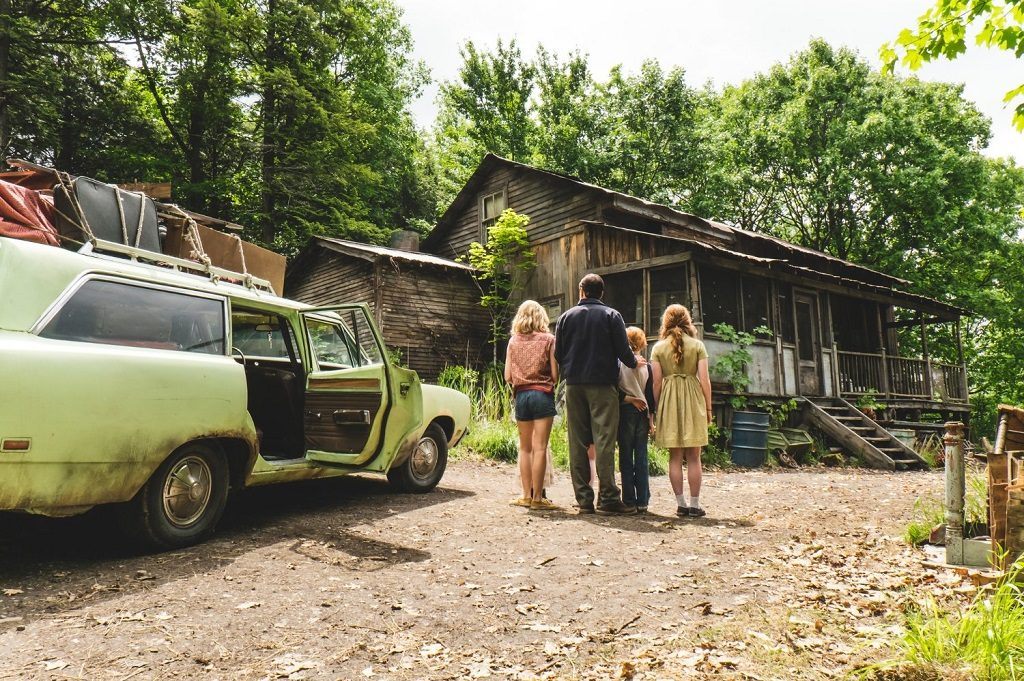
Destin Daniel Cretton's "The Glass Castle" floored me on several levels. Emotionally, its genuine and heartfelt performances eliminated any hints of embeddd maudlin within Jeanette Walls' acclaimed memoir. Visually, its a carefully designed effort with a mise-en-scene firmly anchored to the mood and tempos of its characters. It's chaotic when the scene is chaotic.... patient when holding on the complex swell of emotions building (or being buried) within its faces... and subtly persuasive at mining the unspoken such as one shot of a young girl (Ella Anderson) framed at the far left side of a car's backseat, anxiously awaiting the reaction of her drunken father (Woody Harrelson) in the front. Adapting a cross cutting effect between time and place- focusing on the now adult Jeanette played to perfection by Brie Larson- could be disastrous in some films, yet here it works magnificently. "The Glass Castle" examines the unintentional bohemian fractures of family in a completely rewarding manner. And, anticipating the big climax between father and estranged daughter is prolonged, so when the moment does come, its impact is that much more powerful.
18. Let It Fall: Los Angeles 1982-1992

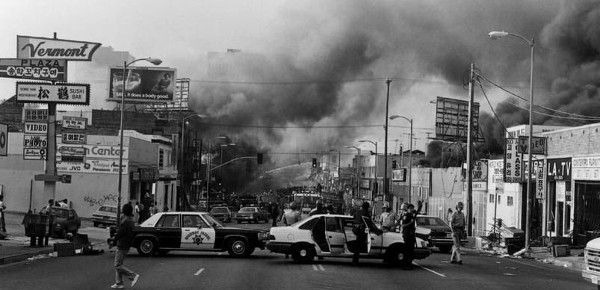
The best documentaries not only provide insight and rhetoric for a specific incident, person or place, but they explain and delineate how or why that said thing came to be. Screenwriter John Ridley's film about the 1992 riots in Los Angeles not only places those horrific days at the center of his thesis, but he effectively builds a sociological blueprint for the anger, resentment and active ingredients for why such horrific days began. Like Ezra Edelman's sprawling "O.J. Made In America" from last year, "Let It Fall" examines the history of Los Angeles incrementally for a decade before the events in 1992, weaving together archival footage and some incredibly personal interviews whose full experiences with the riots are built in slowly and mysteriously until they create a panorama of grief, individualism and doomed history that hopefully will never repeat itself.
18. Let It Fall: Los Angeles 1982-1992
The best documentaries not only provide insight and rhetoric for a specific incident, person or place, but they explain and delineate how or why that said thing came to be. Screenwriter John Ridley's film about the 1992 riots in Los Angeles not only places those horrific days at the center of his thesis, but he effectively builds a sociological blueprint for the anger, resentment and active ingredients for why such horrific days began. Like Ezra Edelman's sprawling "O.J. Made In America" from last year, "Let It Fall" examines the history of Los Angeles incrementally for a decade before the events in 1992, weaving together archival footage and some incredibly personal interviews whose full experiences with the riots are built in slowly and mysteriously until they create a panorama of grief, individualism and doomed history that hopefully will never repeat itself.
17. It Comes At Night

After the flairs of rough-hewn brilliance that occasionally bubbled to the surface in Trey Edward Shults' debut feature "Krisha", it shouldn't be a complete surprise his sophomore effort is so there as well. What is tantamount in "It Comes At Night" is the elongation of tension throughout the entire film, sustained by Shults' perfect accentuation of camera movement and lighting (which at times feels like its lit only by candlelight and lantern). Technical chops aside, "It Comes At Night" is also a pregnant, psychologically taut thriller that posits the idea of mankind's Armageddon as rendered through two sets of families in an isolated part of the country learning to trust, compromise and simply live together as an undefined sickness ravages the unlucky ones. Joel Edgerton, Carmen Ejogo, Riley Keough, Christopher Abbott and Kelvin Harrison Jr. all give tremendous and tightly screwed performances. At one point towards the end, I found myself holding my breath as the consequences on screen tumble towards an inevitable outcome of confusion and violence. It's quite unlike any end-of-the-world scenario imagined by Hollywood in some time which makes it all the more joyful to behold.
16. Wonderstruck


After the flairs of rough-hewn brilliance that occasionally bubbled to the surface in Trey Edward Shults' debut feature "Krisha", it shouldn't be a complete surprise his sophomore effort is so there as well. What is tantamount in "It Comes At Night" is the elongation of tension throughout the entire film, sustained by Shults' perfect accentuation of camera movement and lighting (which at times feels like its lit only by candlelight and lantern). Technical chops aside, "It Comes At Night" is also a pregnant, psychologically taut thriller that posits the idea of mankind's Armageddon as rendered through two sets of families in an isolated part of the country learning to trust, compromise and simply live together as an undefined sickness ravages the unlucky ones. Joel Edgerton, Carmen Ejogo, Riley Keough, Christopher Abbott and Kelvin Harrison Jr. all give tremendous and tightly screwed performances. At one point towards the end, I found myself holding my breath as the consequences on screen tumble towards an inevitable outcome of confusion and violence. It's quite unlike any end-of-the-world scenario imagined by Hollywood in some time which makes it all the more joyful to behold.
16. Wonderstruck

The absolutely stunning recreation of New York City circa 1927 and 1977 alone would be enough to praise Todd Haynes' magical ode to childhood. But his latest film goes even deeper than that, opening a playful pandora's box of cosmic attachment between a young girl (Millicent Simmonds) and young boy (Oakes Fegely) both exploring the same dusty corners of the city (and its museums) fifty years apart. How they're connected (one story told in silent black and white and the other funky fluorescent) slowly weaves into focus with forceful magic realism, culminating in a finale that's both cathartic and tonally perfect with Brian Selznick's original source material. At its core, "Wonderstruck" is a kid's movie, but Haynes makes it feel vital and nostalgic at the same time, fit for both the ten year old and eighty year old. After all, its a film that says the past is on constant repeat like a record player skipping over and over. It's bold, moving and well, wonderful.
15. Karl Marx City

Not only does Petra Epperlein's documentary shine a small light onto the cloistered history and political definitions of the East German Secret Police force (STASI) of the 70's and 80's, but it's also a highly personal exploration of her family's own hushed history during the same time. How these two spheres of time and place interact with each other is the central mystery. Intensely moving one second when Epperlein films her own family trying to come to terms with their father's mysterious suicide years ago, and coldly historical the next when interviewing ex STASI agents and how the compartmentalization of state always seemed to overrule their own better human judgement, "Karl Marx City" is the perfect example of utilizing a movable camera to peel back the layers.... no matter how painful they may be.
14. mother!

Go-for-broke cinema. No matter how one chooses to interpret Darren Aronofsky's parable of a tortured woman (Jennifer Lawrence) slowly going insane in a large old house when creatively-stifled husband (Javier Bardem) continually infringes on their partnership, "mother!" is daring and inciting. I choose to read it as a guttural feminist howl as every tiny recess of Lawrence's mind (including jealousy, paranoia, resentfulness and abandonment) is displayed- literally- onscreen. "mother!" represents a harrowing dissolution of family and self, eventually exploding into a carnal out-of-body trip through the violent dissonance of time where every mother's horror comes to inflict pain. Losing sons during war... losing daughters to carnivorous men.... and especially losing yourself in the midst of it all.
13. Ex-Libris

Frederick Wiseman's 45th feature is yet another typically humanistic and magnificent look at an institution, its inner workings and all its vital tangents. Peeling away the layers through seemingly innocent events- board meetings, dinners, social events, community outreach programs- "Ex Libris" gives all of these things almost holistic observation. He doesn't judge. He doesn't discriminate. All types, races and genders are shown to be part of living organism known as the New York Public Library system. Through his now customary style of establishing shots and then (seemingly) random events recorded like a fly-on-the-wall, Wiseman has delivered another monumental achievement in his soulful exploration of our modern world and the beating hearts and racing minds withinit it.
12. Columbus

Like Richard Linklater's "Before Sunrise" trilogy or Abbas Kiarostami's "Certified Copy", director Kogonada's "Columbus" belongs in that rarefied category of film that works on a different level. Driven by two of the year's absolute best performances by Haley Lu Richardson and John Cho, "Columbus" is a film beautifully attuned to the intricacies and rhythms of two people simply getting to know each other. It doesn't play out like your typical May-December romance. Its way too smart for that. This is a hushed, almost reverent character piece about two people finding each other at the exact moment in their lives when they probably both need each other the most. It's a film that largely flew under the radar, and its a shame because it deserves all the acclaim and more.
11. Blade Runner 2049

What struck struck me most intensely about Denis Villeneuve's sequel to Ridley Scott's trendsetting 1982 film is it's stillness. From the opening scene, the emphasis isn't squarely on action set pieces (although when those happen, it's the quiet that makes them explode against the senses) but the search for meaning in a dystopian world where the most precious vestige of reality is a miraculous human birth. I sound like a broken record as I've said for three years straight now, but Villenueve is working a different level from most filmmakers, completely attuned to the mechanics of a somewhat rickety science fiction idea and how to make it seem relevant in our current world of eroding self and confusing virtual realities.
10. The Post

And to think this is the film that Steven Spielberg just decided to make quickly while awaiting production on another huge blockbuster effort next year. What remains is a crackling and riveting old school journalism picture that grinds everything down to its essence. There's no fluff.The film looks and feels traditional. It follows some fairly routine notes. However, "The Post" succeeds in the way it rhymes with determination and intelligence. Simply following a man as he hustles through a newsroom and then leaves a piece of paper at the hands of a copy editor and tells him he's got 10 minutes to fix it.... well its a retro effort that speaks loudly to this once journalism major's heart. And Tom Hanks and Meryl Streep are pretty good too.
9. Bomb City

Jameson Brooks' feature film debut is a rocket of visual panache and angry narrative. A grungy Texas true crime bombshell, this description still doesn't quite do the film justice. Based on the story about the violent collision of two sects of West Texas highschoolers in 1997, "Bomb City" is highly reminiscent of lost-and-confused-kids tales such as "Over the Edge" (1979) or the early films of Nick Gomez such as "Laws of Gravity" (1993). As the tension between the groups of preppy football players and punk rock outcasts festers, the film builds to a simmering and raw display of violence that's genuinely unsettling. Expertly made, shot and scored, "Bomb City" was the most electric film at the 2017 Dallas International Film Festival. Watch out for it.
8. 20th Century Women

Mike Mills' "20th Centruy Women" feels like an achingly real memoir about adolescence told not through the subject's eyes, but through the prism of the people around him whose voices and perspectives are given equal traction. At first, the film feels ragged and episodic, but it slowly gels into a magnificent ensemble full of life, fragility and casual wisdom. The beauty resides in its raggedness. Even though the women of the title (Annette Benning, Greta Gerwig and Elle Fanning) are given moments of resplendence in the way they shuffle, dance, worry, react and interact with each other, Mills' screenplay and direction belie a gentle touch on everyone involved. It's also a film that understands the textures of an era in the way he flashes black and white photos to subliminally relay faces and images. And, just like a great novel, there's pain and reality in the way each person interjects their fate in voiceover, explaining future and past in one tumultuous gesture. It not only emphasizes the tangential nature of life, but breathes humanity in the present.
7. The Salesman

As he did in "The Past" and "A Seperation", Asgar Farhadi takes a simple disturbance in the relationship of a married couple and and spins it into a dizzying exploration of not only their personal interaction, but their place in Iranian society. "The Salesman" is a film that works incrementally, slowly revealing and uncovering layers with precision. I'm sure if I were a bit more familiar with the caveats of Arthur Miller's "Death of a Salesman" -whose plot device mimics the couple in the Farhadi's as they're actors rehearsing said play- I'd be even more impressed with the film. Part revenge-drama and part meta-cinema about two people coping with anger and embarrassment both on-stage and off, "The Salesman" is a riveting addition to Farhadi's magisterial body of work so far.
6. Phantom Thread

Psychologically venomous. Perversely manipulative. Elegantly composed. All of these things accurately describe Paul Thomas Anderson's latest endeavor. While it, at times, feels like the most mature and visually repressive (in a good way) film he's ever done, its also his most radical in the way his couple- famed fashion designer Reynolds Woodcock (Daniel Day Lewis) and plucked-from-obscurity Alma (Vicky Krieps)- dance and maneuver through a relationship fraught with hidden personal demons, controlling personalities and hints of dominatrix. It's riveting and complex and confusing all at the same time. And when will we ever learn nothing good happens at a New Year's Eve party in a PTA film?
5. Personal Shopper

Sometimes, hype ruins a film for me. When I finally saw Olivier Assayas' "Personal Shopper" in the spring of '17, it's incredible word of mouth since Cannes the previous year was overwhelming.Thankfully, "Personal Shopper" exceeds expectations. Starring Kristen Stewart in a restless, frazzled performance that makes her tenuous connection to the afterlife that much more electric, Assayas spins his drama in so many directions that it could fail at any one of them, but doesn't. Part metaphysical ghost story, part murder-mystery and part travelogue, "Personal Shopper" ultimately becomes a pregnant examination of all these genres. It also has something magnificent to say about the transience of life. As the titular personal shopper, Assayas has cast Stewart as the anonymous presence who shops and supplies clothing for a famous celebrity in Paris. Stewart hates the job, and she's stuck emotionally as well, waiting for a sign from the afterlife from her recently deceased brother. Problem is, something else attaches itself to her while playing in the wold of shadows. "Personal Shopper" is startling, perplexing, mischievous and subtly chilling.
15. Karl Marx City

Not only does Petra Epperlein's documentary shine a small light onto the cloistered history and political definitions of the East German Secret Police force (STASI) of the 70's and 80's, but it's also a highly personal exploration of her family's own hushed history during the same time. How these two spheres of time and place interact with each other is the central mystery. Intensely moving one second when Epperlein films her own family trying to come to terms with their father's mysterious suicide years ago, and coldly historical the next when interviewing ex STASI agents and how the compartmentalization of state always seemed to overrule their own better human judgement, "Karl Marx City" is the perfect example of utilizing a movable camera to peel back the layers.... no matter how painful they may be.
14. mother!

Go-for-broke cinema. No matter how one chooses to interpret Darren Aronofsky's parable of a tortured woman (Jennifer Lawrence) slowly going insane in a large old house when creatively-stifled husband (Javier Bardem) continually infringes on their partnership, "mother!" is daring and inciting. I choose to read it as a guttural feminist howl as every tiny recess of Lawrence's mind (including jealousy, paranoia, resentfulness and abandonment) is displayed- literally- onscreen. "mother!" represents a harrowing dissolution of family and self, eventually exploding into a carnal out-of-body trip through the violent dissonance of time where every mother's horror comes to inflict pain. Losing sons during war... losing daughters to carnivorous men.... and especially losing yourself in the midst of it all.
13. Ex-Libris

Frederick Wiseman's 45th feature is yet another typically humanistic and magnificent look at an institution, its inner workings and all its vital tangents. Peeling away the layers through seemingly innocent events- board meetings, dinners, social events, community outreach programs- "Ex Libris" gives all of these things almost holistic observation. He doesn't judge. He doesn't discriminate. All types, races and genders are shown to be part of living organism known as the New York Public Library system. Through his now customary style of establishing shots and then (seemingly) random events recorded like a fly-on-the-wall, Wiseman has delivered another monumental achievement in his soulful exploration of our modern world and the beating hearts and racing minds withinit it.
12. Columbus

Like Richard Linklater's "Before Sunrise" trilogy or Abbas Kiarostami's "Certified Copy", director Kogonada's "Columbus" belongs in that rarefied category of film that works on a different level. Driven by two of the year's absolute best performances by Haley Lu Richardson and John Cho, "Columbus" is a film beautifully attuned to the intricacies and rhythms of two people simply getting to know each other. It doesn't play out like your typical May-December romance. Its way too smart for that. This is a hushed, almost reverent character piece about two people finding each other at the exact moment in their lives when they probably both need each other the most. It's a film that largely flew under the radar, and its a shame because it deserves all the acclaim and more.
11. Blade Runner 2049

What struck struck me most intensely about Denis Villeneuve's sequel to Ridley Scott's trendsetting 1982 film is it's stillness. From the opening scene, the emphasis isn't squarely on action set pieces (although when those happen, it's the quiet that makes them explode against the senses) but the search for meaning in a dystopian world where the most precious vestige of reality is a miraculous human birth. I sound like a broken record as I've said for three years straight now, but Villenueve is working a different level from most filmmakers, completely attuned to the mechanics of a somewhat rickety science fiction idea and how to make it seem relevant in our current world of eroding self and confusing virtual realities.
10. The Post

And to think this is the film that Steven Spielberg just decided to make quickly while awaiting production on another huge blockbuster effort next year. What remains is a crackling and riveting old school journalism picture that grinds everything down to its essence. There's no fluff.The film looks and feels traditional. It follows some fairly routine notes. However, "The Post" succeeds in the way it rhymes with determination and intelligence. Simply following a man as he hustles through a newsroom and then leaves a piece of paper at the hands of a copy editor and tells him he's got 10 minutes to fix it.... well its a retro effort that speaks loudly to this once journalism major's heart. And Tom Hanks and Meryl Streep are pretty good too.
9. Bomb City

Jameson Brooks' feature film debut is a rocket of visual panache and angry narrative. A grungy Texas true crime bombshell, this description still doesn't quite do the film justice. Based on the story about the violent collision of two sects of West Texas highschoolers in 1997, "Bomb City" is highly reminiscent of lost-and-confused-kids tales such as "Over the Edge" (1979) or the early films of Nick Gomez such as "Laws of Gravity" (1993). As the tension between the groups of preppy football players and punk rock outcasts festers, the film builds to a simmering and raw display of violence that's genuinely unsettling. Expertly made, shot and scored, "Bomb City" was the most electric film at the 2017 Dallas International Film Festival. Watch out for it.
8. 20th Century Women

Mike Mills' "20th Centruy Women" feels like an achingly real memoir about adolescence told not through the subject's eyes, but through the prism of the people around him whose voices and perspectives are given equal traction. At first, the film feels ragged and episodic, but it slowly gels into a magnificent ensemble full of life, fragility and casual wisdom. The beauty resides in its raggedness. Even though the women of the title (Annette Benning, Greta Gerwig and Elle Fanning) are given moments of resplendence in the way they shuffle, dance, worry, react and interact with each other, Mills' screenplay and direction belie a gentle touch on everyone involved. It's also a film that understands the textures of an era in the way he flashes black and white photos to subliminally relay faces and images. And, just like a great novel, there's pain and reality in the way each person interjects their fate in voiceover, explaining future and past in one tumultuous gesture. It not only emphasizes the tangential nature of life, but breathes humanity in the present.
7. The Salesman

As he did in "The Past" and "A Seperation", Asgar Farhadi takes a simple disturbance in the relationship of a married couple and and spins it into a dizzying exploration of not only their personal interaction, but their place in Iranian society. "The Salesman" is a film that works incrementally, slowly revealing and uncovering layers with precision. I'm sure if I were a bit more familiar with the caveats of Arthur Miller's "Death of a Salesman" -whose plot device mimics the couple in the Farhadi's as they're actors rehearsing said play- I'd be even more impressed with the film. Part revenge-drama and part meta-cinema about two people coping with anger and embarrassment both on-stage and off, "The Salesman" is a riveting addition to Farhadi's magisterial body of work so far.
6. Phantom Thread

Psychologically venomous. Perversely manipulative. Elegantly composed. All of these things accurately describe Paul Thomas Anderson's latest endeavor. While it, at times, feels like the most mature and visually repressive (in a good way) film he's ever done, its also his most radical in the way his couple- famed fashion designer Reynolds Woodcock (Daniel Day Lewis) and plucked-from-obscurity Alma (Vicky Krieps)- dance and maneuver through a relationship fraught with hidden personal demons, controlling personalities and hints of dominatrix. It's riveting and complex and confusing all at the same time. And when will we ever learn nothing good happens at a New Year's Eve party in a PTA film?
5. Personal Shopper

Sometimes, hype ruins a film for me. When I finally saw Olivier Assayas' "Personal Shopper" in the spring of '17, it's incredible word of mouth since Cannes the previous year was overwhelming.Thankfully, "Personal Shopper" exceeds expectations. Starring Kristen Stewart in a restless, frazzled performance that makes her tenuous connection to the afterlife that much more electric, Assayas spins his drama in so many directions that it could fail at any one of them, but doesn't. Part metaphysical ghost story, part murder-mystery and part travelogue, "Personal Shopper" ultimately becomes a pregnant examination of all these genres. It also has something magnificent to say about the transience of life. As the titular personal shopper, Assayas has cast Stewart as the anonymous presence who shops and supplies clothing for a famous celebrity in Paris. Stewart hates the job, and she's stuck emotionally as well, waiting for a sign from the afterlife from her recently deceased brother. Problem is, something else attaches itself to her while playing in the wold of shadows. "Personal Shopper" is startling, perplexing, mischievous and subtly chilling.
4. Dunkirk

As he's so masterly done since his debut feature almost twenty years ago, Christopher Nolan's penchant for the manipulation of time features prominently in his WWII feature, "Dunkirk". Literally suspending the rigors of war across three distinct and overlapping timelines (land, sea and air), it's a technical gambit that, in other hands, could be problematic. However, in Nolan's radical conceptualization, "Dunkirk" is essentially a silent film with sporadic bursts of dialogue that imposes the idea of time being the strictest enemy against his relatively anonymous cast of men desperately running away (and towards) the waning vestiges of combat. Refusing to carve out a central figure of empathy (although Tom Hardy's ace fighter pilot comes the closest thing to a hero the film has, including a momentous bow), "Dunkirk" is even more radical for the way it drops us in the midst of war and allows us to experience the waves of anger, desperation, intelligence, cowardice and loyalty that ebbs and flows over its young men facing a dark hour of the war. I find this more honest and revealing than so many other war films that impose a facade of heroism on its characters. In a war that spanned so many years and re-wrote both the internal and external geography of so many men, women and landscapes, "Dunkirk" feels all the more courageous.
3. Lady Bird
 I think the moment Greta Gerwig's lovingly detailed and emotionally attuned coming-of-age masterpiece "Lady Bird" completely wrecked me is the moment Saoirse Ronan finds a handful of crumpled papers in her luggage... placed their surprisingly by her father (Tracy Letts) to let her know the complicated and unsung emotions her mother (Laurie Metcalf) was never able to convey. The same type of thing happened to me once..... a letter of compassion, remorse and half-spoken truths written by my parents at a crucial age in my life. I imagine people will find other select moments within Gerwig's film that relate to their own confused, tumultuous experiences in life which is exactly why "Lady Bird" feels more like a communal memoir than a single film. There's so much tiny beauty and personal affectations riddled throughout "Lady Bird" that it becomes a monumental ode to a certain time in life where everything feels exaggerated and explosive. And its performances are so perfectly realized and its mood so assured that it speaks volumes about actress turned director Gerwig and her natural ability to coax something at once personal and universal. I could gush about this film for days.
2. Wind River

With three efforts in a small amount of time ("Sicario", "Hell or High Water" and now "Wind River"), writer-director Taylor Sheridan is slowly bringing intelligence back to the action thriller. While stepping behind the camera for his sophomore film in "Wind River" and lending only his writing abilities to the other two, a clear pattern of sublime understanding for complex characters in a deadly, shifting and unrelenting environment is quite clear. Stacked with a robust cast full of sensitive performances,
part of the film's poetic success- besides its highly attuned care to make every bullet and punch resound with a thunderous thud- are the quiet moments interspersed throughout. The conversations had throughout "Wind River" are often just as incisive as the action. A quiet moment between Jeremy Renner and FBI agent Elizabeth Olsen- when he explains why he's doing what he's doing for her- is one of the seminal moments of the year in film. Likewise, the way Olsen bottles and chortles up her emotions for a good majority of the film- finally allowing them overtake her in the penultimate scene- is so moving because its timed perfectly to allow the breathless, swooning violence of the previous few scenes gently settle over her. Like Emily Blunt shaking and washing the blood out of her hair in "Sicario", its okay for women to cry in Sheridan's universe.... just not when the shit hits the fan or when other people are around to judge your frazzled self.
1. The Lost City of Z

In the films of James Gray, nothing comes easy. Survival is often sought at a high price. Walloped in deep shadow.... or inky blacks of a midnight trainyard.... or the halcyon golden of a cramped New York City tenement... or especially in the oppressive and humid jungles of South America, his films are a litmus test for the human experience. In his latest film, "The Lost City of Z" (adapted from the book of the same name by David Grann), his survivalist instinct manifests itself in a literal uncharted adventure that sees British officer Col. Percy Fawcett (Charlie Hunnam) braving the depths of the Amazonian jungle and getting lost both in body and spirit. Gorgeously framed and edited, impeccably acted and featuring a classicism whose power is often overwhelming, I find it hard to believe Gray can ever top himself after "The Immigrant" (2014). Though it bombed theatrically and at festivals that film too was a masterpiece of fragility and trapped emotions in the visage of Marion Cotillard's single immigrant female status. I love that film with no bounds. And now, "The Lost City of Z" has made me love something even more rabidly.
Honorable mentions: The Little Hours, Things To Come, I Am Not Your Negro, Wonder Woman, BPM (120 Beats), Roman J. Israel Esq, The Big Sick, Atomic Blond, Ingrid Goes West, The Bad Batch

As he's so masterly done since his debut feature almost twenty years ago, Christopher Nolan's penchant for the manipulation of time features prominently in his WWII feature, "Dunkirk". Literally suspending the rigors of war across three distinct and overlapping timelines (land, sea and air), it's a technical gambit that, in other hands, could be problematic. However, in Nolan's radical conceptualization, "Dunkirk" is essentially a silent film with sporadic bursts of dialogue that imposes the idea of time being the strictest enemy against his relatively anonymous cast of men desperately running away (and towards) the waning vestiges of combat. Refusing to carve out a central figure of empathy (although Tom Hardy's ace fighter pilot comes the closest thing to a hero the film has, including a momentous bow), "Dunkirk" is even more radical for the way it drops us in the midst of war and allows us to experience the waves of anger, desperation, intelligence, cowardice and loyalty that ebbs and flows over its young men facing a dark hour of the war. I find this more honest and revealing than so many other war films that impose a facade of heroism on its characters. In a war that spanned so many years and re-wrote both the internal and external geography of so many men, women and landscapes, "Dunkirk" feels all the more courageous.
3. Lady Bird

2. Wind River

With three efforts in a small amount of time ("Sicario", "Hell or High Water" and now "Wind River"), writer-director Taylor Sheridan is slowly bringing intelligence back to the action thriller. While stepping behind the camera for his sophomore film in "Wind River" and lending only his writing abilities to the other two, a clear pattern of sublime understanding for complex characters in a deadly, shifting and unrelenting environment is quite clear. Stacked with a robust cast full of sensitive performances,
part of the film's poetic success- besides its highly attuned care to make every bullet and punch resound with a thunderous thud- are the quiet moments interspersed throughout. The conversations had throughout "Wind River" are often just as incisive as the action. A quiet moment between Jeremy Renner and FBI agent Elizabeth Olsen- when he explains why he's doing what he's doing for her- is one of the seminal moments of the year in film. Likewise, the way Olsen bottles and chortles up her emotions for a good majority of the film- finally allowing them overtake her in the penultimate scene- is so moving because its timed perfectly to allow the breathless, swooning violence of the previous few scenes gently settle over her. Like Emily Blunt shaking and washing the blood out of her hair in "Sicario", its okay for women to cry in Sheridan's universe.... just not when the shit hits the fan or when other people are around to judge your frazzled self.
1. The Lost City of Z

Honorable mentions: The Little Hours, Things To Come, I Am Not Your Negro, Wonder Woman, BPM (120 Beats), Roman J. Israel Esq, The Big Sick, Atomic Blond, Ingrid Goes West, The Bad Batch


