Thursday, January 15, 2015

Favorites of 2014

20. Life Itself


I’m not sure director Steve James needed to do much when tackling a biography of influential film critic Roger Ebert, especially in the absolutely stoic manner in which he dealt with his waning mortality. Ebert was so well loved and respected in the film going community- both in his reach with artists themselves and the people who paid money for that art- that any old slap dashed documentary probably would have opened the tear floodgates and goodwill towards the writer. But “Life Itself” purports more than. It not only deliberately studies Ebert the man- hard drinker, cantankerous newsman, eventual husband and step father/grandfather- but exemplifies the downright goodness in his actions. As a fifteen year old boy, eagerly watching “Siskel and Ebert” each week for glimmering peeks of films that would never play in my area, his legacy for me personally, is undeniable. His writings (and those of Andrew Sarris) impinge my own thoughts every single time I sit down to write about movies- as I’m sure it does for millions around the world now. Hopefully, his bravery and humor in the thrall of death will be just as lasting for us.


19. Foxcatcher


While simmering tension and dread is there right from the beginning in Bennett Miller’s true tale “Foxcatcher”, the resounding impact from the film remains its stillness. Many scenes are shrouded in quiet, almost hushed conversations, all of which makes the emotional explosion towards the end that much more shocking. Tracking the doomed relationship between wrestling brothers Mark and Dave Schultz (Canning Tatum and Mark Ruffalol) and wealthy Olympic supporter John E. DuPont (Steve Carell), “Foxcatcher” is a dense study in repressed emotions from all sides. While Carell undergoes the most physically transformative of the roles (and he is really, really good), the best acting comes from Tatum and Ruffalo. With statures like apes and lacking the ability to fully express their sentiments outside of casual positive reinforcement or the comfort of each other’s body in practice, “Foxcatcher” soon becomes a pointed attack on the ‘haves’ versus the ‘havenots’. This widening gulf eventually swallows everyone and director Miller orchestrates the quiet apocalypse with deft precision.


18. Whiplash


Who would of thought a music school for jazz prodigies could give us the most compelling psychological thriller of the year? Writer/director Damian Chazelle does just that, assaulting the viewer in many ways as a young drummer (Miles Teller) is given a ticket to the chocolate factory, then has it taken away by a sadistic teacher (JK Simmons).


17. The Internet's Own Boy, Aaron Swartz


Careening to the top of 2014’s current event stories involved the hacking of Sony by (insert your theory here). No doubt viral warfare is on the precipice, looming as the new frontier in corporate espionage and financial insecurity. But Brian Knappenberger’s documentary on the brilliant but brief life of web design pioneer Aaron Swartz shows us that the new frontier can also be used for the positive enforcement of internet freedom of speech and the open access of knowledge. In charting Swartz’s early internet fame and eventual destruction by the US government bringing fraud charges against him, “The Internet’s Own Boy” tracks some of the same murky regions that “Citizenfour” explores. Both films ask us to question the extent modern technology should be allowed to go when faced with the discovery of moral outrage, but “The Internet’s Own Boy” and its diligent portrait of Swartz succinctly gives that technology a human face. What we do next is now up to us.


16. Starry Eyes


The best horror film of the year, sorry “The Babadook”! Both films weave a terrifying yarn that may (or may not) take place inside the mind of a frazzled, burned out woman, alternately casting horrid consequences on those close to her. As the waitress-cum-actress striving to make her big break in Hollywood, Sarah (Alex Essoe) ultimately makes a very bad decision with some very bad people. Essoe is amazing, giving a feral, vivid performance. Not since the French film “Inside” has a film made me gasp and recoil at the horror on screen.


15. The Skeleton Twins


Shame on the trailers for ruining would should have been the incandescent moment in Craig Johnson’s stellar “The Skeleton Twins”. Fortunately, the rest of the film is just as good as the impromptu lip sync between Bill Hader and Kristin Wiig that centerpieces the promotional marketing. And what’s even more surprising about the film are the performances from Wiig and Hader as estranged brother and sister who reconnect after Hader’s attempted suicide and spend a few weeks together. Both have deep familial issues they’re working through, and both actors reveal a stark humanity within cliched ‘indie’ paradigms. “The Skeleton Twins” excels at pretty much everything… even the secondary characters portrayed by Luke Wilson as Wiig’s husband and Ty Burrell as a past figure in Hader’s complicated love life. The emotions and repertoire stirred up throughout the film consistently reveal how messy, imperfect and, ultimately, affirming the curve balls of life routinely are.


14. Starred Up


Simply put, one of the most lean, brutal prison films ever made. 2014 breakout Jack O’ Connell stars as Eric, fresh blood in a prison where his father (Ben Mendehlson) serves as one of the top dog inmates. Director David Mackenzie shuttles most of the back story for these guys, instead choosing to hone in on the forceful, almost wordless quest Eric embarks upon to seek some sort of weird acceptance from dad. “Starred Up” dives head first into a savage, animalistic world of survival, made all the more striking when, in the first scene, after being strip-search and inspected thoroughly, Eric still manages to create a shank with a razor blade and toothbrush within five minutes. So many prison films, but not quite like this.


13. The Rover
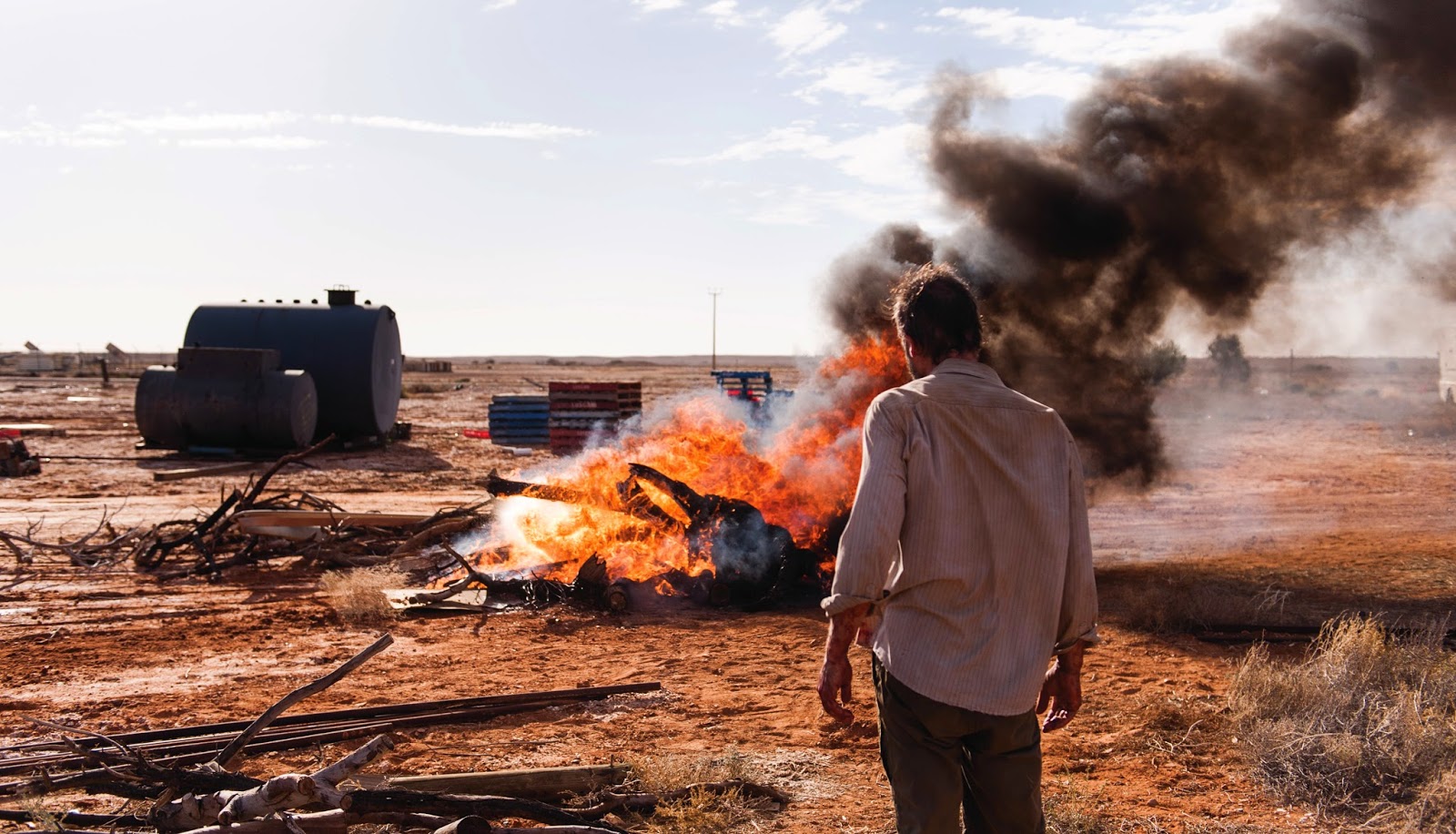


David Michod’s “The Rover” frighteningly presents the apocalypse as a scavenged, bleak and instantly cutthroat procession of boarded up fuel stations, neon-lit motels and burned out vehicles. Swimming through the mire with a singular, propulsive purpose is Guy Pearce, intent on finding the men who hijacked his car. He stumbles across the wounded brother of one of the men, played convincingly by Robert Pattinson, and the two men embark on a journey of revenge. Like his previous film, the magisterial crime opus “Animal Kingdom”, “The Rover” is relentlessly violent and prone to sharp outbursts of gunfire that underline the power of the weaponry. But there’s also an undercurrent of emotion and silent moments of reflection that bring back the human element to this elemental narrative. Though Michod wrote this screenplay before “Animal Kingdom”, both films represent his desire to expose the hypocrisies of family and the manipulation of stronger man over a weaker individual. As the film winds down, it becomes a lean examination of these ideas and spares no one the western-style shootout its been promising since the beginning. With this second film, Michod truly is a bright spot in modern cinema.


12. Wild


Jean Marc Vallee’s film does the improbable…. it takes a well worn treatise on self exile and eventual self fulfillment and makes it feel vital and organic. A lot of this has to do with the source material by Cheryl Strayed, whose life and journey the film is based upon and performed magnificently by Reese Witherspoon. Deciding to escape her troubled life and hike 1000 miles from New Mexico to Canada, “Wild” intercuts her spontaneous and tough walk with the events that landed her in a dark place to begin with. Playing like a patchwork of flashbacks, conversations, moods, memories and sounds that ebb and flow brilliantly into a stream of conscious-like scrapbook, the film coalesces into a cathartic experience. As he proved with “Dallas Buyer’s Club”, Vallee expertly handles the material and elicits vivid portraits from even the smallest secondary roles. But even more than that, “Wild” is a moving exploration of why we sometimes need to fall off the grid and allow life to catch us somewhere below


11. Chef


Jon Favreau’s low budget “Chef” is an unassuming, refreshingly real labor of love that hits all the right notes, both in its storytelling and its food porn. Starring Favreau, the film tells the mid-level rise and hard fall of a Los Angeles chef after a scathing food review sends his self esteem spiraling out of control. He loses his job and has to start over, both professionally and personally as he deals with an ex-wife (Sofia Vergera) and young son (Emjay Anthony). There are just enough starlet cameos (Dustin Hoffman…. Robert Downey Jr) and wish fulfillment girlfriends (Scarlet Johannson) to remind us that Favreau is still an A-list director, but “Chef” hooked me from the get-go. It feels honest and authentic, not only in its kitchen bantering between Favreau and co-stars John Leguizamo and Bobby Cannavale, but in its sprightly outlook on family and the tenuous bonds that often draw us back and forth from one another.


10. The Grand Budapest Hotel


Wes Anderdson’s latest jaunt into his storybook world of old European set design and anachronistic characters crossed between real and half imagined is a sheer delight. Brimming with humor (led by a wildly unpredictable Ralph Fiennes) and 40’s style Hardy Boys adventure, “The Grand Budapest Hotel” tells the tale-within-a-tale about how Zero (F. Murray Abraham as adult and Tony Revolori as his younger self ) came from nothing to eventually own the cavernous place. Along the way, lecherous family members, Cistern monks, war mongrels and cold blooded killers dot the fetishized landscape that has become the coup de grace for Anderson. Any fans of his work will be immediately drawn to the way “The Grand Budapest Hotel” maintains its air of theatricality while still mining real, genuine emotions among its characters. After seeing this very early in the year, I watched it again recently and laughed just as hard the second time.


9. In Bloom


Nana Ekvtimishvili’s debut film is a stunning observational tale of two 15 year old Georgian girls dealing with the turmoil of daily life in their Eastern bloc country. As Eka and Natia, Lika Babluani and Mariam Bokeria give soulful and naturalistic performances. Their sudden growth from giggling schoolgirls to forced adulthood in a lingering atmosphere of loveless marriages, cramped classrooms and streets littered with jeering boys and jealous men is charted by Ekvtimishvili’s fluid camera and unforced narrative. Yes, a gun does play a huge role in the story, but the film refuses to turn generic and stays focused on the truthful relationship between the two girls. It’s this type of film- largely undiscovered on the margins of world cinema- that gives me most hope for the future of movies.


8. Boyhood


Richard Linklater is the undisputed master of documenting time passing and the longueur of life. and with “Boyhood”, he undertakes his most ambitious marking of time yet. Filmed over the course of twelve years with the same core actors, “Boyhood” is a remarkable exploration of not only our preconceived notions of time in the movies, but how the tired clichés of a family drama can be inverted with truth and generosity. As Mason (Ellar Coltrane) grows up literally before our eyes, he deals with puberty, an annoying older sister (Linklater‘s own daughter Lorelei), introduction to the opposite sex and finally flying the nest for college. All these themes have been prolific in the annals of movie making, creating entire dramas out of each individual portion of life. In “Boyhood”, Linklater manages to craft an enveloping experience with them all. And it’s not only with the children, but in the failures, frustrations, and missteps of the parents as well. Ethan Hawke and especially Patricia Arquette provide strong roles as mother and estranged father, trying to hold things together as best they can in an ever-changing environment of spatial differences and asshole husbands. The word “experience” truly describes “Boyhood”.


7. Snowpiercer


It’s a far-fetched idea, yes, but any film based on a popular graphic novel stretches the limitations of logic. “Snowpiercer” is no different, presenting a world frozen over by global warming with the remainder of the world’s inhabitants idling their time and surviving on a powerful train that criss-crosses the globe. Within this compartmentalized dystopian universe are classes divided by sections of the train and kept in line by armed forces serving the train‘s inventor, and it’s here that the eternal struggle between the haves and have nots plays out with kinetic, brutal force. “Snowpiercer”, long delayed and rumored to be a victim of widespread studio interference, emerges as a strong film with dazzling visual style, embedded humor and everything the fan-boy base could hope for…. Including a cute-as-can-be but kick butt young Asian girl (Ah-Sung Ko) and the everyman (Chris Pine) in which we can envision ourselves. I’ve long been a fan of Bong Joon-Ho, and here he continues to fascinate and elevate his material in unique and energetic ways. The violence is swift and brutal, continually challenging our expectations of who is the center point of the film. Just when we connect with someone, life in this rolling hell delivers a punch. And even though the comment on class divisions and social stratus is belabored, “Snowpiercer” eventually has a lot more on its mind.

6. Under the Skin


“Under the Skin” is a minimalist science fiction thriller that could pass as an experimental avant garde film if one walked into it during the middle. Rapt attention is needed as Glazer plays with all sorts of nerve-inducing, shrill soundtrack cues and a perfectly realized mise-en-scene. Scarlet Johansson is some sort of alien being wandering the frigid wastelands of Scotland in a white van, picking up men and then leading them to a dark room where they mindlessly walk into a black ooze. Her only other interaction is with a motorcycle riding “handler” who supports her along the way, then becomes her hunter when things go awry. Not reading the novel the film is based on- though initial reviews describe the film as a complete “paring” of the novel- the force of “Under the Skin” is its complete tone and mood. This thing is entrancing from the beginning, and it only grows its spell as the narrative takes a few science fiction twists, namely the alien’s desire to be human. While “Under the Skin” may puzzle some, its downright adventurous attitude and brave refusal to play anything by the rules is breathtaking.

 
5. Burning Bush


Long form expression on the small screen has reached ecstatic heights over the last dozen or so years, as evidence by master filmmakers making the jump to its cozy format (see Soderbergh and Scorsese). Agnieszka Holland’s four and half hour miniseries gives the time and weight a subject as convoluted as “Burning Bush” deserves. The 1969 self immolation of Prague student Jan Palach is simply the jumping off point for Holland’s infuriating and devout study of Palach’s family quest for justice. As the lawyer fighting against the dynamics of a Communist regime, lead actress Tatiana Pauhofova exerts so much with her eyes and guarded body language. She adds a steely justice fighter to the mix. No intricate understanding of Polish politics or culture is necessary. “Burning Bush” leads one into the foxhole of paranoia, injustice and good ‘ol boy Eastern bloc suffocation with clear eyed determination and just how easily the institution can crush the individual.


4. The Immigrant


The themes of Catholic guilt, familial violence and moody Northeastern settings that have dotted the James Gray cinematic landscape for years now gets cross pollinated with 1920’s New York in “The Immigrant”. Marion Cotillard is splendid as Ewa, a Polish immigrant who’s immediately separated from her sickly sister at Ellis Island, then manipulated into a life of showmanship and prostitution by small time burlesque owner Joaquin Phoenix (in his fourth collaboration with filmmaker Gray). Glimpses of happiness appear when Phoenix’s cousin, magician Orlando (Jeremy Renner), enters the picture and Cotillard is pulled between her obligations for financial status and the potential for a normal life. “The Immigrant” succeeds in developing the three characters with depth and feeling. They are all flawed but acutely drawn people. Even the small roles of Ewa’s aunt and uncle, who make an uncompromising decision, resonate with honesty and moral ambiguity. Filmmaker Gray, so strong with each new passing effort, has crafted an intimate epic that not only gives Cotillard one astounding monologue in a confessional booth, but an ending that both devastates and uplifts its corresponding couple. I’m so glad this film is getting numerous year end accolades.


3. Interstellar
 
 
Christopher Nolan’s science fiction epic travels a long way to reveal the personal foundations that anchors us so firmly to our home. It’s unapologetically his most emotional film to date, tossing a lot of scientific jargon at us while remaining true to not only the cinematic corridors of Kubrick, Tarkovsky and those way-ahead-of-their-times-but-obscure Polish sci-fi flicks of the 80’s but also to the warm embraces of Capra-esque human connectivity. All of this to say “Interstellar” was the film I saw four times in the theater… and each time its power and resonance struck a deeper chord in me. Matthew McConaughey, Jessica Chastain, Anne Hathaway and all involved give tremendous performances within a CGI framework that could have easily suffocated genuine emotion. Instead, Nolan again hatches a mind-warping tale that magisterially settles on the most elemental principle- a father and his daughter.


2. Inherent Vice


Paul Thomas Anderson’s “Inherent Vice” is sure to polarize and challenge the expectations from a film noir. It’s a fuzzy mosaic of gung-ho cops, mysterious drug lords, disaffected Flower Children, fringe political anarchists and lots of marijuana use by its lead private investigator, which only casts a wider sense of paranoia and murkiness around the whole affair. It’s also about the tenuous moment in time when sunny California, as the template for America at large, changed from the Summer of Love into something decidedly more sinister. The logistics of its plot may not come to a fully explainable finale (although I feel like I could decipher the who’s who), but rather the mood and very sad transition of a generation are the real mechanism behind the plot. Haunting, laugh out loud funny, and completely committed to its stoner logic, it’s a majestic ride and yet another brilliant layering on Anderson’s America unfiltered.


1. Birdman
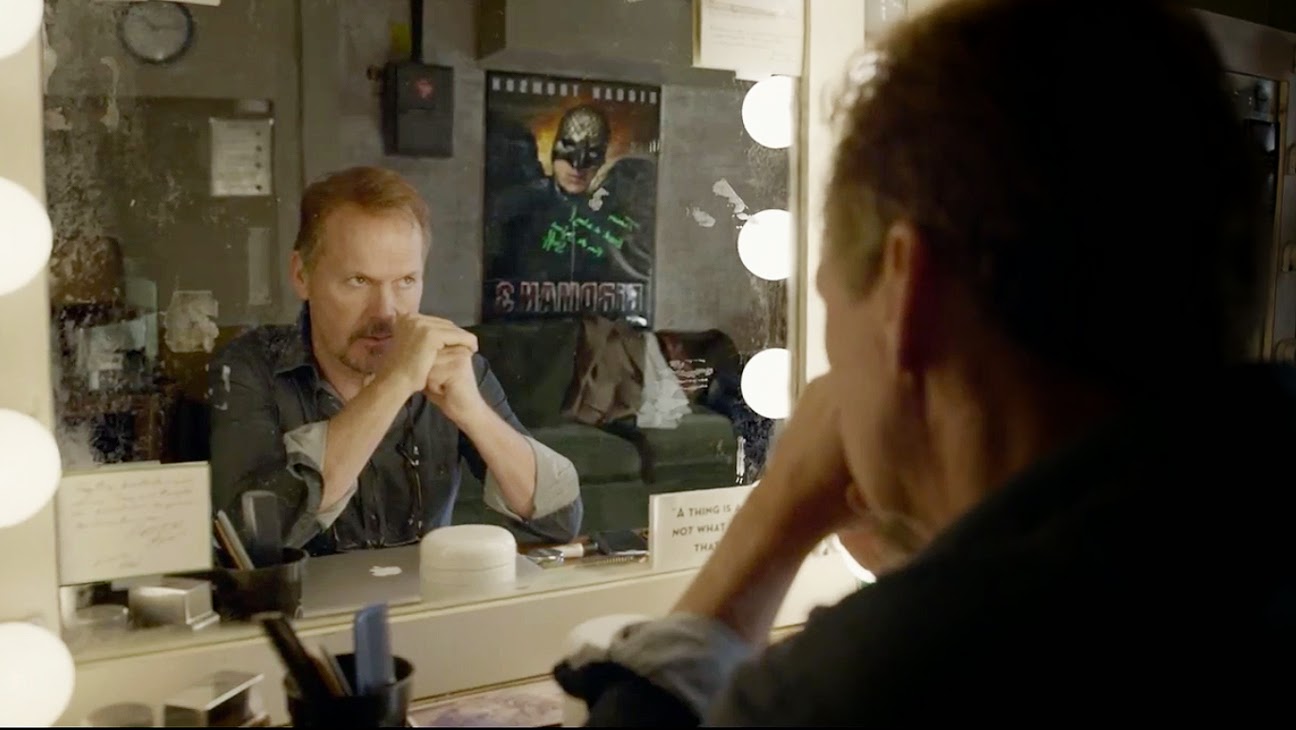

The struggling artist on film has been an especially ripe subject for filmmakers since the medium learned how to refract the light back onto itself. Alejandro Gonzales Innaritu’s “Birdman” joins that procession, and not only does it create a visually stunning universe of backstage politics and shifting emotions among actors in a New York play, but it pinpoints something deeper in the psyche of leading man/writer Riggan Thompson (Michael Keaton). Battling his own inner demons while trying to maintain the week leading up to his opening night, things aren’t made simpler by his inner voice… a stream of conscience rally that wants him to return to his glory days as action film star Birdman. Thrown into the chaotic mix are controversially edgy co-stars (a wonderful Ed Norton), a daughter fresh out of rehab (Emma Stone) and an arts critic just itching to take down his play because Hollywood actors don’t belong in the theater. “Birdman” balances the natural with the supernatural, sometimes with Keaton’s head games taking over the film. But regardless of its flights of fancy (literally at times), “Birdman” is a real triumph of human emotions, anchored by a tremendous performance from Keaton.




Monday, January 12, 2015

RetroActive: The Best Non 2014 Films I Saw In 2014

15. Man Without A Map (1968), directed by Hiroshi Teshigahara

Of all the films by Teshigahara, this is by far the most difficult. It’s also the one that lingers with me the most. Calling it a detective mystery (like on IMDB) is very misleading. If anything, “The Man Without A Map” is an anti-mystery. Like the great neo noirs of the 70’s (“The Big Fix” and especially “The Long Goodbye”), Teshigahara’s film raises more questions than it answers…. never really solves anything… and devours the lead detective in a world of loose ends, digressive leads, and his own doubt about the missing person case. The unnamed Detective (played by Shintaro Katsu, who would go onto later prominence in the “Hanzo” series) is recruited by a woman to find her missing husband. Along the way, the detective is continually thwarted by the brother of the missing man who has his own agenda to follow (namely a violent workers clash), the unclear motives of a taxi driver service the missing man may have worked for, and the inability of the wife to recall any key details about the last days of her husband. Instead, the detective is haplessly relegated to mute witness as he scours the depths of Japan’s brothels and low level businessmen. Going into “The Man Without A Map” with a sense of narrative is probably not the best way to approach it. This is a film that deserves multiple viewings as you realize it’s an atmospheric psychological study of a nation rather than a thriller. It’d also make a dizzying double feature with “Inherent Vice”.


14. The Amsterdam Kill (1977), directed by Robert Clouse


Lots of 1950’s and 60’s Hollywood stars migrated to the cheapo European film scene during the cloudy 70’s, and Robert Mitchum was one of them. Produced by Golden Harvest- the Cannon Films of Asia- “The Amsterdam Kill” rises above its grimy production values and marginal place in chop-socky cinema towards something quite intelligent and involving. As a recently dethroned DEA agent, Mitchum finds himself wrapped back up in its international intrigue and spurting violence when a high placed snitch chooses him to act as middle man of information sharing. Of course, nothing goes as planned. Directed and written by Clouse (of “Enter the Dragon” fame) the film is marketed for the common denominator, yet “The Amsterdam Kill” is smartly crafted and highly entertaining in its double/triple crosses and ultra violence. It helps that Mitchum, looking ragged and worn out, seems to inhabit his laconic character with a sense of passive acceptance- something I’m sure the actor himself felt in taking on this project.


13. Bite the Bullet (1975), directed by Richard Brooks

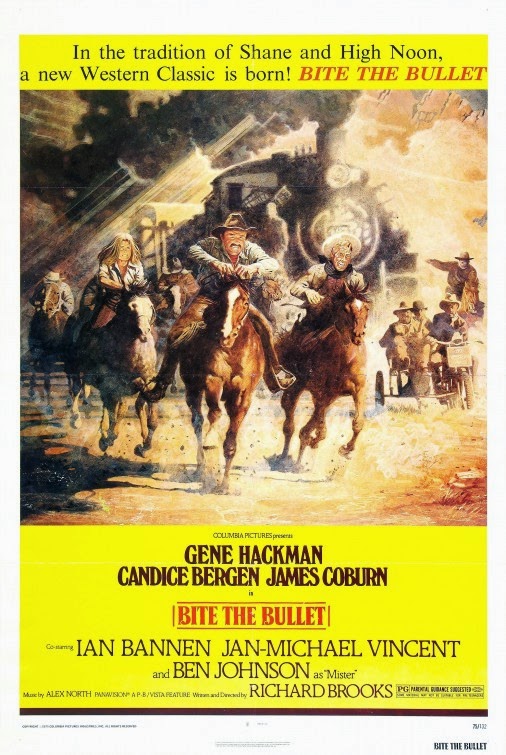
Think of the madcap all-star race films of the 1960's ("Its A Mad Mad Mad Mad World") transposed to the American West with a bit of 70's melancholy and that's exactly what one gets with the Richard Brooks film "Bite the Bullet". Starring James Coburn, Candice Bergen, Gene Hackman, Jan Michael Vincent, Dabney Coleman and Ben Johnson, the film takes place over the course of one week as the various riders race across 700 miles of tough terrain and barren desert. Along the way, they find their feelings for each other, mend old wounds and generally lament about the passing of the Old West... all stalwart topics in the highly revisionist era of the woozy 1970's. Yet "Bite the Bullet" overcomes its oft cliches and ambles into a deeply entertaining, consistently moving exploration of people against nature and the choices we make, good or bad.


12. Desorder (1986), directed by Olivier Assayas

Olivier Assayas' "Disorder" (1986), which marked his formal entrance into the film making world after several short films and a celebrated stint writing for the esteemed French film magazine Cahier du Cinema, holds the best attributes for a debut. Not only does it pantomime so many of his future themes and shooting style, but it denotes the strong voice of an artist struggling to capture the naive and halcyon days of youth... something he's been chasing all these years. It's also very Gallic. His young threesome of lovers (2 males and 1 female) begin in an idyllic sharing relationship and then discover the oscillations of time, society and their own careless decisions continually tug and pull them apart. All of this against the backdrop of a bustling 80's pop music scene and "Disorder" lives up to its raucous title. It also reveals that Assayas has the knack for a knock-out finale right from the very beginning.


11. This Is Not A Film (2011), directed by Jafar Panahi


Jafar Panahi's self exploration documentary shows what's best about Iranian film making- the ability to turn 'meta' at any moment and transform fiction into stunning reality. The first hour of the film documents Panahi's secluded lifestyle in his apartment- forbidden to make films and awaiting his final appeal decision from an Iranian court where he's facing 20 years for anti political film making. He acts out scenes from an unfinished script.... talks to his lawyers... deconstructs his own films he shows on TV... and then a casual meeting between the building custodian outside his door turns into an opportunity for Panahi to invest his time in someone else. Freedom of speech has been under attack for a few months now, and Panahi’s vision shows just how cathartic that expression can be.   


10. Finger of Guilt (1955)  and 9. The Go Between (1971)


Two of Losey’s finest films at opposite edges of his career are excellent buoys for the prevailing winds of his various themes. In “Finger of Guilt”, the blackmail of studio executive Richard Baseheart feels like Losey’s first real condemnation of the society that kicked him out (Hollywood) and its artificiality. “The Go-Between”, which garnered him the most acclaim and a Cannes winner, is a rapturous film that also clearly established the direction he would travel in the 70’s- namely a sharp departure from the psychological inner demons of his men and women of the 60’s to a more geopolitical and conflicted state of mind in the 70’s.


8. White Elephant (2010), directed by Pablo Trapero


Trapero usually makes films for the common man. Label it his Argentinean call to arms. “White Elephant” is no less damning of the Buenos Aires government and its stance on the barrios that congregate in poorer sections of the city. Working with his usual cadre of personnel (actor Ricardo Darin, his beautiful wife Martina Gusman and writer Alejandro Fadel), Trapero has fashioned an intimately epic portrayal of a small group of Red Cross workers trying to maintain health and decency in a shantytown on the verge of revolution. Personal emotions come into conflict with nationalist pride, and “White Elephant” builds to a shattering conclusion. It’s no surprise it’s a dour affair coming from Trapero, yet the film reaches heights of hope.


7. StakeOut (1958), directed by Yoshitaro Nomura

Like Nomura's later masterpiece, "The Castle of Sand" (1974), "Stake Out" uses the police procedural genre to touch on larger themes in life. In that film, the body of an unknown man uncovers a disastrous history of one family. In "Stake Out", the damnation is more intimate to one person. Ostensibly about two policeman canvassing the ex-girlfriend of a wanted criminal, “Stake Out” follows this narrative thread until the policeman confront the woman with devastating consequences. Nomura typically deals with the implosion of the present due to the past, and with “Stake Out”, the apocalypse is all too personal.


6. Beyond the Hills (2012), directed by Cristian Mungiu

Mungiu’s exploration of the collision between old world puritanical faith and the modern ‘age of me’ results in an austere, perfectly reasoned work. The new age lies in Alina (Cristina Flutur), an emotionally unbalanced (and probably lesbian) young girl who comes to visit her only friend, Voichita (Cosmina Stratan) living as a nun in a bare monastery in the hills of Romania. Unable to deal with her old friend’s newfound appreciation of God, a war of wills evolves between Alina and the priest, resulting in a dire conclusion. Based on a true story, “Beyond the Hills” furthers Mungiu’s patient storytelling, framing faces and bodies for maximum effect and allowing the natural energy of a scene to ebb and flow. Sometimes this allows us to get lost in the big eyes of actress Stratan as she helplessly watches her friend slide into despair and anger, and other times Mungiu consistently interrupts the gentle nature of the nun’s life while policemen, nurses, doctors and outsiders quibble about insignificant events in their own lives. Again, its this unharmonious crash of two worlds that gives “Beyond the Hills” its magnificent power…. None moreso damning than in the final scene. Alongside “4 Months, 3 Weeks and 2 Days”, “Beyond the Hills” firmly establishes Mungiu as a world class talent.


5. L'attentent (1972), directed by Yves Boisset

Like the best French thrillers, they move at their own pace, elevating scenario, dialogue and Machiavellian politics above action. Yves Boisset's "L'attentant" (aka "The Assassination" or "The French Conspiracy") is a clear example of this. There are some gunshots and chase sequences, but the ultimate pulse of the film lies in the complicated dynamics of how someone is set up and then the various machinations between state, police and general citizens conspire to see their plan to the end. Ripped from real-life headlines- the vanishing of Moroccan politician Mahdi Ben Barka- "L'attentant" mixes an international cast (Roy Scheider, Jean Seberg and every popular French male actor of the time) with a dialogue laden script whose serpentine authenticity feels just as modern today. I've caught a few other Boisset films, but none of them rise beyond cheapo French policiers quite like this one.


4. Anguish (1986), directed by Bigas Luna
Alongside Alexei German, Spanish filmmaker Bigas Luna was another world talent whose films I was introduced to this year with splendid results. “The best of his films was Anguish”, a bracing deconstruction of the slasher genre with something more important on its mind. And all of this is executed without a hint of sarcasm, irony or wink-wink fetishism. This is no 1980’s version of “Scream”. In fact, it plays the violence for dirty realism. Meta upon meta, “Anguish” takes several layers of voyeurism (people in a movie theater watching a horror movie that soon become part of their own horror movie) and spins a perversely weird and discomforting story. Utilizing a majority of his stock characters (including perennial Angel Jove), “Anguish” becomes a Chinese box of murders with the fictional film (art) imitating real life. Murders on-screen by the fictional son become intertwined with real life and Luna does a terrific job of mixing both time lines together so we (the real viewer in all this) become disoriented as to what’s real and what’s fictional. If the rest of Luna’s work doesn’t quite reach this apex, its only because “Anguish” is so genius.


3. My Friend Ivan Lapshin (1985), directed by Alexei German


Filmed in 1985 but not debuted until two years later at a Moscow film festival, "My Friend Ivan Lapshin" is German’s masterpiece. His visual schematic of cluttered, claustrophobic interiors and snow-laden exteriors, both barely able to contain the perpetual movement of bodies and the thoughts that spew from them, again represents German's snapshot of a particular place and time. Set in the mid 30's just before the Stalin purge of Russian Jews and the onslaught of World War 2, "My Friend Ivan Lapshin" takes its time in eventually focusing on the titular character, choosing to embellish mood and atmosphere before real narrative sets in. Like all of German's films, they can be hard to penetrate sometimes.... full of political allegory and off-hand lines of dialogue that explode with hidden anger or poetic jealousy. While "My Friend Ivan Lapshin" has its share of obfuscated moments, it's German's most accessible and tangible work.


2. Go Go Tales (2007), directed by Abel Ferrara

Ever since the early 2000’s, Ferrara’s work has become increasingly difficult to see, barely receiving theatrical distribution and ascertaining his financing from European companies. When even Ferrara himself states he doesn’t care if his films are viewed only through bit torrent sites, then we know there’s a problem. “Go Go Tales” certainly doesn’t deserve that fate. A consistently funny (Ferrara called it his first comedy) while maintaining a melancholy tempo, the film stars Willem DaFoe as a strip club owner desperately trying to keep it together through one fateful night. In between the bickering of his dancers (namely because they haven’t been paid in two days), the sudden appearance of his brother threatening to shut the place down and his landlord wailing for the rent, DaFoe is burning at both ends. Ferrara’s roving camera…. the dialogue that overlaps and seethes from every corner of the screen… and the encompassing presence of the almighty dollar perfectly rooted into the g strings of its dancers, “Go Go Tales” is an exhilarating effort. This is Ferrara’s best film since “The Funeral” a decade ago.


1. The Collected Works of Paolo Sorrentino, This Must Be the Place (2011), The Family Friend (2006) and The Consequences of Love (2004)

After falling head over heels with “The Great Beauty” last year, I made it my mission to track down other Sorrentino works. Some were easy and some not so easy, but well worth the energy. As a filmmaker, Sorrentino paints woozy, messy tapestries of life, love and memory that burrow into your head and stay there for days. Sean Penn searching for a Nazi death camp soldier in “This Must Be the Place“…. a cheapskate money lender who falls in love with a beautiful woman with stark consequences in “The Family Friend“…. a hitman spinning through a mid life crisis as he awaits his task in a European hotel in “Consequences of Love“- all generic storylines that Sorrentino spins vivaciously outward through musical cues, a roving camera and deadpan emotions that furiously unfurl towards the end of each film and become wholly original works of art. Sorrentino is the most exciting filmmaker working right now.


Friday, January 09, 2015

The Current Cinema 14.12

Wrapping up a few year end releases, things will look a little differently here in 2015. Select films will be featured on Dallas Film Now, a growing site run by Peter Martin, editor of the versatile TwitchFilm site. Peter has graciously accepted me as a contributor there. Surveying the cinematic landscape in the Dallas Fort Worth area will be an exciting challenge as we look at new releases and repertory screenings within the area.

This blog has been my home for a decade now, and, although a few films will now feature links to the new site, I still intend to maintain this blog as a lively and honest depiction of my cinematic exploration for years to come. Thanks to everyone for reading and here's to a productive 2015!

"American Sniper", reviewed here

"Inherent Vice", reviewed here. I really, really liked it. Haunted me for a week now. Not everyone's cup of tea, though.

Saturday, January 03, 2015

70's Bonanza: Natural Enemies

In the opening scene of Jeff Kanew's "Natural Enemies" (1979), the lead character named Paul Steward (Hal Holbrook) brazenly tells the viewer via interior monologue his plan for the upcoming day- which is go to work, take the train home and shoot his wife, three kids, then himself when she calls him down for dinner. From there, his misery-filled odyssey is the remainder of the film. He tries to rationalize his upcoming actions with several people he meets throughout the day, and one, a friend played by Jose Ferrer, sees the upcoming internal apocalypse and takes him out for a drink. There are moments when we feel the crisis may have been inverted. During lunch, he visits a brothel and arranges to be with five women at the same time. In keeping with the film's verbose patterns, Steward ends up talking more than screwing, lying naked and facing his prostitutes as if they were a Greek chorus, lamenting his loveless marriage and searching for acceptance in a life filled with little physical passion. In flashback, we see the deteriorating, almost spiteful marriage he shares with his wife (Louise Fletcher). Dealing with emotional problems of her own, neither wife nor husband are shown to be completely blameless. Basically, "Natural Enemies" is a trenchant assault on the nuclear American family of the late 70's. Scripted in a novelistic fashion, full of rambling stories by its characters, and unafraid to hold its unflinching gaze on Hal Holbrook's slowly dissolving moral core, "Natural Enemies" strikes at something raw. It belongs in the same category of disturbed nihilism that bore "Joe", "Taxi Driver", and Gaspar Noe's "I Stand Alone"- films that place the viewer firmly inside the hermetic, dangerous mind of its unhinged protagonist with little hope for escape.

Written, produced, directed and edited by Jeff Kanew, it's no surprise "Natural Enemies" has yet to find its way to mainstream home video distribution. Even for the liberal 70's, it's a dark and almost rotten experience from the beginning, but one that certainly shakes up the senses and challenges the viewer. It also feels strangely European in tone and pace. Privy to Holbrook's thoughts running underneath the entire film, we begin to wonder how much is true and how much is being sickly reflected through his own memories and unbalanced recollections. Case in point- towards the end of the film (and assuredly the film's finest scene) Holbrook takes the fateful last train ride home when its suddenly frozen on the tracks due to a fire up ahead. The emergency lights kick on and bathe him in a woozy, red light as the woman next to him (played by Patricia Elliot)  starts up a conversation. She talks about the lost attraction to her husband, writings in a diary that will never see the light of day, then plainly asks Steward to make love to her "right here right now".The consecutive abrupt cut shows Steward leaving the train as normal. Either this is one of the many unfulfilled fantasies banging around his head or the film is showing us the pervasive unhappiness seeping into the entire universe. Either way, its a gentle respite in the oncoming hurricane of emotional turmoil.

Wednesday, December 31, 2014

The Current Cinema 14.10

The Gambler

Rupert Wyatt's remake of the 1974 film of the same title features an extended scene where the film's gambling-riddled professor of literature James Bennett (played by Mark Wahlberg) expounds on the philosophy buried within Albert Camus' "The Stranger" to his class. The reason the shooter in the book only fired five shots was to save one bullet for himself. In essence, that sums up Bennett as well, continually pressing his luck with the underworld heads of illegal gambling and refusing to cower or make explanations when he cannot pay. It's an interesting theme which the film tries to 'literalize', but comes up woefully short. Part of the problem is Wahlberg himself. "The Gambler", written by the loquacious William Monahan ("The Departed", "Kingdom of Heaven") sounds alot smarter than Wahlberg is able to project, especially during his long winded classroom lectures where he manages to insult his students and then flirt with another (Brie Larson) all in the same breath. Jessica Lange, as his addled mother, fares much worse in her few opening scenes, playing her role just short of something camp. In fact, the only character in the entire film able to carry the script's pow-pow, hard edged rhythm is John Goodman as a high financier of money. Despite all that, "The Gambler" looks incredible, especially in its nocturnal crawl through the cavernous gambling dens of Los Angeles. All the ingredients are there for something special, but "The Gambler" just tries too hard.


The Imitation Game

Not that there's anything inherently wrong with "The Imitation Game", its just an incredibly safe and anesthetized version of Alan Turing's top secret mission in breaking Nazi Germany's enigma codes during World War 2. Full of easily digestable storylines which shuffle back and forth (courtesy of even intertitles just in case one can't keep up!) between his awkward duckling youth, the enigma code-breaking tensions of the war and his fall in 1951 via a nosy cop, "The Imitation Game" wears its prestige on its sleeve.


Hard To Be A God

Completing my retrospective of Alexei German films, "Hard To Be A God" is quite the career-capper. A project he'd wanted to make for over 30 years and dying before the fully realized project saw the shimmering lights of the big screen, it's an audacious, confounding experiment that I admire more than like. Clocking in at 3 hours and featuring an endless procession of first person handheld cinemetography, the film is ostensibly about the inability of knowledge to impact the present, or more specifically, the past. The idea in the film is that two scientists from the future travel back to Earth during the Middle Ages. The footage we see, recorded from small cameras on their foreheads, reveals a pulsating mass of deplorable conditions, people stacked together like sardines and floating in mud, blood, vomit and feces. German's set design is completely enveloping, and the overall tone descends into madness as the scientists simply react to the barrage of non sequiter dialogue, dense and unexplained mentions of certain people and toothless grins directly into the camera. It's probably an hour into "Hard To Be A God" when I decided to let go and allow the reigning chaos to be the guide. It's a unique experience, but one I never quite want to revisit.

Friday, December 26, 2014

Deep Stax: My Favorite Music of 2014

I seem to say this every year, but I listened to ALOT of music this year. Maybe it's the fact I finally accepted the viable and gratifying vehicle of online distribution for new music, making it easily consumable. I think this is the first year in m life when I didn't buy a single cd. YouTube, Spotify and Pandora opened up whole new worlds of music for me while my own resurgance with vinyl as a musical medium not only got me buying LP's again, but also prompted me to fill in the gaps of my already pretty large record collection with odd Van Morrison and Neil Young selections. I feel comfortable doing a music list now, sampling a wide variety of highly noted releases that have consistently cropped up on other 'best of' lists from worthy publications and online friends. My only conclusion- there's a lot of awful music out there as well that has people doing cartwheels that I just don't get. Regardless, that's what makes us unique as individuals and consumers.


10. Jessy Lanza- Hyperdub


Vocalist Jessy Lanza is new to me. I don't usually fall for this level of pop, but the hyperdub retuning of certain songs feels like an awesome throwback to the 80's. Her song "Strange Emotion" is a show stopper and the entire album is full of unique surprises and small miracles.

9. From Indian Lakes- Absent Sounds


Another introduction this year was Northwestern area band From Indian Lakes. Gaining acclaim when singer/songwriter Joey Vannuchi utilized MySpace (remember that!) to introduce some of his songs in 2009, the band formed soon after. “Absent Sounds”, their second album, lapses a bit into pop and even old-school ‘emo’ at times, yet its commitment to strong lyrics and a full sound won me over and had me playing it continuously throughout the year.


8. Interstellar soundtrack- Hans Zimmer


At least one soundtrack grabs hold of my senses each year, and this time it was Hans Zimmer with his "Interstellar" soundtrack. Yes, there was plenty of caterwaling about the sound mix during early scrennings of the film, but I heard none of this on any of my three trips to the theater in experiencing Nolan's masterpiece- even in IMAX. Zimmer's score is loud at times, but it never dulled the emotion of the film or its dialogue, instead creating a resonant and enveloping accentuation to the film.


7. Mogwai- Rave Tapes


Honestly at this point in the game, there's probably not a Mogwai release I won't love. Their latest, "Rave Tapes" doesn't break any new ground, but it carries on their tradition of low-fil chill and full post-rock sound that's made them famous.


6. Strands of Oak- Heal


As Strands of Oak, singer-songwriter Tim Showalter assembled a minimal supergroup, including Dinosaur Jr guitarist J Mascis, and put together this album. At its core, "Heal" is another brilliant confessional by a hugely talented songwriter (like Matthew Houck and "Phospherence" last year) that doesn't play by the rules of established 'groupdom', choosing to stitch together talented people whenever possible and almost guerilla produce their intentions. "Heal" succeeds on every account.


5. Sun Kil Moon- Benji


Talk about tortured confessional. Sun Kil Moon's (real name Mark Kozelek) sixth album under that nomenclature reaches intimate heights. "Benji" blazes through a range of staggered emotions, such as when he sings about the various deaths of family members by spontaneous combustion or the way the death of his grandmother elicited laughter in him due to the pent up stress. The album is honest and painful in ways that most music simply avoids.


4. Beck- Morning Phase


All I can say about Beck is that between this album and 2002's "Sea Change", he's quietly become the slacker Willie Nelson. We always need slacker Willie Nelsons.


3. Ought- More Than Any Other Day


A punk band that sounds like a cross between The Violent Femmes and Sonic Youth is the most apt description I can imagine for Ought. Their debut album is a packed swerve through a variety of sounds.... made all the more impressive when I read they created the album by just grooving in the studio and molding songs out of that improvisation. I look forward to whatever they create next.

2. The Afghan Whigs- Do the Beast


As a fan of the Afghan Whigs since I discovered thir landmark 1993 album "Gentleman" way back in the day, "Do the Beast" is the most happy reunion in ages. Leader/frontman Greg Dulli has always pissed around with various other groups, never straying too far from the Whigs patent sound, but "Do the Beast" is something special. There's a concept here as songs bleed into one another and lyrics repeat themselves in different songs. It also feels like an album from somewhere deep in the band, wandering around in the musical world for so long and finding their place together again.


1. The Antlers- Familiars


"Hospice" and "Burst Apart" hovered near the very top of my favorites in their respective years as The Antlers continually create transcendetal music. With "Familiars", they've outdone themselves, infusing each and every song with heartbreak, doubt and a strong sense of memory that feels like one can picture the people and places they sing about. When Peter Silberman says "well you're already home but you don't know where to find it. It's not a house we remember but a feeling outside it when everyone's gone and we leave the lights on anyway...." the magnitude of going home never felt so prescient. It's a towering masterpiece.


Monday, December 22, 2014

The Current Cinema 14.9

Electric Boogaloo

First and foremost, director Mark Hartley is a fanboy of the highest order, proven by his rip-roaring ode to ozploitation in "Not Quite Hollywood". I haven't seen "Machete Maidens Unleashed", but the minute I get the urge to delve into the underbelly of the Filipino film market, I'm sure it'll be the first source I crack open. Hartley's latest film, "Electric Boogaloo", charts the rise and fall of the once powerful Cannon Film company.... the production group that spawned a plethora of high voltage, emotionally simple movies on this young boy from the age of 10 to about 15. "The Last American Virgin", "Over the Top", "Missing In Action", "Death Wish 2", "American Ninja", "Cyborg"- films my friends and I snuck into the theater to see multiple times or caressed the VHS boxes on the shelves, intently conniving ways to persuade our parents to rent them. And its that connection with our youth that "Electric Boogaloo" strongly latches onto and won't let go. "Electric Boogaloo" isn't a good documentary on the most elemental level- it never raises any questions or challenges the conventions of the genre. It could easily be something produced by Cannon itself back in the day and dumped onto the Starz channel at 4am. Yet it's an insidious love letter to a certain type of film that holds a unique place in my formative film viewing years, and sometimes we have to look beyond the formal inadequacy of something and allow our ten year old self to revel in the sheer joy of not knowing any better.


Wild

Jean Marc Vallee’s film does the improbable…. it takes a well worn treatise on self exile and eventual self fulfillment and makes it feel vital and organic. A lot of this has to do with the source material by Cheryl Strayed, whose life and journey the film is based upon and performed magnificently by Reese Witherspoon. Deciding to escape her troubled life and hike 1000 miles from New Mexico to Canada, “Wild” intercuts her spontaneous and tough walk with the events that landed her in a dark place to begin with. Playing like a patchwork of flashbacks, conversations, moods, memories and sounds that ebb and flow brilliantly into a stream of conscious-like scrapbook, the film coalesces into a cathartic experience. As he proved with “Dallas Buyer’s Club”, Vallee expertly handles the material and elicits vivid portraits from even the smallest secondary roles. But even more than that, “Wild” is a moving exploration of why we sometimes need to fall off the grid and allow life to catch us somewhere below.

Saturday, December 13, 2014

Performances of the Year.... So Far (the guys)

As compared to the ladies so far this year, I have to admit its been lackluster for the guys. Still, here are five performances that caught my eye. This list excepts my favorite performance of the year (and hopeful Oscar winner) Michael Keaton in "Birdman".


Bill Hader in "The Skeleton Twins"

As a suicidal homosexual going home to reunite with his sister (an equally good Kristen Wiig), Hader avoids the pratfalls of indie quirkiness and creates a full bodied, conflicted presence. We all knew Hader could make us laugh, but who knew he had this performance in him?
 
 
JK Simmons in "Whiplash"

JK Simmons has long been one of my very favorite "character" actors and in "Whiplash", he finally gets the opportunity to take a bit of the center stage as a misogynistic, brutally honest and downright ferocious jazz music teacher who pushes one student a bit too far. It's a showy performance, yes, but one that Simmons inflects with every inch of his muscular arms and shaven head.
 
 
Benecio Del Toro in "Jimmy P."

It's encouraging to see Arnaud Desplechin's early year release "Jimmy P; Psychotherapy of a Plains Indian" popping up on a few best of lists. It's a wonderful little film, populated by a series of one-two discussions between Del Toro and doctor Matthieu Almaric. Del Toro gives a quiet, focused performance of a man struggling with PTSD before anyone really knew what it was, enhanced by his nondescript status as an American Indian. The final scene between Del Toro and his daughter is a knockout of internal acting and just shows how great Del Toro has been for so many years now.


 Mark Ruffalo in "Foxcatcher"

In a film where anyone of the three main performances could be cited as terrific, it's Ruffalo who resonated most profoundly with me. Another highly internal performance (seeing the common denominator with this list), Ruffalo acts with his eyes, body language and almost hushed sense of presence as the older brother to Channing Tatum. "Foxcatcher" builds to a violent finale, and its Ruffalo who made me care the most in this triangle of misplaced patriotism, jealousy and decaying sense of self importance.
 
 
Billy Bob Thornton in "The Judge"

All hail the return of Billy Bob! It feels like Thornton has been missing for so long on the silver screen, although IMDB shows he's just been pretty busy on the small screen (and "Fargo" the tv series feels like something major I've been missing). His role as the prosecuting attorney in "The Judge" is a small one, bookended by a peculiar water flask and deliberate tone of non empathy. Yet, anytime he was on-screen, the film felt infinitely more imprtant.


Sunday, December 07, 2014

The Alexei German Files: My Friend Ivan Lapshin

After "Trial On the Road" (1971) and "Twenty Days Without War" (1977), two films that dealt with the experience of war (or, more specifically the absence of it in one), filmmaker Alexei German's next project was delayed almost ten years. Filmed in 1985 but not debuted until two years later at a Moscow film festival, "My Friend Ivan Lapshin" may be his masterpiece. German's visual schematic of cluttered, claustrophobic interiors and snow-laden exteriors, both barely able to contain the perpetual movement of bodies and the thoughts that spew from them, again represents German's snapshot of a particular place and time. Set in the mid 30's just before the Stalin purge of Russian Jews and the onslaught of World War 2, "My Friend Ivan Lapshin" takes its time in eventually focusing on the titular character, choosing to embellish mood and atmosphere before real narrative sets in. Like all of German's films, they can be hard to penetrate sometimes.... full of political allegory and off-hand lines of dialogue that explode with hidden anger or poetic jealousy. While "My Friend Ivan Lapshin" has its share of obfuscated moments, it's German's most accessible and tangible work.


Playing out in a three part episode, half remembered by an off-screen voice over of a young child now grown into a man, "My Friend Ivan Lapshin" introduces us to its array of characters as a mixture of families and policemen living in a communal household. Boisterous and playful, we soon me Ivan Lapshin (Andrei Boltnev), the most respected and even tempered of the group. The middle section of the film introduces the relationships in Lapshin's life in Khanin (Andrey Mironov), a writer quietly reeling from the death of his wife and an actress named Natasha (Nina Ruslanova). Lapshin has a crush on Natasha, but is soon rebuffed by her when its discovered she's already started an affair with Khanin. One would imagine the potential for jealousy and third act retribution would kick into high gear after this revelation, but it's ignored by German and even has Lapshin and Khanin continuing their friendship into the final act where Lapshin invites Khanin with him on a manhunt for a group of wanted criminals. Its the final act, filmed in a staggering and tense-ridden long take, as the cops descend through a fog into a small village looking for the criminal that "My Friend Ivan Lapshin" coalesces into a prominent work. By this point, we care so deeply for Lapshin and the enveloping atmosphere of 1930's Russia that the spectre of "something big" lingers over the entire film. And even in that regard, German has a narrative surprise for us.

Viewed within the context of his larger body of work, "My Friend Ivan Lapshin" fits neatly into his themes of nationalism and scrapbook-like remembrances from his writer father Yuri. Two small portions of the film inexplicably turn into color stock, fashioned like old polaroid photographs burned into one's memory. Also, the dichotomy of society/war/lawfulness meeting the artificiality of a staged play was a large part of "Twenty Days Without War". Both films also posit a doomed relationship between the drifter/warrior and an actress.... almost as if the two columns of life can never fully mesh. And equally doomed is everyone in the film. With the sweeping changes we know from history on the horizon, "My Friend Ivan Lapshin", like Ingmar Bergman's "The Serpent's Egg" or Haneke's "The White Ribbon", is surepptitously about the passing of a generation... an observation made innocently by the final (color) image and a voice decrying the amount of traffic and tram lines encasing the city. There are no more Ivan Lapshins left.


Thursday, December 04, 2014

The Current Cinema 14.8

Foxcatcher

While simmering tension and dread is there right from the beginning in Bennett Miller’s true tale “Foxcatcher”, the resounding impact from the film remains its stillness. Many scenes are shrouded in quiet, almost hushed conversations, all of which makes the emotional explosion towards the end that much more shocking. Tracking the doomed relationship between wrestling brothers Mark and Dave Schultz (Canning Tatum and Mark Ruffalol) and wealthy Olympic supporter John E. DuPont (Steve Carell), “Foxcatcher” is a dense study in repressed emotions from all sides. While Carell undergoes the most physically transformative of the roles (and he is really, really good), the best acting comes from Tatum and Ruffalo. With statures like apes and lacking the ability to fully express their sentiments outside of casual positive reinforcement or the comfort of each other’s body in practice, “Foxcatcher” soon becomes a pointed attack on the ‘haves’ versus the ‘havenots’. This widening gulf eventually swallows everyone and director Miller orchestrates the quiet apocalypse with deft precision.

Citizenfour

“Citizenfour”, directed by Laura Poitras, is a documentary of prescient timing. Not only was Poitras in the right place and time to document and record whistleblower Edward Snowden’s journey through the media minefield, but “Citizenfour” fits in snuggly with our current preoccupation of governmental distrust. I’m not saying it’s a perfect film, but I can’t imagine a more timely release for a real life paranoid expose like it. Receiving cryptic emails from Snowden almost eight months before coming out with his classified NSA documents concerning the level of privacy piracy by the government, Poitras builds her film around the hotel room conversations she and Snowden (and journalist Glenn Greenwald) recorded. These conversations- in which justification, anxiety and some doubt creep into Snowden- establish the beating pulse of the film. Less interesting are the bits of context mixed around the interviews, namely hearings on privacy invasion and talking head media conferences. Included, I’m sure, to educate the general viewer on the rampant encroachment of industry upon personal privacy like a visual Wikipedia, I felt them a bit redundant and ultimately a remedial effect for the film.

The Homesman

Back in the director-actor seat again, Tommy Lee Jones tackles the western with “The Homesman”, a genre that yielded strong results a few years ago with his “The Three Burial Of Melquidas Estrada”. Where that film was lean, savage and complex, “The Homesman” struggles to find and maintain a tone from the very beginning. Hilary Swank stars as Marry Cuddy, a woman alone in the Nebraska territory who takes on the mission of transporting three mentally unstable women to Iowa. Drifter and general malcontent Jones comes into the picture when Swank saves him from his impending death and charges him with helping her on the journey. The imbalance between the very dark, dream-like existence of the three crazy women and Swank and Jones’ almost cartoonish relationship continually makes “The Homesman” a puzzling effort. Like a character out of a Peckinpah western, Jones embodies his George Briggs as heartless, misanthropic and a bit cowardly, yet we’re expected to see the ultimate good in him as the credits roll. Equally schizophrenic is Swank’s Marry Cuddy… fiercely independent in the way she steps up into the role of woman’s savior but secretly yearning for nothing more than the modest subjugation of marriage. Sketching characters with these broad strokes of emotional complexity is never a bad thing, but “The Homesman” lacks any real depth in its exploration, especially in a third act twist that feels forced in its corn field journey of martyrdom.

Tuesday, December 02, 2014


David Ehrlich kicks off the end of the year extravaganza with another of his beautifully composed and symbiotic Top 25 of the year in film. I so love these things.

Saturday, November 29, 2014

The Alexei German Files: Trial On the Road

Originally filmed in 1971 but not released until 1985 thanks to those awesome censors that the USSR had in place during this time, Alexei German's sophomore film deserves to be seen no matter when. Vladimir Zamanski is Lazarev, a Russian soldier who, at one point towards the end of the war, was captured by the Germans and forced to work with them. A unit of partisan soldiers- comprised partly of war weary veterans and fresh faced village boys- recapture Lazarev and place him under arrest, not sure whether he can still be trusted. It's only when the unit is faced with the huge task of re-routing a train supply line that they place their faith in Lazarev's new found patriotism. Filmed in German's usual method of stark black and white, "Trial On the Road" expresses both the physical and psychological pressures on men during World War 2. The dynamic between Lazarev and the partisans is presented from both vantage points. We can understand how each side is supremely distrusting of the other. And right up to the violent ending, we're never quite sure if Lazarev will be true to his intentions of helping the partisans or not.

Like the best war films of Russian cinema, "Trial On the Road" excels in presenting the elemental nature of war. Sight and sound are magnified aspects of the experience, such as the hissing noise a spent machine gun makes when it hits the snow covered ground or the completely terrifying image of a German death patrol suddenly emerging in front of a partisan soldier during white out conditions. Filmmaker German ensures these small details are etched into our memory and "Trial On the Road" creates a host of them.

Tuesday, November 25, 2014

An Appreciation: Alejandro Jodorowsky


Fando and Lis  (1968) ***- The entry point to Jodorowsky’s cinema is a difficult one. Not too far removed from one of those awful looking student films of the late 60’s, there is something deeper in this parable about a man and paralyzed woman making an arduous journey over a dirty, barren, rock-filled landscape in search of the mythical city of tar. The dynamic between Fando (Sergio Klainer) and Lis (Diana Mariscal) begins as one of child-like affection and love between them, but before long, they become squabbling, pitiless partners. Along the way, they meet and interact with a host of unusual people in what I feel is Jodorowsky’s main theme of the film- the repercussions of external sources to ultimately sour a genuine relationship. If nothing else, this is a theme he’ll be chasing in his unique films for the next 40 plus years.

El Topo (1970) ***½ - A western of dazzling subversion, toying with the very nature of the genre through religious iconography and avant garde hallucinations. Jodorowsky himself stars as the unnamed gunslinger, traveling through the desert first as blood letter and then eventually as the savior to a village of under-privileged and deformed people.  While “Fando and Lis” wants to provoke and challenge, “El Topo is Jodorowsky maturing as a filmmaker, honing his distinctive eye and collapsing so many themes into a compact work. If I don’t like it quite as much as his other work, it’s only because the first half (where he meets and fights a successive group of master gunfighters) feels a bit redundant before hitting its perverse stride in the second half.

The Holy Mountain (1973) **- With “The Holy Mountain”, Jodorowsky’s mythological clap-trap begins to parody itself. A man, seemingly to be Christ, finds his way to a magical tower where its keeper (Jodorowsky himself) takes in the man and introduces him to nine other powerful individuals from each planet of the galaxy. Together, they embark on a journey to find immortality on the legendary holy mountain. Mordantly funny at times (especially in each vignette showcasing the history of the nine chosen) and downright bonkers at others, “The Holy Mountain” seems to be Jodorowsky at his most playfully contempt. The idea of modern greed and technology sullying our lives is well taken, and its probably the perfect film for the dying gasp of ‘hippie-dom’, but too much of it feels like provocation for the sake of LSD inspired intellectualism.

Tusk (1980) *- After his two midnight movies, Jodorowsky re-emerged eight years later with a much more accessible effort. Going in a new direction can be admirable at times, yet “Tusk” only reveals Jodorowsky’s shaky grasp on grounded acting and linear storytelling. The idea of dual nature between man and animal is seized upon at the very beginning when a baby elephant and girl Elise (Cyrielle Clair) are born on the same day. As they grow up, they both deal with various inhumanities, including a group of tusk traders wanting to kill the elephant and Elise’s moral contempt for her father’s empirical landowning practices as a British man in India. In typical Jodorowsky flair, there are elongated scenes of animal cruelty and over-the-top villainy that hammer home their message, but the film fails to elicit any real strong emotions for either man or beast. Not available on home video.

Santa Sangre (1989) ****- An art house slasher film populated by circus rejects. That twitter-like description of the film doesn’t do it’s underlying beating heart justice. Jodorowsky’s own son Axel stars as Fenix, the son of a circus couple who endures a nightmarish childhood when mom catches ringleader husband cheating. Mom is then murdered and dismembered by husband as son watches. It’s no surprise he has troubles adapting to a normal life. Underneath the sordid themes, “Santa Sangre” becomes a twisted love story as well when Alma (Sabrina Dennison), a childhood friend to Fenix, resurfaces and tries to help. Jodorowsky touches on universal themes of unrequited love and childhood psychosis to spin a macabre yet moving fairy tale of sorts. And for all his pop sensationalism, Jodorowsky still has the ability to aggressively comment on all things worldly such as the funeral of an elephant turning into a meat-filled scavenger hunt for the onlooker peasants.

The Rainbow Thief (1990) **½- Virtually disowned by Jodorowsky, “The Rainbow Thief” was his shot at mainstream filmmaking with a modest budget and a name cast. The results are far from disastrous- in fact some of Jodorowsky’s personal touches remain on the film even through his restrictions- and “The Rainbow Thief” emerges as a unique fable with a dash of magic realism for its finale. Starring Omar Sharif as a vagrant and petty thief, he meets Meleagre (Peter O Toole)… a man who has walked away from his family’s fortune and chosen to live without propriety since he overhead the petty squabbles of his family over the comatose body of their patriarch (Christopher Lee, glimpsed only in the wild and excessive opening). The two men form a bond and live underground together, plotting to one day re-emerge and lay claim to the family’s fortune. But the vagrant’s mixed dealings with various lowlifes, pimps and of course midgets, continually gets in the way of that. A bit tone deaf at times, with certain scenes carrying on far too long, the weaknesses of Jodorowsky are glaring. But there’s a weird sweetness to the whole film, never venturing into dark territory or avant garde malaise. Never even released in American theaters and given only a marginal European release, “The Rainbow Thief” deserved a much better fate than that. Not available on DVD.

The Dance of Reality (2013) **- Autobiographical and intensely personal, perhaps “The Dance of Reality” is Jodorowsky’s version of “8 ½”. Split into two distinct portions, the first half deals with a young man’s strict childhood with his father. Since the father is played by Jodorowsky’s own son, Brontis, and features himself in certain ghost-like monologues, the levels of ‘meta’ increase rapidly. The second half follows the father as he embarks on a journey to find himself after he realizes the totalitarian regime that controls his life and his unhappy relationship with his family. How Jodorowsky chooses to fictionalize his obviously painful childhood is interpretative… and looking over his long career, its no surprise “The Dance of Reality” is an amplified excursion of half awake dreams, weird characters (including his mother who sings all her dialogue in opera) and allegorical sight gags. But, the episodic nature of the film continually works against the momentum it occasionally establishes and never fully engaged me.