The Appleseed cast- FLTGS
Has the Internet ever been so enjoyable than it is now? Blogs, interactive services like MySpace and now YouTube, a place where you can search for a relatively little-known band named The Appleseed Cast and get 1400 video clips? So, here's a clip of one of the many new bands I'm championing right now. I'll be seeing them live next Saturday in Denton.
Sunday, July 16, 2006

Friday, July 14, 2006
Mann Does It Again?
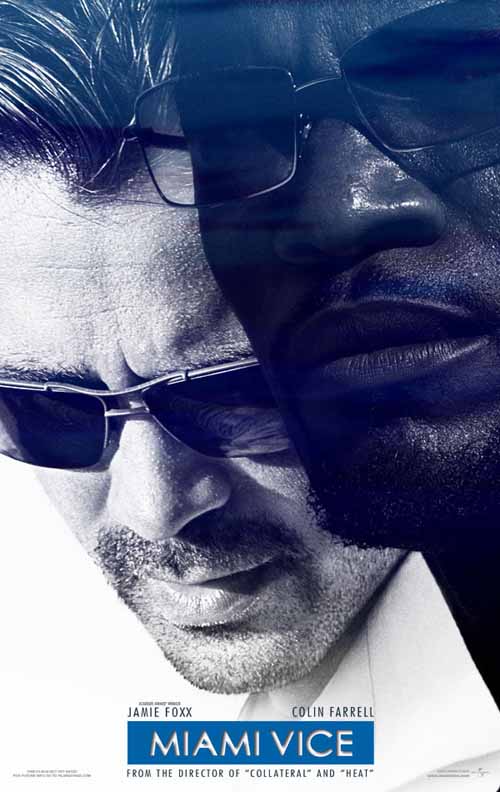
The early reviews are beginning to come in on Michael Mann's "Miami Vice". First, there was the strong buzz from Jeffrey Wells on his blog. Then, David Poland weighed in with his opinion. Now, Ain't It Cool News has another compliment to Michael Mann's latest digital crime thriller. Since early May, this film has been touted as the film of the summer for us serious minded film geeks. And who in a million years would've thought that a film entitled "Miami Vice" would get the blood boiling? But the bottom line is that Michael Mann (outside of Martin Scorsese and Paul Thomas Anderson) is a singular presence within modern filmmaking whose films oooze style, mood and exhilerating grace. Go back and watch the first 20 minutes of "Ali", as music, jump cuts and nervy handheld camerawork build to an electric crescendo. Pick any moment out of "Heat" or "The Insider". Stare at the beauty of the possibility of digital film in "Collateral". And for the really adventurous (as well as seeing where the roots of a character like Neil McCauley stems from) go back and watch Mann's 1981 mini-masterpiece "Thief" starring James Caan and Willie Nelson. That's right... Mann had the foresight to recognize the acting prowess of Nelson back in 1981. It's hard not to get excited over a new Mann film when you study his ouevre. Every film nails time and place perfectly. And, for the sheer logistics of a shoot-out, no one films things quite as brazenely and honestly as him. July 28th. Mark it on your calendar.
Wednesday, June 28, 2006
One of the Greats

Antonioni's "The Passenger
Michealangelo Antonioni’s “The Passenger”, originally released in 1975, was re-issued in theaters late last year. It’s clear that the film’s leading protagonist, Jack Nicholson, holds a special place in his heart for this existential thriller since he was the primary force behind the film’s re-release (and how often does an actor labor for something like that?). Filmed in languorous long shots that give more precedence to space than the emotions of the actors, this was Antonioni’s bid to capsulate his artistic, European senses into a somewhat commercially viable American vehicle. It succeeds on both levels- carrying forward Antonioni’s penchant for static, internalized filmmaking while never losing sight of the fact that it’s a minor league thriller with big actors (Nicholson and his unnamed girl, Maria Schneider). Nicholson plays David Locke, a journalist working in Northern Africa. After a long search through the desert for someone (or something) that never materializes, Locke returns to his hotel room and finds his neighbor, David Robertson (Charles Mulvehill) dead of a heart attack. Locke inexplicably changes identities with the man, keeping his appointments across the globe and leaving his old life behind. Locke soon discovers that he’s traded places not just with an ordinary man, but a man whose job is to sell guns for various organizations. Soon, Locke finds himself hunted both by his past (in the form of his wife once she receives his things and realizes his passport has been doctored) and Robertson’s shady business partners. Along the way, he enlists the help of a young girl (Schneider), fresh from he role in Bertolucci’s “Last Tango In Paris”.
Sounds like a globe-trotting thriller right? The glory of Antonioni’s film is not in the plot mechanisms…. Very little happens during certain parts of the film and there’s not a single gun fired. The real purpose of the film is to propagate Antonioni’s lust for the inexplicable. Like previous films in his career, there’s no reason for Locke to do what he does. He’s as well adjusted and popular as Lea Massari in “L’ Avventurra” (1960), Antonioni’s main female character who disappears 30 minutes into that film. The remainder of “L Avventurra’s” 2 hours is devoted to the search and bonding of this girl’s friends. In “The Red Desert” (1964), a woman (Monica Vitti) wanders around the city and engages in a tryst for no reason other than her angst in a provincial marriage. There are no outward motivations in “The Passenger” either. Antonioni elicits a fairly muted performance from Nicholson, giving him some passion in the form of Maria Schneider, but even then he cuts beyond their sex scene to expose them lying naked in bed in long shot. “The Passenger” cuts at much deeper ideas- space and time (there is not a single wasted shot in this film, each image opening up and out to give us glimpses of people scurrying about at the edges), frustration, and certainly the basis of identity. The fame of “The Passenger” is in the final five minute shot, which tracks slowly through a barred window and out into a dusty courtyard as every player in the game of Locke’s life collides in a quiet, unsettling moment. But even greater images, to me, include the overhead shot as Nicholson rides over a lake in a wire trolley cart and the traveling shot as Schneider asks, “Why do you run?” and Nicholson replies “turn around and look” and the car speeds down the road, the camera fixed on the trees and road that darts away behind them. There is more truth (and motivation) in that 10 seconds than a lot of films muster in 2 hours. This is one of the best films of the 1970’s.
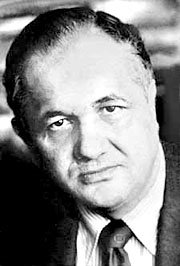
The picture is not a trick. I doubt many people will know who this is. I just stumbled across this tonight. Film lovers can now geek out. The man is Andrew Sarris, respected film critic for the New York Observer and author of the invaluable book called "The American Cinema" which put forth, for American audiences in the late 60's, the radical French theory of director as "auteur". I've long respected this writer's opinions and outlook, and now we have the above collection of his Top Ten lists for the last 30 or so years. If anyone has seen more than 50% of the films on his lists, you truly are cool.
Sunday, June 18, 2006
Memories of Music
Much more than films, music is a form of entertainment that seems critic-proof. There are a few genuine turkeys produced every year (such as when you have Jennifer Love Hewitt or Robert Downey Jr. belting out classics), but the state of the music industry is so varied and so independent, that you have certain types of music that will find an audience no matter what. Case in point- check out metacritic and compare the ratings of all new compact disc releases versus new movie releases. See how the green of music far outweighs the yellows of film? If you release a four hour film that documents the mating rituals of a Brazilian hog, then it’ll get marginal distribution in 25-30 cities on 1 art house screen- which is a virtual gravesite for any film. But if a certain band makes a marginal breakout within the scene, they have gigs, they start touring with more well known bands and they get their cd printed into, maybe, 20,000 copies. And, this band is guaranteed airplay within a radio station that tailors to the tastes of a given audience. Unlike the film, the audience doesn’t have to discover this artwork through a 35 mile trek to the local art-house, they simply have to turn on a predisposed radio station (most likely set in a “favorites” mode) and have this new track of music delivered within the confines of a genre of music those appeals to the listener. And the joy of discovering a new musical talent is often more overpowering than discovering a new filmmaker because the music can travel with you. So, what does all this lead up to? I’m having a heyday right now churning through new music with ease. There is so much out there, buried online (another positive fact for the music industry, myspace and online music services give any computer owner a veritable Ipod) and elsewhere.
I can honestly say that I arrived at music much earlier than I did with movies. To this day (like everyone) I can think of a given song and immediately conjure up an image in my life to go along with that song. Road trips with friends, house parties and clubs- music truly does give us a soundtrack to life. It effectively dog-ears time and space, distilling and enhancing an emotion or a moment with rhythmic vulnerability. Two radio stations, both now sadly defunct, played a formative role in my life- Z Rock, 98.9 out of Austin, Texas and The X, 103.9 out of College Station. Z Rock was one of those late 80’s/early 90’s stations that changed with the tide once alternative rock came in. But in those 4-5 years that I listened to Z-Rock, I was exposed to hard rock and heavy metal that wallpapered the drinking nights at my friend Craig’s house. People poured in and out, but the only constant was Z-Rock. This is where I first heard the likes of Metallica, Pantera, Helmet, 80’s European heavy metal… much like MTV’s old “Headbanger’s Ball”, Z-Rock was the station that growing boys like myself listened to and imagined we were much tougher than we really were. Then, as I grew older and learned that music is sometimes more than adrenaline and screaming (not to demure the bands I just listed), I found my way to The X out of College Station. I remember finding this station by mistake. My job through school was in a retail store where we’d often clean up and stay until 11 or midnight. I’d often spend much more time adjusting the rabbit ears of the radio, desperately trying to affix a signal from outer space that would cut through the electrical wasteland of this department store rather than the tasks of cleaning at hand. And I quickly discovered that the radio worked much better posited on top of a box, peering out of the metal roofed toy stockroom than inside the store! And then, I could get 3 signals. Two country stations and The X. The music that streamed from the speakers was, in a humble word, life-altering. This is where I heard alternative and indie rock from a slew of bands that I’d never heard before. This is where I learned about The Pixies, The Toadies, Weezer, Afghan Whigs, The Cranberries, Bush, At the Drive In, They Might Be Giants and a host of other semi-marginal experimental bands who are now either dead, regarded as godfathers-of-indie-rock, or managers at Taco Bell. This is where I learned that music can be transcendent and edgy and a little different, full of odd vocal inflections, out of key and fuzzy, or simply more complex. Z-Rock and The X taught me a lot about music, and ultimately, about life. And when I hear The Cranberries “Zombie”, a flood of images rushes back to me. Good or bad, it’s always nice to reflect on younger times when you could run faster, jump higher and your stomach was a little flatter. And that’s the real power of music. The power to transform and transport. There is still great music being made, you just have to dig a little deeper. There are no more X’s and Z-Rock’s to serve it up. Everything has become more corporate. I regularly listen to 102.1 The Edge here in Dallas, and while the station tries hard, I can only take so much Green Day and Staind. The reaffirming factor about the Edge is the Sunday night line-up that features “The Adventure Club” from 6-9 p.m. in which they give springboard to a lot of great independent bands from across the country. Then, at 9 p.m. “The Local Show” gives musical props to local bands in the Dallas-Fort Worth area. These 4 hours on one night a week will never forgive the other 164 hours spent on mind-numbing Top 40 hits, but at least it shows that, sometimes, musical originality will explode on the radio. You just have to know when to listen. So, massive tangential conversations aside, here are a few of the new bands I’ve stumbled across:
The Appleseed Cast- “Peregrine”- probably the best album I’ve heard so far this year. This quartet from Kansas, featuring layered sounds of guitar and distinctive vocals, mesmerize from start to finish. If nothing else, a comment on the cd cover should inspire anyone to pick it up, calling The Appleseed Cast America’s closest thing to Radiohead. Check out a sample of their work here
Wolfmother- self titled- The likeability of this band depends on how much retro 70’s hard rock ala Led Zeppelin and Argent one can handle. For my tastes, they rock. This is nothing groundbreaking, but the vocals are strong and Wolfmother are a band who understand their roots without sinking into self mockery or condescension.
Black Tie Dynasty- “Movements”- A local Dallas Fort Worth band that are just now beginning to get some airplay with their single “Tender”, their sound is eerily reminiscent of Depeche Mode, and that’s not a bad thing. The rest of “Movements” is fantastic stuff. I need to check out their earlier stuff.
She Wants Revenge- self titled- If you’ve listened to Interpol, you’d quickly jump to the conclusion that She Wants Revenge is a splinter of that band’s members. Borrowing that band’s driving guitar style and somewhat flat vocals that passes as spoken word music at times, She Wants Revenge is something different and just beginning to make a mark in the musical world. Don't let the "emo" look fool you.
I can honestly say that I arrived at music much earlier than I did with movies. To this day (like everyone) I can think of a given song and immediately conjure up an image in my life to go along with that song. Road trips with friends, house parties and clubs- music truly does give us a soundtrack to life. It effectively dog-ears time and space, distilling and enhancing an emotion or a moment with rhythmic vulnerability. Two radio stations, both now sadly defunct, played a formative role in my life- Z Rock, 98.9 out of Austin, Texas and The X, 103.9 out of College Station. Z Rock was one of those late 80’s/early 90’s stations that changed with the tide once alternative rock came in. But in those 4-5 years that I listened to Z-Rock, I was exposed to hard rock and heavy metal that wallpapered the drinking nights at my friend Craig’s house. People poured in and out, but the only constant was Z-Rock. This is where I first heard the likes of Metallica, Pantera, Helmet, 80’s European heavy metal… much like MTV’s old “Headbanger’s Ball”, Z-Rock was the station that growing boys like myself listened to and imagined we were much tougher than we really were. Then, as I grew older and learned that music is sometimes more than adrenaline and screaming (not to demure the bands I just listed), I found my way to The X out of College Station. I remember finding this station by mistake. My job through school was in a retail store where we’d often clean up and stay until 11 or midnight. I’d often spend much more time adjusting the rabbit ears of the radio, desperately trying to affix a signal from outer space that would cut through the electrical wasteland of this department store rather than the tasks of cleaning at hand. And I quickly discovered that the radio worked much better posited on top of a box, peering out of the metal roofed toy stockroom than inside the store! And then, I could get 3 signals. Two country stations and The X. The music that streamed from the speakers was, in a humble word, life-altering. This is where I heard alternative and indie rock from a slew of bands that I’d never heard before. This is where I learned about The Pixies, The Toadies, Weezer, Afghan Whigs, The Cranberries, Bush, At the Drive In, They Might Be Giants and a host of other semi-marginal experimental bands who are now either dead, regarded as godfathers-of-indie-rock, or managers at Taco Bell. This is where I learned that music can be transcendent and edgy and a little different, full of odd vocal inflections, out of key and fuzzy, or simply more complex. Z-Rock and The X taught me a lot about music, and ultimately, about life. And when I hear The Cranberries “Zombie”, a flood of images rushes back to me. Good or bad, it’s always nice to reflect on younger times when you could run faster, jump higher and your stomach was a little flatter. And that’s the real power of music. The power to transform and transport. There is still great music being made, you just have to dig a little deeper. There are no more X’s and Z-Rock’s to serve it up. Everything has become more corporate. I regularly listen to 102.1 The Edge here in Dallas, and while the station tries hard, I can only take so much Green Day and Staind. The reaffirming factor about the Edge is the Sunday night line-up that features “The Adventure Club” from 6-9 p.m. in which they give springboard to a lot of great independent bands from across the country. Then, at 9 p.m. “The Local Show” gives musical props to local bands in the Dallas-Fort Worth area. These 4 hours on one night a week will never forgive the other 164 hours spent on mind-numbing Top 40 hits, but at least it shows that, sometimes, musical originality will explode on the radio. You just have to know when to listen. So, massive tangential conversations aside, here are a few of the new bands I’ve stumbled across:
The Appleseed Cast- “Peregrine”- probably the best album I’ve heard so far this year. This quartet from Kansas, featuring layered sounds of guitar and distinctive vocals, mesmerize from start to finish. If nothing else, a comment on the cd cover should inspire anyone to pick it up, calling The Appleseed Cast America’s closest thing to Radiohead. Check out a sample of their work here
Wolfmother- self titled- The likeability of this band depends on how much retro 70’s hard rock ala Led Zeppelin and Argent one can handle. For my tastes, they rock. This is nothing groundbreaking, but the vocals are strong and Wolfmother are a band who understand their roots without sinking into self mockery or condescension.
Black Tie Dynasty- “Movements”- A local Dallas Fort Worth band that are just now beginning to get some airplay with their single “Tender”, their sound is eerily reminiscent of Depeche Mode, and that’s not a bad thing. The rest of “Movements” is fantastic stuff. I need to check out their earlier stuff.
She Wants Revenge- self titled- If you’ve listened to Interpol, you’d quickly jump to the conclusion that She Wants Revenge is a splinter of that band’s members. Borrowing that band’s driving guitar style and somewhat flat vocals that passes as spoken word music at times, She Wants Revenge is something different and just beginning to make a mark in the musical world. Don't let the "emo" look fool you.
Sunday, June 11, 2006
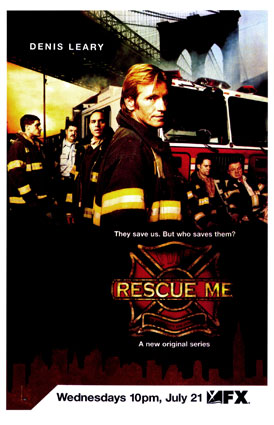
Anyone who remembers the short-lived televison series called "The Job", which ran on ABC for only 6-8 episodes during the spring of 2001, will fondly recall these moments that gravitated Denis Leary from stand up comedian to full bodied actor, complete with venemous diatribes and side splitting humor. Each episode of this 30 minute series was a mini-masterpiece of situational comedy. The times spent frentically bouncing between his wife and girlfriend and the infamous episode where Leary is trapped in the restroom of a police station with a crazed gunman solidified Leary's conviction of creating a new kind of televison comedy- one without strict rigors of plot. The fun within "The Job" were the tangential conversations that carried on for 3-4 minutes and the show's (almost) disdain for plot resolution. At times, nothing happened in this show, but it was funny as hell. Now, Leary and producer Peter Tolan are back with "Rescue Me" on FX. Now in it's third season, I didn't catch on to this show until late last year. Like so many fantastic marketing coups in the home video market, FX wisely released the first 2 seasons on DVD shrewdly before the season's new episodes, giving us slackers the opportunity to catch up before a new barrage of humor and emotion were layed out on the screen. And those recurring faces from "The Job"- Lenny Clarke as his uncle Teddy and Diane Farr as Laura Miles, the first female firefighter in the house- immediately signal that "Rescue Me" is more than a new series, but a fresh progression of things started four years ago on "The Job". "Rescue Me" is endlessly entertaining, casually shifting gears between rapid-fire dialogue that strikes the funny bone and sobering moments of dramatic invasions. This is a show that's dares you to pick up on things the first time. There are scenes where one liners are tossed at random, barely giving us a chance to catch our breath from laughing before another line is dropped. If nothing else, "Rescue Me" is best when it captures the macho casualness exuded by six guys as they sit around a small table, smoking and chatting. Fighting fires is secondary to the documentation of how this group of guys interacts. Chasing pussy, weaseling out of a given circumstance and gay jokes are MUCH more important in this world. Still, "Rescue Me" succeeds on the charms on its acting and writing. It's bracing and energetic television that deserves to be seen. Oh, and "The Job" complete series (19 episodes) is now available on DVD.
Thursday, May 25, 2006
Alive and well
I've been decidedly absent from these pages lately and I apologize. I've spent the week in my hometown with family. While I love my family, I'm suffocating from the lack of Netflix and my local arthouse (damn it... Assayas "Clean" opened there this week. I can only hope it's still showing when I'm back in town on Tuesday). I've had to subsidize my cinematic viewing with a showing of Wolfgang Peterson's maddeningly under-characterized and overly aggressive "Poseidon" and the somewhat thrilling (but ultimately middling)"Da Vinci Code". Readers of the book will not be disappointed. And the most surprising thing about all of my ra-ra Hollywood viewings this week? I absolutely loved "Mission Impossible 3". Director J.J. Abrams fills the screen with meta action set pieces, allowing his mise-en-scene to thoroughly embroil the viewer in detailed and coherent shoot outs and explosions. He has created, probably, the best action film in the last five years. Ohh, and there's a brilliant portrayal of the villain by Philip Seymour Hoffman. Best....Villain....ever.
Thursday, May 04, 2006
List-o-mania #2
1999:
1. Magnolia (Anderson)
2. Lovers of the Arctic Circle (Medem)
3. The Adventures of Sebastian Cole (Williams)
4. The Insider (Mann)
5. Eyes Wide Shut (Kubrick)
6. Limbo (Sayles)
7. Three Kings (Russell)
8. Talented Mr. Ripley (Minghella)
9. The Messenger (Besson)
10. The Iron Giant (Bird)
2000:
1. Almost Famous (Crowe)
2. Traffic (Soderbergh)
3. Kikujiro (Kitano)
4. Requiem For a Dream (Aronofsky)
5. Wonderland (Winterbottom)
6. Late August, Early September (Assayas)
7. Way of the Gun (McQuarrie)
8. Keeping the Faith (Norton)
9. L’Humanite (Dumont)
10. Legend of Bagger Vance (Redford)
2001:
1. The Man Who Wasn’t There (Coens)
2. The Yards (Gray)
3. Mulholland Drive (Lynch)
4. Memento (Nolan)
5. The Royal Tenebaums (Anderson)
6. The Claim (Winterbottom)
7. Made (Favreau)
8. Chopper (Dominik)
9. Ali (Mann)
10. Eureka (Aoyama)
2002:
1. Gangs of New York (Scorsese)
2. The Bed You Sleep In (Jost)
3. Minority Report (Spielberg)
4. Punch Drunk Love (Anderson)
5. 25th Hour (Lee)
6. Insomnia (Nolan)
7. Sex and Lucia (Medem)
8. Narc (Carnahan)
9. Last Orders (Schepsi)
10. The Son’s Room (Moretti)
2003:
1. Mystic River (Eastwood)
2. Lost In Translation (Coppola)
3. Return of the King (Jackson)
4. demonlover (Assayas)
5. All the Real Girls (Green)
6. Irreversible (Noe)
7. The Dancer Upstairs (Malkovich)
8. In America (Sheridan)
9. Purple Butterfly (Le)
10. Cold Mountain (Minghella)
2004:
1. The Aviator (Scorsese)
2. House of Flying Daggers (Yimou)
3. Eternal Sunshine of the Spotless Mind (Gondry)
4. Spartan (Mamet)
5. Garden State (Braff)
6. Code 46 (Winterbottom)
7. The Life Aquatic (Anderson)
8. I’ll Sleep When I’m Dead (Hodges)
9. Crimson Gold (Pahar)
10. Collateral (Mann)
1. Magnolia (Anderson)
2. Lovers of the Arctic Circle (Medem)
3. The Adventures of Sebastian Cole (Williams)
4. The Insider (Mann)
5. Eyes Wide Shut (Kubrick)
6. Limbo (Sayles)
7. Three Kings (Russell)
8. Talented Mr. Ripley (Minghella)
9. The Messenger (Besson)
10. The Iron Giant (Bird)
2000:
1. Almost Famous (Crowe)
2. Traffic (Soderbergh)
3. Kikujiro (Kitano)
4. Requiem For a Dream (Aronofsky)
5. Wonderland (Winterbottom)
6. Late August, Early September (Assayas)
7. Way of the Gun (McQuarrie)
8. Keeping the Faith (Norton)
9. L’Humanite (Dumont)
10. Legend of Bagger Vance (Redford)
2001:
1. The Man Who Wasn’t There (Coens)
2. The Yards (Gray)
3. Mulholland Drive (Lynch)
4. Memento (Nolan)
5. The Royal Tenebaums (Anderson)
6. The Claim (Winterbottom)
7. Made (Favreau)
8. Chopper (Dominik)
9. Ali (Mann)
10. Eureka (Aoyama)
2002:
1. Gangs of New York (Scorsese)
2. The Bed You Sleep In (Jost)
3. Minority Report (Spielberg)
4. Punch Drunk Love (Anderson)
5. 25th Hour (Lee)
6. Insomnia (Nolan)
7. Sex and Lucia (Medem)
8. Narc (Carnahan)
9. Last Orders (Schepsi)
10. The Son’s Room (Moretti)
2003:
1. Mystic River (Eastwood)
2. Lost In Translation (Coppola)
3. Return of the King (Jackson)
4. demonlover (Assayas)
5. All the Real Girls (Green)
6. Irreversible (Noe)
7. The Dancer Upstairs (Malkovich)
8. In America (Sheridan)
9. Purple Butterfly (Le)
10. Cold Mountain (Minghella)
2004:
1. The Aviator (Scorsese)
2. House of Flying Daggers (Yimou)
3. Eternal Sunshine of the Spotless Mind (Gondry)
4. Spartan (Mamet)
5. Garden State (Braff)
6. Code 46 (Winterbottom)
7. The Life Aquatic (Anderson)
8. I’ll Sleep When I’m Dead (Hodges)
9. Crimson Gold (Pahar)
10. Collateral (Mann)
Tuesday, May 02, 2006
List-o-mania
So... in order to gather a more comprehensive idea of my cinematic tastes (and it is broad, if I may say so) I've decided to post a copy of my "favs of the year" from 1990 on. It's amazing, looking back at some of these lists, how much they've changed. A majority of them have been left intact, and only a marginal number of films have been added, but a couple have been drastically re-numbered (especially 1998... P.T. Anderson's two breathtaking masterpieces now top my list whereas Kasi Lemmons' more moderate and accomplished character piece has fallen). Hindsight is 20-20. If only I could have the luxury of seeing every film that comes out every year.. then I'd feel more comfortable with these lists, but we know that will never happen, so here goes: The first post is from 1990-1998. 1998-2005 will be up soon.
1990:
1. Goodfellas (Scorsese)
2. King of New York (Ferrera)
3. Cinema Paradiso (Tornatore)
4. Twin Peaks (TV- Lynch)
5. Henry, Portrait of a Serial Killer (McNaughton)
6. Miller’s Crossing (Coens)
7. Edward Scissorhands (Burton)
8. State of Grace (Joanau)
9. The Godfather Part 3 (Coppola)
10. Wild at Heart (Lynch)
1991:
1. The Double Life of Veronique (Kieslowski)
2. The Indian Runner (Penn)
3. JFK (Stone)
4. Zentropa (vonTrier)
5. Grand Canyon (Kasdan)
6. Homicide (Mamet)
7. Ju Dou (Yimou)
8. Bullet in the Head (Woo)
9. Barton Fink (Coens)
10. City of Hope (Sayles)
1992:
1. Laws of Gravity (Gomez)
2. Glengary Glen Ross (Mamet)
3. Bad Lieutenant (Ferrera)
4. The Player (Altman)
5. Bob Roberts (Robbins)
6. Reservoir Dogs (Tarantino)
7. All the Vermeers in New York (Jost)
8. A River Runs Through It (Redford)
9. Raise the Red Lantern (Yimou)
10. Last of the Mohicans (Mann)
1993:
1. Schindler’s List (Spielberg)
2. Short Cuts (Altman)
3. True Romance (Scott)
4. Fearless (Weir)
5. Age of Innocence (Scorsese)
6. Faraway, So Close (Wenders)
7. A Perfect World (Eastwood)
8. In the Name of the Father (Sheridan)
9. The Puppet Master (Hsiou-Hsien)
10. In the Line of Fire (Peterson)
1994:
1. Imaginary Crimes ( Drazan)
2. To Live (Yimou)
3. Cold Water (Assayas)
4. Trois Colors Trilogy (Kieslowski)
5. Forrest Gump (Zemeckis)
6. Last Seduction (Dahl)
7. Dangerous Game (Ferrera)
8. Clean, Shaven (Kerrigan)
9. Red Rock West (Dahl)
10. Hudsucker Proxy (Coens)
1995:
1. Casino (Scorsese)
2. Heat (Mann)
3. Seven (Fincher)
4. Smoke/Blue In the Face (Auster/Wang)
5. The Kingdom (vonTrier)
6. Funny Bones (Chelsom)
7. Kicking and Screaming (Stillman)
8. Shanghai Triad (Yimou)
9. Sonatine (Kitano)
10. Little Odessa (Gray)
11. The Day the Sun Turned Cold (Yim)
12. Clockers (Lee)
1996:
1. Breaking the Waves (vonTrier)
2. Swingers (Liman)
3. The English Patient (Minghella)
4. The Whole Wide World (Ireland)
5. Lone Star (Sayles)
6. Fargo (Coens)
7. The Funeral (Ferrera)
8. Irma Vep (Assayas)
9. Bottle Rocket (Anderson)
10. Basquiat (Schnabel)
11. Beautiful Girls (demme)
12. He Got Game (Lee)
13. Sleepers (Levinson)
1997:
1. Boogie Nights (Anderson)
2. Hard Eight (Anderson)
3. Kundun (Scorsese)
4. Eve’s Bayou (Lemmons)
5. Fireworks (Kitano)
6. La Scorta (Tognazzi)
7. Gattaca (Niccol)
8. Sweet Hereafter (Egoyan)
9. L.A. Confidential (Hanson)
10. Daytrippers (Mottola)
1998:
1. The Thin Red Line (Malick)
2. The Big Lebowski (Coens)
3. Saving Private Ryan (Spielberg)
4. The Truman Show (Weir)
5. Out of Sight (Soderbergh)
6. Zero Effect (Kasdan)
7. Chinese Box (Wang)
8. Pi (Aronofsky)
9. The Game (Fincher)
10. A Simple Plan (Raimi)
11. Lulu On the Bridge (Auster)
1990:
1. Goodfellas (Scorsese)
2. King of New York (Ferrera)
3. Cinema Paradiso (Tornatore)
4. Twin Peaks (TV- Lynch)
5. Henry, Portrait of a Serial Killer (McNaughton)
6. Miller’s Crossing (Coens)
7. Edward Scissorhands (Burton)
8. State of Grace (Joanau)
9. The Godfather Part 3 (Coppola)
10. Wild at Heart (Lynch)
1991:
1. The Double Life of Veronique (Kieslowski)
2. The Indian Runner (Penn)
3. JFK (Stone)
4. Zentropa (vonTrier)
5. Grand Canyon (Kasdan)
6. Homicide (Mamet)
7. Ju Dou (Yimou)
8. Bullet in the Head (Woo)
9. Barton Fink (Coens)
10. City of Hope (Sayles)
1992:
1. Laws of Gravity (Gomez)
2. Glengary Glen Ross (Mamet)
3. Bad Lieutenant (Ferrera)
4. The Player (Altman)
5. Bob Roberts (Robbins)
6. Reservoir Dogs (Tarantino)
7. All the Vermeers in New York (Jost)
8. A River Runs Through It (Redford)
9. Raise the Red Lantern (Yimou)
10. Last of the Mohicans (Mann)
1993:
1. Schindler’s List (Spielberg)
2. Short Cuts (Altman)
3. True Romance (Scott)
4. Fearless (Weir)
5. Age of Innocence (Scorsese)
6. Faraway, So Close (Wenders)
7. A Perfect World (Eastwood)
8. In the Name of the Father (Sheridan)
9. The Puppet Master (Hsiou-Hsien)
10. In the Line of Fire (Peterson)
1994:
1. Imaginary Crimes ( Drazan)
2. To Live (Yimou)
3. Cold Water (Assayas)
4. Trois Colors Trilogy (Kieslowski)
5. Forrest Gump (Zemeckis)
6. Last Seduction (Dahl)
7. Dangerous Game (Ferrera)
8. Clean, Shaven (Kerrigan)
9. Red Rock West (Dahl)
10. Hudsucker Proxy (Coens)
1995:
1. Casino (Scorsese)
2. Heat (Mann)
3. Seven (Fincher)
4. Smoke/Blue In the Face (Auster/Wang)
5. The Kingdom (vonTrier)
6. Funny Bones (Chelsom)
7. Kicking and Screaming (Stillman)
8. Shanghai Triad (Yimou)
9. Sonatine (Kitano)
10. Little Odessa (Gray)
11. The Day the Sun Turned Cold (Yim)
12. Clockers (Lee)
1996:
1. Breaking the Waves (vonTrier)
2. Swingers (Liman)
3. The English Patient (Minghella)
4. The Whole Wide World (Ireland)
5. Lone Star (Sayles)
6. Fargo (Coens)
7. The Funeral (Ferrera)
8. Irma Vep (Assayas)
9. Bottle Rocket (Anderson)
10. Basquiat (Schnabel)
11. Beautiful Girls (demme)
12. He Got Game (Lee)
13. Sleepers (Levinson)
1997:
1. Boogie Nights (Anderson)
2. Hard Eight (Anderson)
3. Kundun (Scorsese)
4. Eve’s Bayou (Lemmons)
5. Fireworks (Kitano)
6. La Scorta (Tognazzi)
7. Gattaca (Niccol)
8. Sweet Hereafter (Egoyan)
9. L.A. Confidential (Hanson)
10. Daytrippers (Mottola)
1998:
1. The Thin Red Line (Malick)
2. The Big Lebowski (Coens)
3. Saving Private Ryan (Spielberg)
4. The Truman Show (Weir)
5. Out of Sight (Soderbergh)
6. Zero Effect (Kasdan)
7. Chinese Box (Wang)
8. Pi (Aronofsky)
9. The Game (Fincher)
10. A Simple Plan (Raimi)
11. Lulu On the Bridge (Auster)
Tuesday, March 28, 2006
Italian faux-realism
"A Crime For 3 Sins"
Called "the most exciting and intricately plotted crime film since I don't know when!" by film critic Salvatore Fibrizio, A Crime For 3 Sins is finally being released on DVD.
Three low level crime men plan the perfect hold-up of an armored truck. Each does it for different reasons. Marco (Anthony Sante) is in desperate need of the money due to his gambling debts. Sal (Roberto Iolleni) plans on finally being able to use his wealth to steal his deaf-mute half sister away from their domineering father and create the perfect lifestyle where they can love each other openly and without fear of taboo retaliation. Tony (Alfred Mavala) banks on the money to, somehow, appease his wife and win her back from her many torrid love affairs with other men. But, complicating matters are Sgt. Azara (Federico Leulla), a dedicated and professional detective who gets wind of the heist due to the fact he's one of the many men sleeping with Tony's wife. Plus, shady associates of Sal's gambling debts find out about the plan and put their own execution of the heist in the works. Who will get to the money first? How will the seperate camps outsmart each other? And more importantly, will anyone walk away clean with the loot?
Directed with verve from acclaimed, reclusive filmmaker Dante Ferriota, this 131 minute version has finally been restored by NoShame DVD and given a proper release. Previously, only a severely truncated 94 minute version was available after the film's director pulled "A Crime For 3 Sins" from the Italian film market after a less-than-remarkable debut at the 1997 Venice Film Festival. Critics decried his uneven mixture of handheld cinematography coupled against Antonioni-like long takes, as well as the film's handling of it's matter-of-factly filmed themes of incest.
Finally, the director has re-emerged with his original print and all of it's biting glory can be found on NoShame DVD.
Sounds interesting right? I'm glad you like it. It's a made up synopsis of a movie that doesn't exist. Over at www.moriartylabs.typepad.com/moriartys_dvd_shelf/, he threw together a contest in which we created the plot outline of an Italian crime film and submitted it to his site. The best one would get a copy of a new film called "Uno Bianca", apparently a 3 hour crime film from the director who brought American audiences "Cemetary Man" a few years back, and a film that bares striking similiarity with Michael Mann's "Heat". I didn't win with the above synopsis, but I gave it a great college try. The most heartening thing about all of this is the resurgence of giallo, cult, and hard-to-find Italian films being released on DVD- including such illustrious titles as "Double Game", "Forbidden Photos of a Lady Under Suspicion", "Pyjama Girl Case", "The Black Belly of the Tarantula" and "Fifth Cord". Couple those with all of the recent Argento, Fulci and "What Have You Done With Solange" discs, and one begins to jump for joy in all of the genre's excessive perversions. NoShame DVD and Blue Underground are the companies behind these flicks, and one can only hope that they continue their distribution of the lost and forgotten.
Called "the most exciting and intricately plotted crime film since I don't know when!" by film critic Salvatore Fibrizio, A Crime For 3 Sins is finally being released on DVD.
Three low level crime men plan the perfect hold-up of an armored truck. Each does it for different reasons. Marco (Anthony Sante) is in desperate need of the money due to his gambling debts. Sal (Roberto Iolleni) plans on finally being able to use his wealth to steal his deaf-mute half sister away from their domineering father and create the perfect lifestyle where they can love each other openly and without fear of taboo retaliation. Tony (Alfred Mavala) banks on the money to, somehow, appease his wife and win her back from her many torrid love affairs with other men. But, complicating matters are Sgt. Azara (Federico Leulla), a dedicated and professional detective who gets wind of the heist due to the fact he's one of the many men sleeping with Tony's wife. Plus, shady associates of Sal's gambling debts find out about the plan and put their own execution of the heist in the works. Who will get to the money first? How will the seperate camps outsmart each other? And more importantly, will anyone walk away clean with the loot?
Directed with verve from acclaimed, reclusive filmmaker Dante Ferriota, this 131 minute version has finally been restored by NoShame DVD and given a proper release. Previously, only a severely truncated 94 minute version was available after the film's director pulled "A Crime For 3 Sins" from the Italian film market after a less-than-remarkable debut at the 1997 Venice Film Festival. Critics decried his uneven mixture of handheld cinematography coupled against Antonioni-like long takes, as well as the film's handling of it's matter-of-factly filmed themes of incest.
Finally, the director has re-emerged with his original print and all of it's biting glory can be found on NoShame DVD.
Sounds interesting right? I'm glad you like it. It's a made up synopsis of a movie that doesn't exist. Over at www.moriartylabs.typepad.com/moriartys_dvd_shelf/, he threw together a contest in which we created the plot outline of an Italian crime film and submitted it to his site. The best one would get a copy of a new film called "Uno Bianca", apparently a 3 hour crime film from the director who brought American audiences "Cemetary Man" a few years back, and a film that bares striking similiarity with Michael Mann's "Heat". I didn't win with the above synopsis, but I gave it a great college try. The most heartening thing about all of this is the resurgence of giallo, cult, and hard-to-find Italian films being released on DVD- including such illustrious titles as "Double Game", "Forbidden Photos of a Lady Under Suspicion", "Pyjama Girl Case", "The Black Belly of the Tarantula" and "Fifth Cord". Couple those with all of the recent Argento, Fulci and "What Have You Done With Solange" discs, and one begins to jump for joy in all of the genre's excessive perversions. NoShame DVD and Blue Underground are the companies behind these flicks, and one can only hope that they continue their distribution of the lost and forgotten.
Wednesday, March 15, 2006
The Art of the Chase
Sixteen Blocks
I have to commend Richard Donner's "16 Blocks". Not only does it prove to be a highly entertaining, frenetically paced action film, but it manages to shroud Bruce Willis with his first role wherein he gets the chance to look, act and feel like the years are wearing on him (unlike the stubborn 'machoness' that Harrison clumsily exudes in "Firewall"). Willis is asked to do nothing super-heroish in the film. He walks steadily with a limp, runs continually out of breath and looks like shit the entire film, carrying a pale complexion that leads one to wonder if he was actually drinking before Donner yelled action. "16 Blocks" is an old-fashioned film that unfolds in real time as Jack Mosley (Willis) has to transport Eddie Bunker (Mos Def) 16 blocks to appear in court. Of course, it turns out that the court date is to virtually bury several of New York's finest, and they (as well as the gargantuan sprawl of the city itself) stand in the way. David Morse (such a fine character actor) is one of those cops, and "16 Blocks" certainly takes a jaundiced eye at the New York police department. There's a scene in a small bar towards the beginning of the film (the first that David Morse appears in) where Willis learns of his ex-partners motivations. The tightness and economy of that scene is breathless, and it's a tone that Donner sustains throughout the remainder of the film. Nice stuff.
Running Scared
I wish the same economy and tightness was found anywhere in Wayne Kramer's "Running Scared". Now, an admission- I was drawn to this film from the slightly glowing review of Andres Sarris in ****** .com in which he wrote that the film is not as bad as others are saying. I'm not sure what Sarris saw in the overly aggressive and emotionally bankrupt motivations of this film, but it didn't strike me as anything more than yet another Paul Walker vehicle in which he gets to look tough and overract. I won't go into the narrative details, except the fact that it's virtually about the allure and criminal perversions that often accompany a handgun as it passes through various hands, a trope that usually offers interesting results, as in the way Bresson handles the subtle human calibrations as a bill makes it way through the landscape. But I apologize for even mentioning Bresson in any comparison to "Running Scared". This is a crushingly boring film, even though it features probably 95 minutes worth of action and bloodshed. If anything, the most memorable part of takes place towards the end in which all the film's nauseatingly empty characters end up in a hockey rink and take practice on Walker's face. At this point, my disinterest in the film turned into pleading for the film's full frontal assault to end. And the most inane part of the whole affair is the way Kramer's script dodges it's hyper-reality and twists towards a happy climax.
Pulse
Kiyoshi Kurosawa is quickly becoming a filmmaker that I shout out to anyone interested in Asian cinema- with slight caution. His film's won't give you nightmares through cheap scares… they creep up on you and disturb your senses in subtle ways. And even then, not all of his films are designed to disturb. They slowly immerse the viewer in dread-soaked visions that leave your eyes searching the corners of the frame. And they feature great humor, such as in "Doppelganger". "Pulse" is no exception. There is one scene where a woman slowly walks out the shadows towards a man hiding in the same dark room. She swaggers and almost stumbles in a highly supernatural way that chilled me to the bone. But "Pulse" is not really a ghost story. Instead, it's an apocalyptic caution drama doused in horrific overtones, featuring images that rattle around in your head for days (such as an airplace crashing off-screen and the single take as a woman leaps from a water tower.) The idea is this- isolation and loneliness as the key to world destruction. People slowly fade out of reality and become black gobs of soot in their final minutes. Sometimes, they re-appear inside computer screens, slowly reaching out to the living for some kind of connection, which is Kurosawa's sly comment on the disconnected-ness that world wide technology like the internet is supposed to eliminate. Even if all of the film's ideas aren't readily understood on first viewing, "Pulse" is still a masterpiece of world cinema that sells itself as horror and comes off as something more. Essential viewing.
I have to commend Richard Donner's "16 Blocks". Not only does it prove to be a highly entertaining, frenetically paced action film, but it manages to shroud Bruce Willis with his first role wherein he gets the chance to look, act and feel like the years are wearing on him (unlike the stubborn 'machoness' that Harrison clumsily exudes in "Firewall"). Willis is asked to do nothing super-heroish in the film. He walks steadily with a limp, runs continually out of breath and looks like shit the entire film, carrying a pale complexion that leads one to wonder if he was actually drinking before Donner yelled action. "16 Blocks" is an old-fashioned film that unfolds in real time as Jack Mosley (Willis) has to transport Eddie Bunker (Mos Def) 16 blocks to appear in court. Of course, it turns out that the court date is to virtually bury several of New York's finest, and they (as well as the gargantuan sprawl of the city itself) stand in the way. David Morse (such a fine character actor) is one of those cops, and "16 Blocks" certainly takes a jaundiced eye at the New York police department. There's a scene in a small bar towards the beginning of the film (the first that David Morse appears in) where Willis learns of his ex-partners motivations. The tightness and economy of that scene is breathless, and it's a tone that Donner sustains throughout the remainder of the film. Nice stuff.
Running Scared
I wish the same economy and tightness was found anywhere in Wayne Kramer's "Running Scared". Now, an admission- I was drawn to this film from the slightly glowing review of Andres Sarris in ****** .com in which he wrote that the film is not as bad as others are saying. I'm not sure what Sarris saw in the overly aggressive and emotionally bankrupt motivations of this film, but it didn't strike me as anything more than yet another Paul Walker vehicle in which he gets to look tough and overract. I won't go into the narrative details, except the fact that it's virtually about the allure and criminal perversions that often accompany a handgun as it passes through various hands, a trope that usually offers interesting results, as in the way Bresson handles the subtle human calibrations as a bill makes it way through the landscape. But I apologize for even mentioning Bresson in any comparison to "Running Scared". This is a crushingly boring film, even though it features probably 95 minutes worth of action and bloodshed. If anything, the most memorable part of takes place towards the end in which all the film's nauseatingly empty characters end up in a hockey rink and take practice on Walker's face. At this point, my disinterest in the film turned into pleading for the film's full frontal assault to end. And the most inane part of the whole affair is the way Kramer's script dodges it's hyper-reality and twists towards a happy climax.
Pulse
Kiyoshi Kurosawa is quickly becoming a filmmaker that I shout out to anyone interested in Asian cinema- with slight caution. His film's won't give you nightmares through cheap scares… they creep up on you and disturb your senses in subtle ways. And even then, not all of his films are designed to disturb. They slowly immerse the viewer in dread-soaked visions that leave your eyes searching the corners of the frame. And they feature great humor, such as in "Doppelganger". "Pulse" is no exception. There is one scene where a woman slowly walks out the shadows towards a man hiding in the same dark room. She swaggers and almost stumbles in a highly supernatural way that chilled me to the bone. But "Pulse" is not really a ghost story. Instead, it's an apocalyptic caution drama doused in horrific overtones, featuring images that rattle around in your head for days (such as an airplace crashing off-screen and the single take as a woman leaps from a water tower.) The idea is this- isolation and loneliness as the key to world destruction. People slowly fade out of reality and become black gobs of soot in their final minutes. Sometimes, they re-appear inside computer screens, slowly reaching out to the living for some kind of connection, which is Kurosawa's sly comment on the disconnected-ness that world wide technology like the internet is supposed to eliminate. Even if all of the film's ideas aren't readily understood on first viewing, "Pulse" is still a masterpiece of world cinema that sells itself as horror and comes off as something more. Essential viewing.
Thursday, March 09, 2006
Lists!
And while we're at it.... in conjunction with the recent survey of Peckinpah's films, what better way to ammend that than with a list of how I rank his films! In order from favorite:
1) The Killer Elite
2) The Wild Bunch
3) Ride the High Country
4) Junior Bonner
5) The Getaway- simply becaise Steve McQueen oozes coolness from every pore.
6) Bring Me the Head of Alfredo Garcia
7) The Ballad of Cable Hogue
8) Pat Garrett and Billy the Kid
9) Straw Dogs
10) The Deadly Companions
11) Cross of Iron
12) The Osterman Weekend
13) Major Dundee
14) Convoy- it means well....
1) The Killer Elite
2) The Wild Bunch
3) Ride the High Country
4) Junior Bonner
5) The Getaway- simply becaise Steve McQueen oozes coolness from every pore.
6) Bring Me the Head of Alfredo Garcia
7) The Ballad of Cable Hogue
8) Pat Garrett and Billy the Kid
9) Straw Dogs
10) The Deadly Companions
11) Cross of Iron
12) The Osterman Weekend
13) Major Dundee
14) Convoy- it means well....
Placing Peckinpah
There are very few pre-1990 filmmakers whose entire body of work can be seen by the average viewer. Studio rights, individual rights, bad prints (or lost prints)… these are just a few of the cinematic potholes that sink into our restoration and release process. DVD is a big proponent of the new fashion of multi-work releases and deluxe edition boxsets. In early January, Warner Brothers released the "legendary westerns" boxset which included "The Wild Bunch", "Ride the High Country", "Pat Garrett and Billy the Kid" and "The Ballad of Cable Hogue". With those four titles released, the entire canon of director Sam Peckinpah can be viewed and enjoyed within the comfort of your home. That's exactly what I did, and what follows is a small appreciation of the filmmaker's body of work.
So much is said about the violence of Peckinpah's films. That doesn't make any sense. I assume this is coming from people and pundits who were only privileged to see "The Wild Bunch" (1969) and "Straw Dogs" (1972), certainly two of his more polarizing films. and the ones that have been available on home video release the longest. While "The Wild Bunch" does belong in the halls of fantastic (and groundbreaking) movie-making, "Straw Dogs" was his follow-up to that masterpiece. "Straw Dogs" is a film in which Dustin Hoffman and his wife, Susan George, are continually assaulted both physically and mentally by the local community of the remote village they've settled in. In fact, "Straw Dogs" is still banned in the UK due to it's portrayal of a rape scene in which actress George eventually gives in and 'appears' to be enjoying the moment. Peckinpah dials down the physical violence just a bit, but he cranks up the psychological malaise. It's difficult to place "Straw Dogs" after "The Wild Bunch", and if the film doesn't succeed quite as well, it's because the performances of Hoffman and George are a little stilted. But what is clear from these two efforts is that Peckinpah finally found a stylistic voice. The success of "The Wild Bunch" gave him the levity to create a more interior work like "Straw Dogs". It charted a straight line within Hollywood in which he had the freedom to disappear in Mexico and take his time piecing together the melancholy haze that graces the visuals and mood of "Bring Me the Head of Alfredo Garcia". And they certainly gave him the chutzpah to barrel ahead and churn out nihilistic works like "Cross of Iron" and "The Osterman Weekend", films a little shoddy on look and tempo but striking in texture and creative authenticity. But, through all of this, are "The Wild Bunch" and "Straw Dogs" the reason there's not a more consistent and widespread demand for the works of Peckinpah to explode on modern viewers? Is he saddled with the monikor of "violent" because, as a culture, we're insatiable about pigeonholing our artists with one word? If one takes both of these dynamic and unsettling films out of his oeuvre, I wager that Peckinpah becomes more respected within the confines of the average viewer. Everyone understands the greatness of both these works on the industry in the late 60's and early 70's, but I think these two films also cast a shadow of distrust over the remainder of Peckinpah's career. It's easy to overlook the humor in many of his films, like in "The Killer Elite". It's easy to disregard the sensitive and congenial spirit pulsing through every look and gesture of Steve McQueen in "Junior Bonner". And it's irresponsible to view "The Ballad of Cable Hogue" as anything but a filmmaker coasting on pure delight in morphing the well-worn tropes of the western genre into a comedy of epic proportions. To so many, Peckinpah is forever remembered as the violent masochist who drank himself to death and focused on the dark corners of the human psyche. That is very unfair. Watch any other film besides "The Wild Bunch" and "Straw Dogs" and one will see a director enamored with humor, redemption, affection and trust. And at times, Peckinpah is much more satisfied with the playful listlessness of his characters on the screen rather than gun fire and rape.
But one cannot debate Peckinpah without bringing up his numerous forays into the western genre. It's the western that defines him. In fact, seven of his first nine films are westerns. And couple those with the wild streak of "Convoy" in 1977- in which eighteen wheelers could be seamlessly substituted for horses, and "Bring Me the Head of Alfredo Garcia" in which Warren Oates tramples around Mexico with a human head, dodging hired hitman- and you begin to see that these two works could also easily fall under the graces of the wild western tradition. It's not that the western is such an easy genre to tackle, but it gives filmmakers such a wide canvas to work with- both in look and allegorical character development. His first two films, "Ride the High Country" and "The Deadly Companions", are great westerns not because of what they present, but because of what they infer- the dying vestiges of a landscape concerned not with fighting Indians and shoot outs at the OK Corral, but with men fighting something inside themselves. Both films feature lead actors (Randolph Scott and Joel Mcrea, Brian Keith) as worn out figures in a land that slowly passing them by. The latest and best filmmaker to conduct this sort of redemptive strike at man-versus-the-western-landscape-as-savior is Tommy Lee Jones with his "The Three Burials of Melquiades Estrada". That film certainly wouldn't have been quite as pungent without the slow-to-burn moral compass guiding Brian Keith in "The Deadly Companions" and Warren Oates in "Bring Me the Head of Alfredo Garcia" as both Peckinpah characters pay their dues across the western vistas, wrangling their sins (a head and a child's body) in the form of a journey. Redemption, like revenge, is a common theme in all of Peckinpah's works, but he doesn't pull at the core quite as evocative as he does in "The Deadly Companions". In "Ride the High Country", Scott and Mcrea are brokeback (sorry, couldn’t resist) gunslingers who begin escorting gold to a small mining town, and end up violently protecting the virginal figure of Mariette Hartley. Again, like the best of the genre, Peckinpah circumvents the values and norms of the western, slowly turning the story inward, and in the case of his first two films, creates a rigid sense of individualism and timelessness that ends with his characters bowing out in poetic and humane fashion.
As far as style, that came about with "The Wild Bunch". Peckinpah's fascination with dragging out the images of bodies falling, cross-cutting amongst a single violent incident and prolonging the final blow started in 1968. There wasn't a hint of it in 1966 when he polished off "Major Dundee". And while this became a minor distraction in later efforts (especially in one fantastically designed bar room brawl in 1972's "Junior Bonner"), Peckinpah coalesced his editing trickery with "The Wild Bunch" and used it as a trope throughout the remainder of his work (as well as the recurring images of children bearing witness to various acts of violence and bloodshed). In fact, Peckinpah's claim to visual auterism is his manner of cross-cutting and frenetically inserting images against each other. That, above all else, is what aligns Peckinpah with so many peers of his generation. He was not the author of very many of his works. The few writing credits affixed to his name come from a partnership with another writer. Peckinpah was a visualist… a filmmaker who adapted the writings of others and marginally surfaced his sensibilities. He became a chameleon to a vast array of genres and styles, yet another characteristic of a director less concerned with vanity and more interested in telling as many stories as possible. Can you imagine the shock that must have followed the cathartic bloodletting of "The Wild Bunch" in 1968 when he released the playfully subdued "Ballad of Cable Hogue" two years later, giving Jason Robards one of his most charismatic and unpretentious roles? Or the sledgehammer see-saw effect that "Junior Bonner" must've had when it was released in 1972, sandwiched between "The Getaway" and "Straw Dogs". Or, as judging by a lot of critics reactions to his final film, "The Osterman Weekend", the release of an aggressively paranoid 70's thriller ten long years after that genre had run its gamut? That's why I love cinema; the ability to be constantly poked, prodded and challenged by my expectations of a filmmaker. I can think of no higher praise for Peckinpah than that.
So, with all that said… the purpose of this short writing is to explain that there is more than meets the eye when it comes to the dynamic career of Sam Peckinpah. All of these titles are available on DVD. Check them out.
So much is said about the violence of Peckinpah's films. That doesn't make any sense. I assume this is coming from people and pundits who were only privileged to see "The Wild Bunch" (1969) and "Straw Dogs" (1972), certainly two of his more polarizing films. and the ones that have been available on home video release the longest. While "The Wild Bunch" does belong in the halls of fantastic (and groundbreaking) movie-making, "Straw Dogs" was his follow-up to that masterpiece. "Straw Dogs" is a film in which Dustin Hoffman and his wife, Susan George, are continually assaulted both physically and mentally by the local community of the remote village they've settled in. In fact, "Straw Dogs" is still banned in the UK due to it's portrayal of a rape scene in which actress George eventually gives in and 'appears' to be enjoying the moment. Peckinpah dials down the physical violence just a bit, but he cranks up the psychological malaise. It's difficult to place "Straw Dogs" after "The Wild Bunch", and if the film doesn't succeed quite as well, it's because the performances of Hoffman and George are a little stilted. But what is clear from these two efforts is that Peckinpah finally found a stylistic voice. The success of "The Wild Bunch" gave him the levity to create a more interior work like "Straw Dogs". It charted a straight line within Hollywood in which he had the freedom to disappear in Mexico and take his time piecing together the melancholy haze that graces the visuals and mood of "Bring Me the Head of Alfredo Garcia". And they certainly gave him the chutzpah to barrel ahead and churn out nihilistic works like "Cross of Iron" and "The Osterman Weekend", films a little shoddy on look and tempo but striking in texture and creative authenticity. But, through all of this, are "The Wild Bunch" and "Straw Dogs" the reason there's not a more consistent and widespread demand for the works of Peckinpah to explode on modern viewers? Is he saddled with the monikor of "violent" because, as a culture, we're insatiable about pigeonholing our artists with one word? If one takes both of these dynamic and unsettling films out of his oeuvre, I wager that Peckinpah becomes more respected within the confines of the average viewer. Everyone understands the greatness of both these works on the industry in the late 60's and early 70's, but I think these two films also cast a shadow of distrust over the remainder of Peckinpah's career. It's easy to overlook the humor in many of his films, like in "The Killer Elite". It's easy to disregard the sensitive and congenial spirit pulsing through every look and gesture of Steve McQueen in "Junior Bonner". And it's irresponsible to view "The Ballad of Cable Hogue" as anything but a filmmaker coasting on pure delight in morphing the well-worn tropes of the western genre into a comedy of epic proportions. To so many, Peckinpah is forever remembered as the violent masochist who drank himself to death and focused on the dark corners of the human psyche. That is very unfair. Watch any other film besides "The Wild Bunch" and "Straw Dogs" and one will see a director enamored with humor, redemption, affection and trust. And at times, Peckinpah is much more satisfied with the playful listlessness of his characters on the screen rather than gun fire and rape.
But one cannot debate Peckinpah without bringing up his numerous forays into the western genre. It's the western that defines him. In fact, seven of his first nine films are westerns. And couple those with the wild streak of "Convoy" in 1977- in which eighteen wheelers could be seamlessly substituted for horses, and "Bring Me the Head of Alfredo Garcia" in which Warren Oates tramples around Mexico with a human head, dodging hired hitman- and you begin to see that these two works could also easily fall under the graces of the wild western tradition. It's not that the western is such an easy genre to tackle, but it gives filmmakers such a wide canvas to work with- both in look and allegorical character development. His first two films, "Ride the High Country" and "The Deadly Companions", are great westerns not because of what they present, but because of what they infer- the dying vestiges of a landscape concerned not with fighting Indians and shoot outs at the OK Corral, but with men fighting something inside themselves. Both films feature lead actors (Randolph Scott and Joel Mcrea, Brian Keith) as worn out figures in a land that slowly passing them by. The latest and best filmmaker to conduct this sort of redemptive strike at man-versus-the-western-landscape-as-savior is Tommy Lee Jones with his "The Three Burials of Melquiades Estrada". That film certainly wouldn't have been quite as pungent without the slow-to-burn moral compass guiding Brian Keith in "The Deadly Companions" and Warren Oates in "Bring Me the Head of Alfredo Garcia" as both Peckinpah characters pay their dues across the western vistas, wrangling their sins (a head and a child's body) in the form of a journey. Redemption, like revenge, is a common theme in all of Peckinpah's works, but he doesn't pull at the core quite as evocative as he does in "The Deadly Companions". In "Ride the High Country", Scott and Mcrea are brokeback (sorry, couldn’t resist) gunslingers who begin escorting gold to a small mining town, and end up violently protecting the virginal figure of Mariette Hartley. Again, like the best of the genre, Peckinpah circumvents the values and norms of the western, slowly turning the story inward, and in the case of his first two films, creates a rigid sense of individualism and timelessness that ends with his characters bowing out in poetic and humane fashion.
As far as style, that came about with "The Wild Bunch". Peckinpah's fascination with dragging out the images of bodies falling, cross-cutting amongst a single violent incident and prolonging the final blow started in 1968. There wasn't a hint of it in 1966 when he polished off "Major Dundee". And while this became a minor distraction in later efforts (especially in one fantastically designed bar room brawl in 1972's "Junior Bonner"), Peckinpah coalesced his editing trickery with "The Wild Bunch" and used it as a trope throughout the remainder of his work (as well as the recurring images of children bearing witness to various acts of violence and bloodshed). In fact, Peckinpah's claim to visual auterism is his manner of cross-cutting and frenetically inserting images against each other. That, above all else, is what aligns Peckinpah with so many peers of his generation. He was not the author of very many of his works. The few writing credits affixed to his name come from a partnership with another writer. Peckinpah was a visualist… a filmmaker who adapted the writings of others and marginally surfaced his sensibilities. He became a chameleon to a vast array of genres and styles, yet another characteristic of a director less concerned with vanity and more interested in telling as many stories as possible. Can you imagine the shock that must have followed the cathartic bloodletting of "The Wild Bunch" in 1968 when he released the playfully subdued "Ballad of Cable Hogue" two years later, giving Jason Robards one of his most charismatic and unpretentious roles? Or the sledgehammer see-saw effect that "Junior Bonner" must've had when it was released in 1972, sandwiched between "The Getaway" and "Straw Dogs". Or, as judging by a lot of critics reactions to his final film, "The Osterman Weekend", the release of an aggressively paranoid 70's thriller ten long years after that genre had run its gamut? That's why I love cinema; the ability to be constantly poked, prodded and challenged by my expectations of a filmmaker. I can think of no higher praise for Peckinpah than that.
So, with all that said… the purpose of this short writing is to explain that there is more than meets the eye when it comes to the dynamic career of Sam Peckinpah. All of these titles are available on DVD. Check them out.
Tuesday, February 21, 2006
Films from Opposite Corners of the World
Eytan Fox's "Walk On Water" covers some of the same ground as Steven Speilberg's Munich, albeit in much more modest terms. Eyal, (Lior Ashkenazi, an actor who should be destined for international stardom with his dashing good looks and cerebral portrayal of inner turmoil) is a MOSSAD agent whose specialty is assassinating Nazi war criminals through lethal injection. His next assignment turns out to be the hunt for an 86 year old Nazi commander who is still believed to be alive. In order to ascertain whether this fact is true or not, Eyal is asked to impersonate an Israeli tour guide and get comfortable with the nazi commander's grandson when he arrives for a visit. Eyal gets to know the grandson, Axel Himmelman (Knut Berger) and granddaughter Pia (Caroline Peters) as he leads them around the city. All of the story's tension builds around the fundamental question of can Eyal carry out his mission after forming a unique relationship with his target's grandchildren? Director Fox adroitly underscores subtle moral complexities within the story. This is not a film that dwells on the tensions of the assassinations like Munich. Fox instead focuses on the slow immersion of Eyal into the secular and humane beliefs of Axel and Pia. To complicate matters, Axel is homosexual, a lifestyle in stark contrast to Eyal beliefs. The connection these two make by the end of the film is surprising and moving. The manner of Eyal's assassination method is also emblematic of Fox's almost subliminal handling of the film's moral center- lethal injection, requiring that Eyal comfortably wedge himself close enough to strike his victim. "Walk On Water" also confronts the wavering guilt that has slowly built inside Eyal after committing so many murders (both on the job and in his personal life), and like "Munich", this guilt exposes itself in an ending that is both humble and miraculous. Highly recommended film. The Three Burials of Melquiades Estrada Why is the western such an enduring genre? Is it because it gives filmmakers the freedom to present globally profound ideas against a (highly) picturesque background? Or is it because the genre lends itself to stories that resonate with our innate sense of the past and our progression from rugged determination to technological advancement? Either way, Tommy Lee Jones' "The Three Burials of Melquiades Estrada" is a brutally honest and unflinching portrait of a profound idea (redemption) situated against that picturesque backdrop. Written by Guillermo Arriaga ("21 Grams, Amorres Perros), he tackles this story with the same sense of fractured fervor that punctuates those stories. While the first 45 minutes or so keeps you guessing about the timelines, jumping between the budding friendship of Tommy Lee Jones and his friend Melquiades (Julio Cidillo) and the new arrival of Mike Norton (Barry Pepper) and his perky, short-skirted wife (Melissa Leo), Arriaga's script doesn't feel ambivalent and unnecessary like it did in his previous efforts. Each character is given weight and pretense, and while the inextricable connections between all four eventually becomes clear in a harrowing manner, Tommy Lee Jones is the kindred spirit behind this film, turning in a performance that's both slightly off-kilter and wonderous in his quiet intensity. "The Three Burials of Melquiades Estrada" deftly builds towards a journey through the Texas and Mexico landscape with Jones and Pepper that's frightening and intoxicating. Parts of the film (the insertion of a blind man in the middle of nowhere, a female "healer" in a small town) play like great excerpts from a Faulkner novel and, ultimately, as with most westerns, the journey through the desolate landscape becomes the unspoken crux of the film. As a first time director, Jones' images are crisp and straight forward and he elicits strong supporting roles from January Jones and Dwight Yoakem, a tremendously funny actor in almost every scene as the town's local sheriff. "The Three Burials of Melquiades Estrada" takes the western as its pretext and paints a moving portrait of two men in search for something more than a burial ground for Melquiades, a casualty of territorial and ethnic injustice. But then again, isn't that what a great western does?
Thursday, February 09, 2006
Tops in pops '05
1) The Mars Volta, "Frances the Mute"- Head and shoulders above everything else I listened to this year, "Frances The Mute" is a stunning album in every sense of the word. Channeling the long lost ghost of Led Zeppelin, FM radio play and prog-rock with a vengeance, they throw everything at you in this 75 minute opus. More free-form and improvisatory than their previous album, this is one helluva great cd to get lost with.
2) Explosions In the Sky, "How Strange, Innocence"- This quartet from Austin, Texas will never hit it big. Why? They're four guys who play instrumental pieces without a single word! I discovered this band by accident late in the year and their sound (a cross between Mogwai and the repetitive background fuzz of early Sonic Youth) builds to hugely satisfying crescendos. This album, entitled "How Casual, Innocence" was released in '05, but it's a remix of eight early demo songs that never got off the ground after they formed in 2000. Just as I was conducting more research on these guys, I kept thinking how perfect their moody music would be for soundtracks, then I realized a lot the unique music in the film Friday Night Lights is courtesy of Explosions In the Sky. I can't recommend this band enough. It's always engaging when you discover a band you feel no one else has heard before.
3) Smile, Smile- "Smile Smile"- This debut EP from Dallas male and female duo Jencey and Ryan Hamilton (and the inferences to The White Stripes must be infuriating) is deceptively simple. Lush melodies are overlapped against keyboard, guitar and a mechanized drum beat, creating some of the most oddly moving sounds of the year.
4) My Morning Jacket, "Z"- Whatever one wishes to classify My Morning Jacket under (alt-country, bluegrass, rock fusion), after three albums it's clear they're here to stay. "Z" is an all-out exploration of genre and sound, easily swooning between 70's style rock and lazy alternative country. This one stayed in my cd player for three months straight.
5) Gorillaz, "Demon Days"- Former Blur frontman Daman Albarn took refuge with his band Gorillaz (really no more than himself splurging in the studio and inviting various musical personalities, and Dennis Hopper, to join in the fun) and this second album progresses his playful and irreverent sense of hip hop, electronica and…. Gospel? At first glance, this all seems like a mess. But on repeat listens, there's a definite method to this album's madness. The tunes become hypnotic and tell unique stories, either through spoken word or through the way Albarn's voice suddenly becomes clear after mumbling. It's all very subtle… and brilliant.
6) Coldplay, "X/Y"- Let the bashing begin. Wasn't there a cute little line about me being gay if I liked Coldplay tossed into a film somewhere this year? Oh well. I’m comfortable with my masculinity, and I still love Coldplay.
2) Explosions In the Sky, "How Strange, Innocence"- This quartet from Austin, Texas will never hit it big. Why? They're four guys who play instrumental pieces without a single word! I discovered this band by accident late in the year and their sound (a cross between Mogwai and the repetitive background fuzz of early Sonic Youth) builds to hugely satisfying crescendos. This album, entitled "How Casual, Innocence" was released in '05, but it's a remix of eight early demo songs that never got off the ground after they formed in 2000. Just as I was conducting more research on these guys, I kept thinking how perfect their moody music would be for soundtracks, then I realized a lot the unique music in the film Friday Night Lights is courtesy of Explosions In the Sky. I can't recommend this band enough. It's always engaging when you discover a band you feel no one else has heard before.
3) Smile, Smile- "Smile Smile"- This debut EP from Dallas male and female duo Jencey and Ryan Hamilton (and the inferences to The White Stripes must be infuriating) is deceptively simple. Lush melodies are overlapped against keyboard, guitar and a mechanized drum beat, creating some of the most oddly moving sounds of the year.
4) My Morning Jacket, "Z"- Whatever one wishes to classify My Morning Jacket under (alt-country, bluegrass, rock fusion), after three albums it's clear they're here to stay. "Z" is an all-out exploration of genre and sound, easily swooning between 70's style rock and lazy alternative country. This one stayed in my cd player for three months straight.
5) Gorillaz, "Demon Days"- Former Blur frontman Daman Albarn took refuge with his band Gorillaz (really no more than himself splurging in the studio and inviting various musical personalities, and Dennis Hopper, to join in the fun) and this second album progresses his playful and irreverent sense of hip hop, electronica and…. Gospel? At first glance, this all seems like a mess. But on repeat listens, there's a definite method to this album's madness. The tunes become hypnotic and tell unique stories, either through spoken word or through the way Albarn's voice suddenly becomes clear after mumbling. It's all very subtle… and brilliant.
6) Coldplay, "X/Y"- Let the bashing begin. Wasn't there a cute little line about me being gay if I liked Coldplay tossed into a film somewhere this year? Oh well. I’m comfortable with my masculinity, and I still love Coldplay.
Wednesday, January 25, 2006
The horror... the horror
The New World
Twenty-five days into the new year, and I doubt I'll find a better film this year than The New World. Directed by Terrence Malick, The New World is yet another moving effort from an artist adept at charging each frame with spirituality and depth. Like the early images of The Thin Red Line, Days of Heaven and the final half hour of Badlands, The New World is a visionary experience as it observes the interaction between people from vastly different cultures and backgrounds. It could be dangerous (or the ultimate put-down, boring) to spend so much time with three characters who frolic and find pleasure in nature quite as randomly as the film's three main protagonists do in The New World, but Malick infuses every moment of his film with innocence and heartfelt emotion. Shot in natural light by cinematographer Emmanual Lubezki, actors Colin Farrell, Christian Bale and newcomer Q'Orianka Kilcher give restrained and genuine performances, relying on casual glances and body language rather than overt acting. And while a great deal of concern has been given towards Malick's disregard for formal narrative, The New World dispenses a ton of exposition within small jump cuts and intuition. He doesn't feel a need for dialogue. The New World is a tone poem of sorts, and the type of poetic cinema he's been gravitating towards since Days of Heaven. He reaches the apex of his career with The New World. Now let's just hope his timeline of producing films continues to decrease.
Electra Glide In Blue
Electra Glide In BlueElectra Glide In Blue is a curious thing- at once a bracing example of 70's era cinema as well as the lone feature by a director so full of promise and a jaundiced eye for underscoring police corruption in such a playful and biting manner. But, as it stands, this was the only film ever directed by record producer James Guercia (of the band Chicago) and stars a young Robert Blake. Blake plays John Wintergreen, an Arizona motorcycle cop who obeys the law and passionately wants to become detective. He gets his chance when a desert recluse's body turns up and his assumption of murder is quickly validated by veteran detective Harve (Mitchell Ryan). Wintergreen soon becomes witness to the brutal methods of investigation that Harve employs as they scour the desert for a killer. The counter-culture that seems so prevalent in various 'communes' throughout the desert soon become the target of Harve's authoritative search. But, as in so many great films, the resolution of the murder is less interesting than the truths learned by the protagonist along the way. No one comes out unscathed in this film. Blake gives a commanding performance as the moral compass amidst the sweltering desert heat. Even though the film bows out with a heavy handed message concerning the dichotomy between old and new cultures ala Easy Rider, Guercia's film is certainly an underrated classic that deserves its recognition now on DVD. On any given day, I'd be hard pressed not to include this film as one of the best films of the 1970's.
Hostel
Eli Roth's Hostel has to be given its due for attempting to portray the grimy and twisted characteristics of grindhouse cinema on a mainstream American screen. So why is it still a lackluster effort from a director capable of so much more? I once met Eli Roth. On Halloween 2002, my brother and some friends and I trekked down to Austin, Texas, where Harry Knowles and the Aint-It-Cool-News gang were putting on a Horror-fest of films. Shown on the Alamo Drafthouse Rolling Roadshow, the night was screened against the backdrop of the now defunct Travis County State Hospital- a show of its own since we got to freely wander the grounds and the empty buildings. I remember venturing through the children's ward, pitch black, using only my cell phone as light and seeing some of the crayon drawings still lingering on the padded walls. It was chilling. And the films themselves, Alone in the Dark, some Greek horror movie, Argento's Twitch of the Death Nerve and finally the world premier of Roth's Cabin Fever, paled in comparison to this. But, before Cabin Fever, one of the hosts made the announcement that they were serving lemonade. I got in the long line and was just about to the front when the guy handing out lemonade said he was out. I stood back for a second and curiosity got the better of me. Why lemonade? Why not hot chocolate since it was 45 degrees out? I approached the man serving lemonade and we struck up a short conversation. He told me "you'll understand about the lemonade once you see the final movie tonight." We chatted about the night's event, shared a few favorite horror films and parted ways. After Cabin Fever was over, they introduced Eli on stage, which only added to the crowd's fervor over the cheesy, reverential aspects of the film's delights. I was in minimal shock. Wow… he never even introduced himself as a director or made any mention of his involvement with the event (which seems like a contradiction compared to the preening I've read about his demeanor at Cabin Fever's Toronto Film Festival debut) So, what does all this add up to? In that brief conversation, I could see Roth's passion for filmmaking. And more succinctly, his love of horror films now and then. So it's only natural that Roth would push audience limits with grotesqueries. The first half of Hostel plays way too juvenile, with actors Jay Hernandez and Derek Richardson trading lines like "Edward salad-hands groped up Josh!" The guys party more, insult each other over a fanny pack one of them carries, and take pictures of themselves in the bathroom as they screw European women. They find out about a hostel in the Czech Republic where "the girls make all your dreams come true". Of course, this hostel is a front for mean and nasty people to do mean and nasty things (and you know just how grotesque the process must be to have Takashi Miike pop in and do a great cameo). By the time the meanness of the second half kicks in though, the tone is all wrong. We don't care about these people anymore. In Cabin Fever, the tone was cheeky and playful all along. Even when things turn sour, Roth sustained a genuine sense of humor and apathy with the film's dingy teenagers. In Hostel, he tries to combine the best of both tones and fails. Hostel doesn't win you over as either a cheeky, playful throwback or a serious endeavor into the increasingly hard-to-mimic grindhouse movement. It just feels like lazy filmmaking.
Twenty-five days into the new year, and I doubt I'll find a better film this year than The New World. Directed by Terrence Malick, The New World is yet another moving effort from an artist adept at charging each frame with spirituality and depth. Like the early images of The Thin Red Line, Days of Heaven and the final half hour of Badlands, The New World is a visionary experience as it observes the interaction between people from vastly different cultures and backgrounds. It could be dangerous (or the ultimate put-down, boring) to spend so much time with three characters who frolic and find pleasure in nature quite as randomly as the film's three main protagonists do in The New World, but Malick infuses every moment of his film with innocence and heartfelt emotion. Shot in natural light by cinematographer Emmanual Lubezki, actors Colin Farrell, Christian Bale and newcomer Q'Orianka Kilcher give restrained and genuine performances, relying on casual glances and body language rather than overt acting. And while a great deal of concern has been given towards Malick's disregard for formal narrative, The New World dispenses a ton of exposition within small jump cuts and intuition. He doesn't feel a need for dialogue. The New World is a tone poem of sorts, and the type of poetic cinema he's been gravitating towards since Days of Heaven. He reaches the apex of his career with The New World. Now let's just hope his timeline of producing films continues to decrease.
Electra Glide In Blue
Electra Glide In BlueElectra Glide In Blue is a curious thing- at once a bracing example of 70's era cinema as well as the lone feature by a director so full of promise and a jaundiced eye for underscoring police corruption in such a playful and biting manner. But, as it stands, this was the only film ever directed by record producer James Guercia (of the band Chicago) and stars a young Robert Blake. Blake plays John Wintergreen, an Arizona motorcycle cop who obeys the law and passionately wants to become detective. He gets his chance when a desert recluse's body turns up and his assumption of murder is quickly validated by veteran detective Harve (Mitchell Ryan). Wintergreen soon becomes witness to the brutal methods of investigation that Harve employs as they scour the desert for a killer. The counter-culture that seems so prevalent in various 'communes' throughout the desert soon become the target of Harve's authoritative search. But, as in so many great films, the resolution of the murder is less interesting than the truths learned by the protagonist along the way. No one comes out unscathed in this film. Blake gives a commanding performance as the moral compass amidst the sweltering desert heat. Even though the film bows out with a heavy handed message concerning the dichotomy between old and new cultures ala Easy Rider, Guercia's film is certainly an underrated classic that deserves its recognition now on DVD. On any given day, I'd be hard pressed not to include this film as one of the best films of the 1970's.
Hostel
Eli Roth's Hostel has to be given its due for attempting to portray the grimy and twisted characteristics of grindhouse cinema on a mainstream American screen. So why is it still a lackluster effort from a director capable of so much more? I once met Eli Roth. On Halloween 2002, my brother and some friends and I trekked down to Austin, Texas, where Harry Knowles and the Aint-It-Cool-News gang were putting on a Horror-fest of films. Shown on the Alamo Drafthouse Rolling Roadshow, the night was screened against the backdrop of the now defunct Travis County State Hospital- a show of its own since we got to freely wander the grounds and the empty buildings. I remember venturing through the children's ward, pitch black, using only my cell phone as light and seeing some of the crayon drawings still lingering on the padded walls. It was chilling. And the films themselves, Alone in the Dark, some Greek horror movie, Argento's Twitch of the Death Nerve and finally the world premier of Roth's Cabin Fever, paled in comparison to this. But, before Cabin Fever, one of the hosts made the announcement that they were serving lemonade. I got in the long line and was just about to the front when the guy handing out lemonade said he was out. I stood back for a second and curiosity got the better of me. Why lemonade? Why not hot chocolate since it was 45 degrees out? I approached the man serving lemonade and we struck up a short conversation. He told me "you'll understand about the lemonade once you see the final movie tonight." We chatted about the night's event, shared a few favorite horror films and parted ways. After Cabin Fever was over, they introduced Eli on stage, which only added to the crowd's fervor over the cheesy, reverential aspects of the film's delights. I was in minimal shock. Wow… he never even introduced himself as a director or made any mention of his involvement with the event (which seems like a contradiction compared to the preening I've read about his demeanor at Cabin Fever's Toronto Film Festival debut) So, what does all this add up to? In that brief conversation, I could see Roth's passion for filmmaking. And more succinctly, his love of horror films now and then. So it's only natural that Roth would push audience limits with grotesqueries. The first half of Hostel plays way too juvenile, with actors Jay Hernandez and Derek Richardson trading lines like "Edward salad-hands groped up Josh!" The guys party more, insult each other over a fanny pack one of them carries, and take pictures of themselves in the bathroom as they screw European women. They find out about a hostel in the Czech Republic where "the girls make all your dreams come true". Of course, this hostel is a front for mean and nasty people to do mean and nasty things (and you know just how grotesque the process must be to have Takashi Miike pop in and do a great cameo). By the time the meanness of the second half kicks in though, the tone is all wrong. We don't care about these people anymore. In Cabin Fever, the tone was cheeky and playful all along. Even when things turn sour, Roth sustained a genuine sense of humor and apathy with the film's dingy teenagers. In Hostel, he tries to combine the best of both tones and fails. Hostel doesn't win you over as either a cheeky, playful throwback or a serious endeavor into the increasingly hard-to-mimic grindhouse movement. It just feels like lazy filmmaking.
Friday, January 13, 2006
Best of 2005
2005 was a great year for film. I've been formally compiling 'best of' lists for almost 12 years now, so why change the intro this year: Composed below are my choices for favorite films of the year. These twenty best may be someone else's twenty worst, nevertheless, so here's hoping we can meet in a compromise and look forward to 2006.
20. "2046"- Wong Kar Wai's elegant, visually sumptuous mood piece grows upon each viewing (and I wouldn't be surprised if it moves up this list in due time). Billed as a sequel to his previous film, "In the Mood For Love", Wong Kar Wai carries the sexual longing forward, again utilizing some of the best (and most beautiful) male and female stars of Asian cinema. At times, the story is set on auto pilot and the musings of lost love flow easily, but the performances of Zhang Yiyi and Tony Leung ground the film. And if all else fails, turn the sound down and get lost in the lush images.
19. "Domino"- I'm not sure if I just gained credibility or lost it by putting a Tony Scott film ahead of a Wong Kar Wai art flick, but oh well. Maybe everyone will keep reading anyway to see where in the hell this goes. Do I really have to apologize for this? It's no doubt my love for director Tony Scott overshadows a lot of things. Keira Knightley is so damn cool here. Though Scott re-visits set pieces from earlier films, it's hard not to fall under the spell of his hot-wired commitment. And by the time cult legend Tom Waits shows up in the middle of the desert after the characters crash their bus due to methamphetamine addiction, you sorta toss your hands up in the air and give in to the film's go-for-broke sensibility anyway. Great pulp cinema. No apologies here.
18. "Walk the Line"- Though Reese Witherspoon outshines Joaquin Phoenix here, the beauty of James Mangold's biopic film is in the unexpected and striking ways he avoids so many tropes of the genre. Where last year's "Ray" was turgid and plodding, "Walk the Line" is lively and fierce. Almost shoving aside the music of Johnny Cash, Mangold instead redirects the film's energy to the connection between Cash and June Carter. The final images, almost an anti-climax, only speak louder of the film's love and appreciation for human connection over pedestrian 'rockabilly' recreation.
17. "Batman Begins"- Give a wily outsider the chance, and he can re-create a dying franchise. I've loved Christopher Nolan since discovering his black and white no-budget debut "Following" in 1999, and here he's given the opportunity to flesh out the Batman series in dark, moving and operatic ways.
16. "Hustle and Flow"- Craig Brewer's Sundance hit carries a long way on the charismatic performance of Terence Howard, but it's also a wonderfully orchestrated ensemble piece. Taraji Henson , Anthony Anderson and Taryn Manning as Howard's main blonde trick provide moments of revelatory emotion and truth in a world full of catastrophe and chaos. Alongside "Walk the Line", "Hustle and Flow" also features tremendous moments that reveal just how electric and breathtaking it can be to produce art out of nothing except words, ideas and interaction.
15. "Cinderella Man"- Ron Howard's Depression-era boxing flick warms the heart and bruises the eye. Russell Crowe is mesmerizing here, and this is the first film that I kinda recognize the greatness of Paul Giamatti.
14. "Happy Endings"- Not known for making masterpieces, independent filmmaker Don Roos certainly rolled the dice here and came up with a jackpot. I mean, honestly, any movie maker who can give Lisa Kudrow and Tom Arnold the roles of their career has to be special. Sort of like Altman's "Short Cuts" on a smaller scale, Roos adds heart and context to the film by inserting text on the bottom of the screen to explain his character's futures as the film plays. It sounds coy, but it works. This one slipped under the radar and got no love on it's release. Rent it now.
13. "Layer Cake"- Not only does Daniel Craig ooze coolness here, Matthew Vaughn's stylish British gangster flick follows a relatively formulaic narrative (i.e. double and triple crosses in the great noir tradition) while managing to seem fresh and highly entertaining. Plus, the color scheme is way cool as well.
12. "Kung Fu Hustle"- One of the most enjoyable times at the theater this year was with Stephen Chow's ebullient and playful "Kung Fu Hustle". Watch it a second time, and you get even more pleasure out of it's Buster Keaton antics and widescreen compositions.
11. "Nobody Knows"- Hirokazu Kore-eda's film is a small, humble piece of filmmaking. Based on real events, four Japanese children are left to fend for themselves after their mother never returns home. The immersion into this world is undeniable. Every trip to the grocery store and every moment on the balcony overlooking their decrepit street is given weighty proportions. And when disaster strikes, it's all the more heartbreaking.
10. "Funny Ha Ha"- Twenty-somethings caught in limbo. Sound familiar? It's not. Andrew Bujalski's debut feature captures some of the brilliant glimmers of interaction between people that marks the realistic works of early Cassavettes. Kate Dollenmayer gives an altogether endearing performance, and though there's a lot of stammering, "yeahs", and "stuff" in this film, Bujalski has an acute eye for the way people use language and laughter to mask their emotions. A true gem of independent filmmaking.
9. "Syriana"- Stephen Gaghan's effort is the most political film on this list, tackling current issues with grace, resolve and conviction. Juggling an all star cast, multiple continents and often segueing into political undercurrents that had my head spinning, "Syriana" turns an intelligent script into a schizophrenic potboiler.
8. "Throwdown"- Is Johnny To the most underappreciated talent working in Asian cinema today? Probably. Even though he has two other films floating around the festival circuit right now (Breaking News and Election… both receiving no less than raves) "Throwdown" was the film I happened to catch this year. This latest film from the action maestro (though his films are often more about 'inaction') feels like the type of genre film Godard might have made back in the day. Alternating between whimsical fairy tale, flashes of hard edged gangsterism, and kitschy romance, "Throwdown" is exhilarating to watch no matter what genre it tackles. The images of Cherry Ying running (slow motion) down a city street as money sprinkles out of her hand and a lush song blares over the soundtrack is an unmistakable joy to behold.
7. "Kings and Queens"- There's plenty to love in Arnaud Desplechin's two and half hour gabfest. Mathieu Amalric, alone, is worth the price of admission. Following the intersection of two former lovers as they slowly reconnect in life (albeit from far different routes) "kings and Queens" is maddening, heartbreaking, tedious and complex... all the things I love about cinema.
6. "Capote"- Once you get beyond Philip Seymour Hoffman's Capote impersonation (and it doesn't take long), director Bennett Miller guides us through a small slice of the writer's life. What soon takes center stage is a compelling series of collisions- collisions between cultures (Kansas and New York), collisions between life and death, and the struggle between the creative process and one's moral compass. Cinematographer Adam Kimmell deserves credit for his evocative cinematography and if Clifton Collins Jr. doesn’t take home the supporting actor award, then the Oscars are rigged (oh well…. This will just give me a reason to complain about someone else next year, like I did last year, and probably will every year the Oscars are around.)
5. "Head-On"- Fatih Akin's German-Hungarian film is epic in every way. A man and woman meet, marry under false pretenses, then spend the rest of the film pretending not to agonize over their feigned relationship. Violent, erotic and wholly compelling, Birol Unel and Sibel Kikilli give beautiful performances. Following their love-hate relationship over the course of five years, at first glance, Akin's couple are sex-addicted, drug-addicted and suicidal. But as the film plays on, glimpses of emotional connection and a sense of shared history (both personal and national) emerge, all of which coalesces into a finale that is sublime.
4. "A History of Violence"- The third film on this list that inspects revenge and the multiple forms it takes, Cronenberg's latest defies expectations as it mutates genre from the inside out and whose every image (and for that matter, line of dialogue) is ripe with double meanings and hidden complexities. After all is said and done, Cronenberg's playful trip of idyllic-life-turned-sour is less about violence and more about the destruction of the nuclear family.
3. "Munich"- Steven Spielberg's masterpiece finally delivers on the mixture of intelligent cinema and heady political comment he's been grappling after for the previous five to six years. From the opening steadicam shot of a group of terrorists quickly shedding their costumes in a dimly lit courtyard to the auspicious images of a man running away from his country in front of the New York skyline, Spielberg is in visual and intellectual command here.
2. "Memories of Murder"- Joon Ho-Bong's film retells the completely unscientific method of tracking a serial killer in South Korea during the 1980's. Devoid of forensic research, the film's lead detectives (Kang Ho-son and Sang Kiyun Kim) instead turn to violence and torture. But that leads them no where. Essentially a whodunit, Joon's film is also about military occupation and the large crevices between investigative skills then and now. Featuring two grandstanding scenes- one as a girl wanders down a lonely, rainy road next to a cornfield and the second the film's final moments as the detective, years later, realizes just how close he might have come to seeing the killer- stand as breathtaking examples of South Korea's vibrant filmmakers and the limitless imagination invested in so many of their films.
1. "Oldboy"- I supose this list could be subtitled "Or How I learned to stop worrying and love asian cinema". The second film in Chan Wook Park's 'revenge trilogy' bustles with carefully choreographed images, sharp humor and a seething rage that is unmatched in recent international cinema. It's interesting that the theme of revenge rattles around in so many films this year (both in theaters and on this list), and while the director Park gleefully rolls this film towards its shocking denouement, it's also a painfully accurate meditation on memory and transformation from child to adult. Watching this film gives me the impression we're seeing something truly electric from an international talent just waiting to begin a long and fulfilling career. The best film of this year.
20. "2046"- Wong Kar Wai's elegant, visually sumptuous mood piece grows upon each viewing (and I wouldn't be surprised if it moves up this list in due time). Billed as a sequel to his previous film, "In the Mood For Love", Wong Kar Wai carries the sexual longing forward, again utilizing some of the best (and most beautiful) male and female stars of Asian cinema. At times, the story is set on auto pilot and the musings of lost love flow easily, but the performances of Zhang Yiyi and Tony Leung ground the film. And if all else fails, turn the sound down and get lost in the lush images.
19. "Domino"- I'm not sure if I just gained credibility or lost it by putting a Tony Scott film ahead of a Wong Kar Wai art flick, but oh well. Maybe everyone will keep reading anyway to see where in the hell this goes. Do I really have to apologize for this? It's no doubt my love for director Tony Scott overshadows a lot of things. Keira Knightley is so damn cool here. Though Scott re-visits set pieces from earlier films, it's hard not to fall under the spell of his hot-wired commitment. And by the time cult legend Tom Waits shows up in the middle of the desert after the characters crash their bus due to methamphetamine addiction, you sorta toss your hands up in the air and give in to the film's go-for-broke sensibility anyway. Great pulp cinema. No apologies here.
18. "Walk the Line"- Though Reese Witherspoon outshines Joaquin Phoenix here, the beauty of James Mangold's biopic film is in the unexpected and striking ways he avoids so many tropes of the genre. Where last year's "Ray" was turgid and plodding, "Walk the Line" is lively and fierce. Almost shoving aside the music of Johnny Cash, Mangold instead redirects the film's energy to the connection between Cash and June Carter. The final images, almost an anti-climax, only speak louder of the film's love and appreciation for human connection over pedestrian 'rockabilly' recreation.
17. "Batman Begins"- Give a wily outsider the chance, and he can re-create a dying franchise. I've loved Christopher Nolan since discovering his black and white no-budget debut "Following" in 1999, and here he's given the opportunity to flesh out the Batman series in dark, moving and operatic ways.
16. "Hustle and Flow"- Craig Brewer's Sundance hit carries a long way on the charismatic performance of Terence Howard, but it's also a wonderfully orchestrated ensemble piece. Taraji Henson , Anthony Anderson and Taryn Manning as Howard's main blonde trick provide moments of revelatory emotion and truth in a world full of catastrophe and chaos. Alongside "Walk the Line", "Hustle and Flow" also features tremendous moments that reveal just how electric and breathtaking it can be to produce art out of nothing except words, ideas and interaction.
15. "Cinderella Man"- Ron Howard's Depression-era boxing flick warms the heart and bruises the eye. Russell Crowe is mesmerizing here, and this is the first film that I kinda recognize the greatness of Paul Giamatti.
14. "Happy Endings"- Not known for making masterpieces, independent filmmaker Don Roos certainly rolled the dice here and came up with a jackpot. I mean, honestly, any movie maker who can give Lisa Kudrow and Tom Arnold the roles of their career has to be special. Sort of like Altman's "Short Cuts" on a smaller scale, Roos adds heart and context to the film by inserting text on the bottom of the screen to explain his character's futures as the film plays. It sounds coy, but it works. This one slipped under the radar and got no love on it's release. Rent it now.
13. "Layer Cake"- Not only does Daniel Craig ooze coolness here, Matthew Vaughn's stylish British gangster flick follows a relatively formulaic narrative (i.e. double and triple crosses in the great noir tradition) while managing to seem fresh and highly entertaining. Plus, the color scheme is way cool as well.
12. "Kung Fu Hustle"- One of the most enjoyable times at the theater this year was with Stephen Chow's ebullient and playful "Kung Fu Hustle". Watch it a second time, and you get even more pleasure out of it's Buster Keaton antics and widescreen compositions.
11. "Nobody Knows"- Hirokazu Kore-eda's film is a small, humble piece of filmmaking. Based on real events, four Japanese children are left to fend for themselves after their mother never returns home. The immersion into this world is undeniable. Every trip to the grocery store and every moment on the balcony overlooking their decrepit street is given weighty proportions. And when disaster strikes, it's all the more heartbreaking.
10. "Funny Ha Ha"- Twenty-somethings caught in limbo. Sound familiar? It's not. Andrew Bujalski's debut feature captures some of the brilliant glimmers of interaction between people that marks the realistic works of early Cassavettes. Kate Dollenmayer gives an altogether endearing performance, and though there's a lot of stammering, "yeahs", and "stuff" in this film, Bujalski has an acute eye for the way people use language and laughter to mask their emotions. A true gem of independent filmmaking.
9. "Syriana"- Stephen Gaghan's effort is the most political film on this list, tackling current issues with grace, resolve and conviction. Juggling an all star cast, multiple continents and often segueing into political undercurrents that had my head spinning, "Syriana" turns an intelligent script into a schizophrenic potboiler.
8. "Throwdown"- Is Johnny To the most underappreciated talent working in Asian cinema today? Probably. Even though he has two other films floating around the festival circuit right now (Breaking News and Election… both receiving no less than raves) "Throwdown" was the film I happened to catch this year. This latest film from the action maestro (though his films are often more about 'inaction') feels like the type of genre film Godard might have made back in the day. Alternating between whimsical fairy tale, flashes of hard edged gangsterism, and kitschy romance, "Throwdown" is exhilarating to watch no matter what genre it tackles. The images of Cherry Ying running (slow motion) down a city street as money sprinkles out of her hand and a lush song blares over the soundtrack is an unmistakable joy to behold.
7. "Kings and Queens"- There's plenty to love in Arnaud Desplechin's two and half hour gabfest. Mathieu Amalric, alone, is worth the price of admission. Following the intersection of two former lovers as they slowly reconnect in life (albeit from far different routes) "kings and Queens" is maddening, heartbreaking, tedious and complex... all the things I love about cinema.
6. "Capote"- Once you get beyond Philip Seymour Hoffman's Capote impersonation (and it doesn't take long), director Bennett Miller guides us through a small slice of the writer's life. What soon takes center stage is a compelling series of collisions- collisions between cultures (Kansas and New York), collisions between life and death, and the struggle between the creative process and one's moral compass. Cinematographer Adam Kimmell deserves credit for his evocative cinematography and if Clifton Collins Jr. doesn’t take home the supporting actor award, then the Oscars are rigged (oh well…. This will just give me a reason to complain about someone else next year, like I did last year, and probably will every year the Oscars are around.)
5. "Head-On"- Fatih Akin's German-Hungarian film is epic in every way. A man and woman meet, marry under false pretenses, then spend the rest of the film pretending not to agonize over their feigned relationship. Violent, erotic and wholly compelling, Birol Unel and Sibel Kikilli give beautiful performances. Following their love-hate relationship over the course of five years, at first glance, Akin's couple are sex-addicted, drug-addicted and suicidal. But as the film plays on, glimpses of emotional connection and a sense of shared history (both personal and national) emerge, all of which coalesces into a finale that is sublime.
4. "A History of Violence"- The third film on this list that inspects revenge and the multiple forms it takes, Cronenberg's latest defies expectations as it mutates genre from the inside out and whose every image (and for that matter, line of dialogue) is ripe with double meanings and hidden complexities. After all is said and done, Cronenberg's playful trip of idyllic-life-turned-sour is less about violence and more about the destruction of the nuclear family.
3. "Munich"- Steven Spielberg's masterpiece finally delivers on the mixture of intelligent cinema and heady political comment he's been grappling after for the previous five to six years. From the opening steadicam shot of a group of terrorists quickly shedding their costumes in a dimly lit courtyard to the auspicious images of a man running away from his country in front of the New York skyline, Spielberg is in visual and intellectual command here.
2. "Memories of Murder"- Joon Ho-Bong's film retells the completely unscientific method of tracking a serial killer in South Korea during the 1980's. Devoid of forensic research, the film's lead detectives (Kang Ho-son and Sang Kiyun Kim) instead turn to violence and torture. But that leads them no where. Essentially a whodunit, Joon's film is also about military occupation and the large crevices between investigative skills then and now. Featuring two grandstanding scenes- one as a girl wanders down a lonely, rainy road next to a cornfield and the second the film's final moments as the detective, years later, realizes just how close he might have come to seeing the killer- stand as breathtaking examples of South Korea's vibrant filmmakers and the limitless imagination invested in so many of their films.
1. "Oldboy"- I supose this list could be subtitled "Or How I learned to stop worrying and love asian cinema". The second film in Chan Wook Park's 'revenge trilogy' bustles with carefully choreographed images, sharp humor and a seething rage that is unmatched in recent international cinema. It's interesting that the theme of revenge rattles around in so many films this year (both in theaters and on this list), and while the director Park gleefully rolls this film towards its shocking denouement, it's also a painfully accurate meditation on memory and transformation from child to adult. Watching this film gives me the impression we're seeing something truly electric from an international talent just waiting to begin a long and fulfilling career. The best film of this year.
Wednesday, December 28, 2005
Films Big and Small
Creep
Even though it was a direct-to-video release, garnering little mainstream theater time except for a few screenings at various "Frightfests" around the festival circuit, Christopher Smith's "Creep" is a film that rivals the reckless abandon of sanity that infests Rob Zombie's "House of 1,000 Corpses". Starring "Run Lola Run" sprinter Franka Potente, she plays Kay, a woman who is en route to (possibly) meet George Clooney at a party. After falling asleep and missing the last metro train on the London underground, she awakes to find herself locked in the massive subway system where something is slowly hunting her. Never mind the plot. Holes abound and the acting is uniformly average, but the film hits such a note of savage intensity that it spirals into an unbelievably demented story of torture and scientific experiments run amuck beneath the concrete. This is not for the squeamish. "Creep" is a horror film that deserves its place on the midnight circuit festivals. It deserves long standing and newfound support on video. And director Christopher Smith certainly has the visual chops for bigger and better things. The atmosphere is photographically ripe- full of green fluorescents and ominous blacks. The editing is sharp, creating unusually genuine scares from quick cuts and Smith's knack for utilizing the darkness around the edges of the screen. And Potente delivers on the heroine in peril character, having fun running around in ripped stockings, being the bait for men both monstrous and normal. And through all the sickening plot twists, "Creep" maintains a sense of humor that, ultimately, collides into a finale that subtly resonates a social conscience.
Munich
Steven Speilberg's "Munich" is a thrilling, tightly constructed drama that finally delivers on his promise of intellectual cinema without the falter of maudlin sentiment in the final third act. So much of Speilberg's oeuvre in the last five years (with the exception of "Minority Report" in 2002) grips you so wonderfully in the beginning with high expectations of kinetic ideas and energy, then gradually unravels as emotions and forced happy endings take place. With "Munich", that does not happen. The final five minutes of this film are as devoid of optimism as the first five. Avner (Eric Bana) is spiritually and psychologically bankrupt. There are no clear winners. And like so many other films this year, "Munich" is a film about repressed violence slowly re-incarnating itself in various other forms. A masterpiece.
Grizzly Man
Werner Herzog's "Grizzly Man" continues his long progression of documentary oddities- films that portray marginal figures in society butted against social and political impasses. This time, the subject is Timothy Treadwell, a man who spent 13 seasons in the Alaskan wildlife living and befriending grizzly bears. That is, until they ate him. Treadwell is an ingratiating character, and Herzog presents him in many forms and fashions; allowing him to spit virulent slanders towards the Parks department one minute then crying over the carcass of a dead fox the next. On the right afternoon, "Grizzly Man" could easily pass as a broad comedy (especially when a coroner and one of Treadwell's female friends woodenly act out the trading of his personal belongings, and the same coroner later tells his improvised vision of what he thought really happened with wide-eyed wonderment) and Herzog's holier-than-thou voice over lends the tale even more comedic credence. It's not that I'm being unfair to the film. Perhaps Herzog wants us to take things lightly due to the exaggerated premise of the film. If this were meant as pure drama, the film wouldn't be as fascinating.
Even though it was a direct-to-video release, garnering little mainstream theater time except for a few screenings at various "Frightfests" around the festival circuit, Christopher Smith's "Creep" is a film that rivals the reckless abandon of sanity that infests Rob Zombie's "House of 1,000 Corpses". Starring "Run Lola Run" sprinter Franka Potente, she plays Kay, a woman who is en route to (possibly) meet George Clooney at a party. After falling asleep and missing the last metro train on the London underground, she awakes to find herself locked in the massive subway system where something is slowly hunting her. Never mind the plot. Holes abound and the acting is uniformly average, but the film hits such a note of savage intensity that it spirals into an unbelievably demented story of torture and scientific experiments run amuck beneath the concrete. This is not for the squeamish. "Creep" is a horror film that deserves its place on the midnight circuit festivals. It deserves long standing and newfound support on video. And director Christopher Smith certainly has the visual chops for bigger and better things. The atmosphere is photographically ripe- full of green fluorescents and ominous blacks. The editing is sharp, creating unusually genuine scares from quick cuts and Smith's knack for utilizing the darkness around the edges of the screen. And Potente delivers on the heroine in peril character, having fun running around in ripped stockings, being the bait for men both monstrous and normal. And through all the sickening plot twists, "Creep" maintains a sense of humor that, ultimately, collides into a finale that subtly resonates a social conscience.
Munich
Steven Speilberg's "Munich" is a thrilling, tightly constructed drama that finally delivers on his promise of intellectual cinema without the falter of maudlin sentiment in the final third act. So much of Speilberg's oeuvre in the last five years (with the exception of "Minority Report" in 2002) grips you so wonderfully in the beginning with high expectations of kinetic ideas and energy, then gradually unravels as emotions and forced happy endings take place. With "Munich", that does not happen. The final five minutes of this film are as devoid of optimism as the first five. Avner (Eric Bana) is spiritually and psychologically bankrupt. There are no clear winners. And like so many other films this year, "Munich" is a film about repressed violence slowly re-incarnating itself in various other forms. A masterpiece.
Grizzly Man
Werner Herzog's "Grizzly Man" continues his long progression of documentary oddities- films that portray marginal figures in society butted against social and political impasses. This time, the subject is Timothy Treadwell, a man who spent 13 seasons in the Alaskan wildlife living and befriending grizzly bears. That is, until they ate him. Treadwell is an ingratiating character, and Herzog presents him in many forms and fashions; allowing him to spit virulent slanders towards the Parks department one minute then crying over the carcass of a dead fox the next. On the right afternoon, "Grizzly Man" could easily pass as a broad comedy (especially when a coroner and one of Treadwell's female friends woodenly act out the trading of his personal belongings, and the same coroner later tells his improvised vision of what he thought really happened with wide-eyed wonderment) and Herzog's holier-than-thou voice over lends the tale even more comedic credence. It's not that I'm being unfair to the film. Perhaps Herzog wants us to take things lightly due to the exaggerated premise of the film. If this were meant as pure drama, the film wouldn't be as fascinating.
Wednesday, December 14, 2005
Oil and more
Syriana
Written and directed by Stephen Gaghan as a bustling and diligently plotted mosaic of oil moguls, CIA operatives, lawyers and Middle Eastern pawns, "Syriana" is an energetic and exhaustive effort that ranks as one of the most exhilarating films of the year. Much like his previous screenwriting effort, "Traffic", Gaghan juggles time, space and a myriad of characters as they rotate and bounce around the solidifying idea of securing (and profiting from) the world's precious oil expenditures in the Middle East. Much has been made of "Syriana's" complex structure and obfuscated motives of the film's dozen or so main characters. Honestly, that's part of the film's greatness. I found it alluring to connect the dots between Jeffrey Wright's judicial turn as a lawyer (working for who knows) and the Sheik brothers (Alexander Siddig), people connected with most of the film's economic matters. Even more promising is the storyline that follows Bryan Woodman (Matt Damon) as an energy consultant who finds himself inadvertently allied with the Sheik after his son is killed in an accident at the Sheik's palace. If that doesn't satisfy, you have George Clooney portraying a CIA operative who performs shadow missions in the Middle East and soon finds himself closed off and hung out to dry by the very people who sent him on his cloak-and-dagger assignments. His arch is the most defined in the film, ultimately transforming him into the film's patriotic conscience…. and the closest thing to the film's hero. Clearly, Clooney's role is there to appease the action starved fanatics who might stroll into the film expecting an old fashioned intrigue 'actioner', but even his performance and the arch of his character is interesting. Plus he gets to spout off nice snippets of dialogue such as "Guilty until investigated? Has the ring of being written as it's said." Another of the film's plotlines traces the progression of a young Islamic man (Mazhar Munir) from despondent, unemployed worker to suicide bomber fairly quickly (which has always been Gaghan's shortcoming as a screenwriter… paraphrasing his characters' lifestyle choices in a very clipped fashion) but actor Munir makes the most of it, effectively capturing the futility of one's dead-end status as well as the confusion that faith and obligation lend to that futility. Not completely successful in storytelling- two scenes involving William Hurt beg the question that there was more left on the cutting room floor- Gaghan straddles the uneasy line between entertainment and political commentary, but it's still a fascinating film that generates genuine tension in mood, sound, editing and ideas. I loved it.
Doppelganger
Reaching back into the faults (jeez, is 2003 really that far back?), I finally tracked down a copy of Kiyoshi Kurosawa's "Doppelganger". Beginning as a creepy psychological horror and ending up closer to an Abbott and Costello comedy, the film stars Koji Yakusho ("Shall We Dance?", "The Eel") as a scientist who begins to see his (evil?) double. From the outset, Yakusho is working on a robotic breakthrough that will give paralyzed people the ability to telepathically control the 'arms' and 'fingers' of this robot so they can crack an egg or light a cigarette. When his project hits a stone wall, he begins to see himself in public places. Is this his imagination or has he really met his double? Kurosawa doesn't waste time in establishing the dual nature of his character. Everything is played with a straight face. Yakusho eventually accepts his double and begins to live with it, allowing the double to, literally, wreck his career and force him to hit the road with an assistant and the sister of a man who died after coming in contact with his double early in the film. Of course, Yakusho's double is everything he isn't in real life (please, no mentions of "Fight Club" are warranted.) The title of the film is a mask not only for its central plot, but for the film's overall schematic. Wildly erratic in tone, Kuroawa has made two films here; one plagued by eerie, slow moving pans in the beginning and the second full of humor and casual violence as it winds towards a completely absurdist finale. This is a world where, when the unwanted double shows up towards the end of the film, Yakusho's assistant gently picks up a hammer and utters "you want me to get rid of him?" This is certainly the funniest of Kurosawa's films, adeptly wavering between genre and mood with the precision and countenance of a master filmmaker.
Written and directed by Stephen Gaghan as a bustling and diligently plotted mosaic of oil moguls, CIA operatives, lawyers and Middle Eastern pawns, "Syriana" is an energetic and exhaustive effort that ranks as one of the most exhilarating films of the year. Much like his previous screenwriting effort, "Traffic", Gaghan juggles time, space and a myriad of characters as they rotate and bounce around the solidifying idea of securing (and profiting from) the world's precious oil expenditures in the Middle East. Much has been made of "Syriana's" complex structure and obfuscated motives of the film's dozen or so main characters. Honestly, that's part of the film's greatness. I found it alluring to connect the dots between Jeffrey Wright's judicial turn as a lawyer (working for who knows) and the Sheik brothers (Alexander Siddig), people connected with most of the film's economic matters. Even more promising is the storyline that follows Bryan Woodman (Matt Damon) as an energy consultant who finds himself inadvertently allied with the Sheik after his son is killed in an accident at the Sheik's palace. If that doesn't satisfy, you have George Clooney portraying a CIA operative who performs shadow missions in the Middle East and soon finds himself closed off and hung out to dry by the very people who sent him on his cloak-and-dagger assignments. His arch is the most defined in the film, ultimately transforming him into the film's patriotic conscience…. and the closest thing to the film's hero. Clearly, Clooney's role is there to appease the action starved fanatics who might stroll into the film expecting an old fashioned intrigue 'actioner', but even his performance and the arch of his character is interesting. Plus he gets to spout off nice snippets of dialogue such as "Guilty until investigated? Has the ring of being written as it's said." Another of the film's plotlines traces the progression of a young Islamic man (Mazhar Munir) from despondent, unemployed worker to suicide bomber fairly quickly (which has always been Gaghan's shortcoming as a screenwriter… paraphrasing his characters' lifestyle choices in a very clipped fashion) but actor Munir makes the most of it, effectively capturing the futility of one's dead-end status as well as the confusion that faith and obligation lend to that futility. Not completely successful in storytelling- two scenes involving William Hurt beg the question that there was more left on the cutting room floor- Gaghan straddles the uneasy line between entertainment and political commentary, but it's still a fascinating film that generates genuine tension in mood, sound, editing and ideas. I loved it.
Doppelganger
Reaching back into the faults (jeez, is 2003 really that far back?), I finally tracked down a copy of Kiyoshi Kurosawa's "Doppelganger". Beginning as a creepy psychological horror and ending up closer to an Abbott and Costello comedy, the film stars Koji Yakusho ("Shall We Dance?", "The Eel") as a scientist who begins to see his (evil?) double. From the outset, Yakusho is working on a robotic breakthrough that will give paralyzed people the ability to telepathically control the 'arms' and 'fingers' of this robot so they can crack an egg or light a cigarette. When his project hits a stone wall, he begins to see himself in public places. Is this his imagination or has he really met his double? Kurosawa doesn't waste time in establishing the dual nature of his character. Everything is played with a straight face. Yakusho eventually accepts his double and begins to live with it, allowing the double to, literally, wreck his career and force him to hit the road with an assistant and the sister of a man who died after coming in contact with his double early in the film. Of course, Yakusho's double is everything he isn't in real life (please, no mentions of "Fight Club" are warranted.) The title of the film is a mask not only for its central plot, but for the film's overall schematic. Wildly erratic in tone, Kuroawa has made two films here; one plagued by eerie, slow moving pans in the beginning and the second full of humor and casual violence as it winds towards a completely absurdist finale. This is a world where, when the unwanted double shows up towards the end of the film, Yakusho's assistant gently picks up a hammer and utters "you want me to get rid of him?" This is certainly the funniest of Kurosawa's films, adeptly wavering between genre and mood with the precision and countenance of a master filmmaker.
Sunday, December 04, 2005
DVD mania
Happy Endings
Even though "The Opposite of Sex" was a smart, cynical comedy, nothing could prepare one for the sustained enjoyment and precise characterizations conjured up in "Happy Endings", the third film from writer-director Don Roos. Taking its cue from the sprawling multi-character pieces of Altman and P.T. Anderson (and yes, it's set in Los Angeles where a series of interconnected people zig-zag through life, love and guilt), don't let this discredit the originality and warmth of Roos' script. It's a post-modern sprawling, multi-character piece, where the audience is privy to the action on the screen as well occasionally being littered with text on the side of the image that explains a moment in the scene or gives us a glimpse into the character's future. This sounds glib, or perhaps even artificial. I mean, really, do we need a film to be so self-reflexive that we are burdened with image and text? Has Godard maneuvered into mainstream Hollywood that quickly? But it works… and it works well. It's not an artificial gimmick because Roos builds enough emotion around his characters that we desire to know more than the film's 128 minute running time allows. Perhaps the most moving example of this is a scene in which Maggie Gyllenhaal (as sexy and confident as ever) is lying in bed with her new found lover (a charismatic and terrifically cast Tom Arnold!). The image moves to a small box in the corner of the screen as their tryst continues and the text reads "He will have sex with just 2 more women after Jude. In the last week of his life, a nurse will remind him of Jude and she will think his smiles are for her." I can't think of any recent film that elaborated so succinctly (and poetically) on the invisible tangents that are ignored in most films. Ninety-nine percent of all films don't care what happens to its characters once they supply the necessary narrative drive. And to that point, we usually don't care either. But Roos has an affinity for his creations. He wants them to continue on outside of the linear script and he gives each one of them a past, present and future, whether it's shown on screen or not. "Happy Endings" is a remarkably touching film, formidably cast with a host of actors- Lisa Kudrow, Steve Coogan, Laura Dern, the aforementioned Gyllenhaal and Arnold, Jason Ritter and Jesse Bradford all give stand out performances. There isn’t a single wasted moment or feeling elicited from "Happy Endings". It's one of the very best films of the year. How in the hell did everyone miss it?
My Voyage To Italy
Martin Scorsese's "My Voyage To Italy" is probably the closest we'll ever come to an autobiographical screen representation of the director's magnificent career. Couple this with "A Personal Journey Through American Movies", and you have eight hours of documented images that seared a deep impression on the filmmaker in his formative years. Culling images from the films of Rossellini, Fellini, De Sica and Antonioni, Scorsese compulsively works his way through the narratives and subversive feelings of many of the Italian neo-realism masterpieces. It's not hard to glean where a majority of Scorsese's cinematic tropes have come from. Watching him explain the obvious joys of Federico Fellini's "I, Vitelloni", one quickly understands where the wrestling of faith, flesh and community in "Mean Streets" comes from. And even deeper than that, he gives us glimpses at a single camera move within the same Fellini masterpiece that, basically, shaped and defined every tracking shot Scorsese himself ever attempted. I can think of any other straight forward "documentary" that would give us quite as much insight into the creative mind of a working artist with as much sincerity and eloquence as Scorsese does in "My Voyage To Italy".
9 Songs
Michael Winterbottom's "9 Songs" charts the romance of an amorous couple in between concert footage of 9 songs (get it). And when I say amorous, I should say pornographic. Winterbottom's cast (male Kirean O' Brien and female Margo Stilley) bare it all for the camera. Ejaculation, full frontal nudity, oral sex and penetration….and did I mention drugs and rock and roll? I'm sure that's the point of Winterbottom's erotic exercise, but what impresses most are the small moments between his lead actors. During the sex scenes, they have the magnetisism of a true pornographic couple, which is to say it's non-existent. But when Winterbottom frames them out of bed, eating dinner, talking shit to each other, or teasing with little dances, their personalities arise and we sorta care about the arch of their relationship. I never thought I'd say this, but "9 Songs" would've work better without the hardcore sex.
Sympathy For Mr. Vengeance
Chan Wookpark's "Sympathy For Mr. Vengeance" does live up to the hype that I've been hearing about for two long years now. Not quite as emotionally gripping or uncomfortably perverse as "Oldboy", there's still an aura of brilliance that hovers throughout this first film in Park's revenge trilogy. Played out in a precise rhythm of cuts and sounds, the film tracks the ultimately violent decisions an unemployed deaf/mute factory worker makes in the hopes of gaining an organ transplant for his dying sister. Enlisting the aid of his revolutionary-minded girlfriend, they decide to kidnap the factory manager's daughter and blackmail him. Of course, tragedy strikes and the four main characters are forced to stumble through a series of bloody confrontations. I have to admit, even though the film is not as strong in its emotional connection to its characters as Park's "Oldboy", "Sympathy For Mr. Vengeance" is a strong visual masterpiece, relying on wordless stretches of images that cast a hallucinatory haze over the film. Certain narrative plot points are skipped outright (such as the entire kidnapping), and Park edits the film in a manner that culminates in an amazingly poignant finale. Chan Wook Park is one of the best directors working today and his oeuvre is yet another reason why Korean cinema contains some of the most vibrant and revelatory moments in international film.
Even though "The Opposite of Sex" was a smart, cynical comedy, nothing could prepare one for the sustained enjoyment and precise characterizations conjured up in "Happy Endings", the third film from writer-director Don Roos. Taking its cue from the sprawling multi-character pieces of Altman and P.T. Anderson (and yes, it's set in Los Angeles where a series of interconnected people zig-zag through life, love and guilt), don't let this discredit the originality and warmth of Roos' script. It's a post-modern sprawling, multi-character piece, where the audience is privy to the action on the screen as well occasionally being littered with text on the side of the image that explains a moment in the scene or gives us a glimpse into the character's future. This sounds glib, or perhaps even artificial. I mean, really, do we need a film to be so self-reflexive that we are burdened with image and text? Has Godard maneuvered into mainstream Hollywood that quickly? But it works… and it works well. It's not an artificial gimmick because Roos builds enough emotion around his characters that we desire to know more than the film's 128 minute running time allows. Perhaps the most moving example of this is a scene in which Maggie Gyllenhaal (as sexy and confident as ever) is lying in bed with her new found lover (a charismatic and terrifically cast Tom Arnold!). The image moves to a small box in the corner of the screen as their tryst continues and the text reads "He will have sex with just 2 more women after Jude. In the last week of his life, a nurse will remind him of Jude and she will think his smiles are for her." I can't think of any recent film that elaborated so succinctly (and poetically) on the invisible tangents that are ignored in most films. Ninety-nine percent of all films don't care what happens to its characters once they supply the necessary narrative drive. And to that point, we usually don't care either. But Roos has an affinity for his creations. He wants them to continue on outside of the linear script and he gives each one of them a past, present and future, whether it's shown on screen or not. "Happy Endings" is a remarkably touching film, formidably cast with a host of actors- Lisa Kudrow, Steve Coogan, Laura Dern, the aforementioned Gyllenhaal and Arnold, Jason Ritter and Jesse Bradford all give stand out performances. There isn’t a single wasted moment or feeling elicited from "Happy Endings". It's one of the very best films of the year. How in the hell did everyone miss it?
My Voyage To Italy
Martin Scorsese's "My Voyage To Italy" is probably the closest we'll ever come to an autobiographical screen representation of the director's magnificent career. Couple this with "A Personal Journey Through American Movies", and you have eight hours of documented images that seared a deep impression on the filmmaker in his formative years. Culling images from the films of Rossellini, Fellini, De Sica and Antonioni, Scorsese compulsively works his way through the narratives and subversive feelings of many of the Italian neo-realism masterpieces. It's not hard to glean where a majority of Scorsese's cinematic tropes have come from. Watching him explain the obvious joys of Federico Fellini's "I, Vitelloni", one quickly understands where the wrestling of faith, flesh and community in "Mean Streets" comes from. And even deeper than that, he gives us glimpses at a single camera move within the same Fellini masterpiece that, basically, shaped and defined every tracking shot Scorsese himself ever attempted. I can think of any other straight forward "documentary" that would give us quite as much insight into the creative mind of a working artist with as much sincerity and eloquence as Scorsese does in "My Voyage To Italy".
9 Songs
Michael Winterbottom's "9 Songs" charts the romance of an amorous couple in between concert footage of 9 songs (get it). And when I say amorous, I should say pornographic. Winterbottom's cast (male Kirean O' Brien and female Margo Stilley) bare it all for the camera. Ejaculation, full frontal nudity, oral sex and penetration….and did I mention drugs and rock and roll? I'm sure that's the point of Winterbottom's erotic exercise, but what impresses most are the small moments between his lead actors. During the sex scenes, they have the magnetisism of a true pornographic couple, which is to say it's non-existent. But when Winterbottom frames them out of bed, eating dinner, talking shit to each other, or teasing with little dances, their personalities arise and we sorta care about the arch of their relationship. I never thought I'd say this, but "9 Songs" would've work better without the hardcore sex.
Sympathy For Mr. Vengeance
Chan Wookpark's "Sympathy For Mr. Vengeance" does live up to the hype that I've been hearing about for two long years now. Not quite as emotionally gripping or uncomfortably perverse as "Oldboy", there's still an aura of brilliance that hovers throughout this first film in Park's revenge trilogy. Played out in a precise rhythm of cuts and sounds, the film tracks the ultimately violent decisions an unemployed deaf/mute factory worker makes in the hopes of gaining an organ transplant for his dying sister. Enlisting the aid of his revolutionary-minded girlfriend, they decide to kidnap the factory manager's daughter and blackmail him. Of course, tragedy strikes and the four main characters are forced to stumble through a series of bloody confrontations. I have to admit, even though the film is not as strong in its emotional connection to its characters as Park's "Oldboy", "Sympathy For Mr. Vengeance" is a strong visual masterpiece, relying on wordless stretches of images that cast a hallucinatory haze over the film. Certain narrative plot points are skipped outright (such as the entire kidnapping), and Park edits the film in a manner that culminates in an amazingly poignant finale. Chan Wook Park is one of the best directors working today and his oeuvre is yet another reason why Korean cinema contains some of the most vibrant and revelatory moments in international film.
Subscribe to:
Posts (Atom)