Tuesday, May 03, 2022

The Last Few Films I'v Seen, Spring '22 edition

1. Everything Everywhere All At Once (2022) - I went into Daniel Kwan and Daniel Scheinert's "Everything Everywhere All At Once" skeptical of the adoring buzz, but after the first hour, I began to feel myself crumbling to the film's sweet energy before collapsing into an emotional mess at the finale. This is an exuberant celebration of family, inclusion,and film genre itself as it marches forward with it's head spinning tale of multiverses and hot dog fingers. Led by the amazing Michelle Yeoh (with heartbreaking supporting turns by Ke Huy Quan and Stephanie Hsu), The Daniels have created a modern answer to the iconic, trippy, and melancholy past works of Michel Gondry ("Eternal Sunshine of the Spotless Mind") or Julio Medem ("Lovers of the Arctic Circle") with a film that stretches the concept of love and acceptance across a spectrum of space and time.... and come out the other side with a beautiful rendition of what makes us human.

2. The Lodger (1927) - Early Hitchcock that, while it features the pregnant ideals that would mature in most of his best thrillers, that's the most interesting thing about it.

3. Uppercase Print (2020) - "The perpetrator may live close by. Or they may live far away".

Taken from transcripts of the Romanian Securitate as they investigated the sudden appearance of chalk graffiti around the city in mid 1981, Radu Jude's "Uppercase Print" is an intellectual examination of both a time and place where liberty needed to be called upon as a dying idea. Interspersing governmental films, weird musical interludes and VHS images of the country (complete with bad VCR tracking issues!) amongst a theatrical reading of the now released investigation notes of the graffiti that eventually ruined the life of a young student, "Uppercase Print" begins as a dryly humorous effort before shifting into an especially acrid portrait of oppressive nationalism. The above quotation is from the crack investigative reports of the secret police and Jude's film initially seems like a comedy of communistic generality. Needless to say, things turn very dark, formally assured and completely heartbreaking by the end. I haven't seen a few of Jude's other pointed mixed-media documentaries about his home country, but after this one, I look forward to diving into them.

4. The Long Haul (1957) - Diana Dors. Wow. Not sure that her attraction to Victor Mature is warranted, but this is a sharp (and under seen) Brit noir, part fatalistic drama and one-third "Wages of Fear".

5. Satan's Brew (1975) - Probably one of the more 'extreme' Fassbinder films where a creatively blocked poet murders people, screws any woman who moves and lives with his screaming wife and dead fly collecting brother. For Fassbinder characters, its his most exaggerated clique and one that I found to be repellent and compulsively watchable at the same time.

6. The Unbearable Weight of Massive Talent (2022) - Sure, Nicholas Cage pokes lots of fun at himself and that's enjoyable in small measures, but this action comedy bored me more than anything else. I kep hoping it'd turn into a "Bowfinger" like commentary on itself.

7. Ambulance (2022) - Garret Dillahunt, awesome. Everything else, not so much, I understand going in that it's Michael Bay, and there are some gloriously conceived tracking shots, but please let the logistics breathe a little. Still, that's obviously not his style.

8. Law of Desire (1987) - Digging into some of Almodovar's early film output, and this is his best so far. Kinky when it needs to be, immensely funny at other times and a fantastic finale. Don't we all wish Antonio Banderas kept making Almodovar films?

9. Codename Cougar (1989) - Zhang Yimou's debut film (co-directed with Yang Fengliang) is a minor thriller about a hijacked plane that's forced to crash land in between two non-communicative governments (Taiwan and China) and the military action to free its hostages. Most notable for a young Gong Li and the final fifteen minutes that serve as a beautifully rendered precursor to Yimou's next decade of filmmaking and his elegantly composed images and color.

10. All the Old Knives (2022) - A subtle spy thriller throwback with conversation rather than commotion. Reviewed here.


Monday, April 11, 2022

No One Gets Out of Here Alive: Abel Ferrara's "Alive In France"

Two things are made incredibly clear in "Alive In France", Abel Ferrara's documentary about his overseas promotional tour with his band while attending a retrospective of his films; first, he scratches together music with just as much abandon as he does film making. From the way he pieces together various drummers in each city to how he vigorously commands the light show at each club, Ferrara is an alpha auteur in every sense. Secondly, the documentary fits perfectly with his late career work of quieter, more reflexive pieces of cinema that act as love letters to both the creative process and the people he's chosen to align himself with. As he answers one patron in a Q&A session, the New York of his older films doesn't exist anymore, so why should he continue making films about gangsters? Well, "Alive In France" is still a Ferrara film, beating with the hard-scrabbled heart of his previous films but tinged with a sense of nostalgia and passion for his latest role in life. It makes him immensely happy (despite the pressures of performance) and it's a film that makes us incredibly happy as well.

Following Ferrara and his musical pals Paul Hipp and Joe Delia (both creative partners for the past 30 plus years in either acting roles or compositional crew) as they perform a number of shows across France, "Alive In France" doesn't boast much more story than that. The film shows us the boyish interaction between the trio, introduces their wives (Cristina Chiriac) and Ferrara's child into the mix (whose becoming quite the mainstay in recent Ferrara films) and observes as they bounce from Toulousse to Paris playing for receptive- and not so receptive- audiences. Of course, the audiences come because its Abel Ferrara, hounding him for autographs on "Bad Lieutenant" posters and wanting to take a "serious" picture with him. But beneath his demure attitude- Ferrara is always accommodating even if he appears about to blow his top- the film is most productive in revealing the hound dog attitude he puts into playing in a band. Every street encounter results in him handing out a flyer for his upcoming gig. Every radio interview ends up with his questioning their legitimacy in really advertising. And an impromptu stop at a local film school has most of the students brushing him off, in which the camera captures an impressively ironic moment as Ferrara walks away, not in anger but in reflective reverie identifying with them when he was a brash student.

And then there's the music. Much of the film lingers on the band's sweaty style of Rolling Stones-knock offs. And even if Ferrara is probably the weakest member of the group, "Alive In France" glides along with Hipp's rendition of his music from Ferrara's "China Girl" (1987) and the vibes of Delia's soundtrack contributions. Though their shows are interspersed with clips from Ferrara's films (in case anyone forgets who he is), the documentary is alive with their creation. Whether it's visual or sonic, doesn't matter. It makes us realize that artistry is what gives Ferrara breath.... no matter where he resides.


Thursday, February 24, 2022

Moments of the Year 2021

Inspired by the now defunct Film Comment "Moments Out of Time" series and the great Roger Ebert's year end recap, this Moments of the Year list (now in its 23rd edition) represents indelible moments of my film-going year. It can be a line of dialogue, a glance, a camera movement or a mood, but they're all wondrous examples of a filmmaker and audience connecting emotionally.


After efficiently taking down a guard, the way Elena (Florence Pugh) struggles and grunts to move the body. Superhuman ability juxtaposed with real humanity.  “Black Widow”


The way a woman (Marion Cotillard) gently buries her face in the shoulder of her lover (Adam Driver) as he sings to her. One of the few emotionally resonant moment between a hurried romance in Leos Carax’s bonkers “Annette”


“Shiva Baby” and the sly little smile given as two women hold hands in the backseat of a mini van


Lady Di (Kristen Stewart) playing a game with her children by candlelight in “Spencer”.  One of the few times she’s not vibrating with angst in Pablo Larrain’s masterful film


The subtle (but seismic) shift as Vicky Kreps wakes up and says “oh hi Anders” in “Bergman Island”. In a year of prism box films about filmmaking and finding oneself within the camera’s images, Mia Hanson-Love’s effort is startling and beautiful.


In “The Lost Daughter”, the thrust of a hat pin, almost imperceptible, and the way it jars Olivia Colman back into her reality of broken motherhood.


“Oh cool, ma, a hamburger!”   “The Many Saints of Newark


The running joke of why a three star general would charge everyone for White House snacks. The world may be ending but it reeeaaally bothers Jennifer Lawrence.   “Don’t Look Up”


Harriet Sansom Harris and the way “Licorize Pizza” holds on her face in a jazzy, scene stealing performance as a talent scout who seems to control the world at her desk


The way Bob Well’s voice cracks as he talks about his son’s suicide.  The weaving of fact and fiction become something cathartic in Chloe Zhao’s “Nomadland”


Wesley Snipes and his walk.  “Coming 2 America”


Sly and the Family Stone taking the stage in “Summer of Soul”


An editor’s burial.  “The French Dispatch”


In the middle of a shouting rant on live television, a scientist (Leonardo DiCaprio) momentarily knocks his glasses askew…. And then keeps on going. Whether it was a gaffe or scripted, it lends a moment of unhinged passion to things.  “Don’t Look Up”


With a dissonant Jonny Greenwood score, the long shot as it follows Gary (Cooper Hoffman) inside and around a promotional event, eventually ending up with him being tackled and hauled away by the police for murder. “Licorice Pizza”


Thursday, February 17, 2022

Cherry Blossoms and the Trials of The Makioka Sisters

Kon Ichikawa's "The Makioka Sisters" trades on alot of the same sentiments that made Ozu such a beloved figure in international cinema. It's a film that concerns itself primarily with the task of finding suitable husbands for two of the 4 titular sisters... something that drove so many of Ozu's efforts about the nuclear family and its important formation. And while Ozu deserves his place in the echelon, Ichikawa has worked a bit more in the margins and toggled through all types of genre. And while no one is going to accuse him of stepping on Ozu's toes in subject matter, in my opinion, "The Makioka Sisters" is better than anything ever produced by him.


Genuinely humane and bitingly funny, "The Makioka Sisters" does involve four of them, but it eventually narrows its view on the two youngest- indecisive but independent Yukiko (Sayuri Yoshinaga) and volatile, brash Taeko (Yuko Kotegawa). The two older sisters Sachiko (Yoshiko Sakuma) and Tsuruko (Keiko Kishi) spend most of their days trying to find suitors for both, but the film underlines something deeper than arranged marriages. That the Makioka family is well off (but often not as important as the male suitor's families lined up) is a central theme, but as the film travels in years after its starting point of 1938, their family declines. Add to that young Taeko runs off with a bar owner when her real love dies a peasant's death because he couldn't get surgery in time and Yukiko demures any advances from any established suitor, and Ichikawa's adaptation makes a strong case that the family is far more liberal and free spirited than the aristocratic frame they're often poised within. They want to conform, but young Yukiko and Taeko certainly have other ideas.

Full of wonderful, quickly edited reaction shots (mostly from the family's help in young Oharu played by Yukari Uehara) and a dinner meeting that carefully frames everyone in uncomfortable banter, "The Makioka Sisters" is also one of Ichikawa's most humorous efforts. Listening to a suitor ramble on about his work in aquatic reproduction and then hearing Yukiko turn him down with "I'm not a fish" gently underscores the admiration that slowly builds for these four women throughout the film. They have personalities. They grow on us like an expansive intimate epic should. And the slow puncture of Japanese cultures and mores feels like something revolutionary in the hands of a master director like Ichikawa.

Released in 1983, "The Makioka Sisters" (only 1 of his 93 films spanning from the late 30's until 2006) also uses color brilliantly. From a face bathed in red light inside a photography production room to the sickly green hue of a corner bar, it's a film that sees a purpose in each designation. Of course, there's the obligatory cherry blossoms as well. In a scene that bookends the opening and closing images, time has passed and life has been altered. But luckily, there's no great sadness. No one has died and the world is still spinning, although Yukiko and Taeko are at vastly different paths in their lives. And even though some melancholy has settled, "The Makioka Sisters" proves that even minor shifts can have tremendous impact.

Monday, February 14, 2022

My Fav Movies of 2021

 For full descriptions, please visit this list that published last month here at Dallas Film Now


13. Procession, directed by Robert Greene

12. Lily Topples the World, directed by Jeremy Workman

11. Shiva Baby, directed by Emma Seligman

10. Quo vadis Aida?, directed by Jasmila Zbanic

9. The Card Counter, directed by Paul Schrader

8. No Sudden Move, directed by Steven Soderbergh

7. Summer of Soul, directed by Questlove

6. Spencer, directed by Pablo Larrain

5. Titane, directed by Julia Ducournau

4. The World To Come, directed by Mona Fastvold

3.  Bergman Island, directed by Mia Hansen-Love

2. Wife of a Spy, directed by Kiyoshi Kurosawa

1. Licorice Pizza, directed by Paul Thomas Anderson

Monday, January 10, 2022

Retro Perspective: The Best Non 2021 Films I Saw in 2021


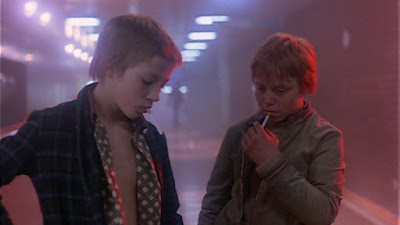
Honorable Mention:  Bloody Kids (1980), directed by Stephen Frears - Stephen Frears' film about two young boys (Richard Thomas and Peter Clark) surging through the nocturnal wasteland of new-wave dead end Essex, England after a prank goes horribly wrong is a masterpiece of anarchic energy. With a propulsive soundtrack that swaggers from inspired spaghetti-western theatrics to thudding heavy metal and a camera that swoops and glides around its characters with breathless energy, "Bloody Kids" captivates from the very opening. It only gets better when one of the young boys hooks up with a group of older men and women (led by the manics of Gary Holton) and the film sinks into an orgy of anti-establishment nose thumbing and petty criminality. Made for television and released in 1980, this is a film that deserves a rediscovery for its nervy ambition in representing the nihilistic attitude of punk rock Britain in the late 70's. For the record, the cops (and supposed adults) in this film don't get off easily either.


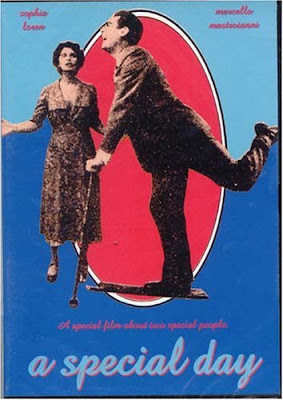
10. A Special Day (1977), directed by Ettore Scolla - Taking place over the course of a single day, "A Special Day" soon dispenses with every other character besides housewife Sophia Loren and writer Mastroianni as their crowded apartment building neighbors disappear into the streets to wave and cheer Hitler and Mussolini. The apartment building is empty, except for a solitary man working in his apartment directly across from Loren's view. When her pet bird escapes his cage and flies to his windowsill, the man and woman meet, talk, flirt and exchange ideas about the maelstrom of history swirling around them. While she chose not to go because she simply doesn't care about Italy's political strategy, he can't go anywhere for reasons that will become crushingly obvious before the end

Loren and Mastroianni, who've been paired so many times before, have a casual elegance about them as they come together and fall apart, their dialogue rolling between them with the ease of professionalism both continually exhibit in all their work. Mastroianni, especially, is tasked with a conflicted character, at once attracted to Loren for her ideals and then forced to confront emotions that are hidden behind his true self.... emotions that have him writing with one hand and keeping a pistol close by with the other. And Loren, in the final image as she watches something across the courtyard, gives a full performance that suggests an alternate life would suit her perfectly. From its magical opening shot to its final shadows of people being led away to nefarious futures, Scolla's seemingly meet-cute romance feels like the template for Richard Linklater's "Sunrise" trilogy and so many others to come.


9. Dwelling in the Fuchun Mountains (2019), directed by Gu Xiaogang - Visually soft like feather one second and then emotionally draining the next, Gu Xiaogang's "Dwelling in the Fuchun Mountains" takes the generational storytelling of Edward Yang and the visually intricate mise en scene of Hou Hsiao Hsien and creates a masterpiece of an effort. Serene locations play host to three generations of a family as they deal with the troubles of life (i.e. love, death, and gambling), but the magnificence of the film lies in the way its filmmaker frames everything. Subtle and complex long takes suspend time while real connections are made between people and the landscape's ethereal beauty is the painting in which they wander around in. It's a wonderful film that shows and tells the small sacrifices of life.


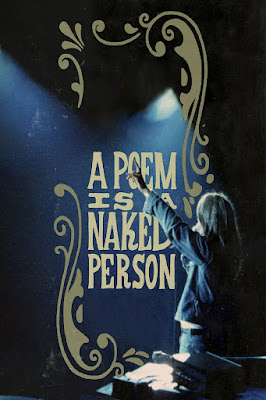
8. A Poem is a Naked Person (1974), directed by Les Blank -  Rarely shown outside of personal events hosted by the filmmaker himself for more than 40 years, "A Poem Is a Naked Person" only really saw the light of day in 2015 and 2016 after Blank's death, when it was remastered and released through Criterion with the generous support of Blank's son and the musician/subject Leon Russell himself. What emerges in this crusty document of early 1970's hazy bohemian atmosphere is a blast. Darting from a wedding of Russell's band member hosted in his very Southern gothic mansion to interviews with an entertaining man who eats glass at an Oklahoma air show, "A Poem Is a Naked Person" is just as weirdly poetic as its title suggest. One does get a ton of Russell's earthy alt-country/rock music (and even more cameos from friends as diverse as Eric Anderson, JJ Cale and Willie Nelson), but the intention of the documentary is to replicate a time and place not through aggrandizement, but a down-and-dirty synthesis of creative artistry and all the weird freedom that comes with its boozy, carefree lifestyle. I can only imagine the reaction if Les Blank's "A Poem Is a Naked Person" had actually been unleashed on the movie-going public when it was finished in 1974


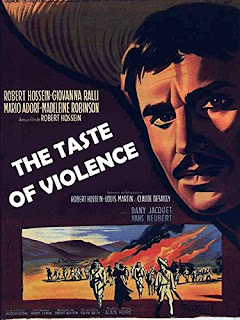
7. The Taste of Violence (1961), directed by Robert Hossein -  One of my favorite directors to discover over the past few years has been actor-director Robert Hossein. Producing a string of low-key thrillers and bastardized westerns with nary a hint of release on any video format (or streaming) here in the US, it's somewhat thrilling to continue finding small gems like this, as if I'm the only one who knows about them. This 1961 western tracks with the rest of his work, barreling though a variety of themes such as the almost wordless anti-hero Hossein himself plays, a Stockholm syndrome kidnapping, and superfluous camera moves that feel needlessly pompous and so freaking perfect at the same time. Hossein plays Perez, the leader of a band of Mexican outlaws who kidnap the president's daughter (Giovanna Ralli) and then tear themselves apart with jealousy and greed over her return to other revolutionary forces. Often filmed with searing landscapes behind them and never afraid to shy away from horrifying tableaux (such as a group of men hanging alongside a cobblestone street like heavy pinatas), "The Taste of Violence" is a western quite unlike any other.


6. House of Hummingbird (2018), directed by Kim Bora - Kim Bora's three hour portrait of a young girl's navigation of her pubescent life is tender and evocative, none moreso than the lengthy scene in which Eun-Hee (Park Ji Hoo) dances and pounds her feet on the floor, partly out of frustration but mostly because it's the only time she can steel herself from the emotional volcano of the world around her. She drifts in and out of friendships, finds first love, and deals with the crushing bureaucracy that takes her favorite and inspirational teacher (Kim Sae-Byuk) away from her in the blink of an eye. "House of Hummingbird" is so full of life- both fair and unfair- that it makes one cringe with empathy as we reflect on our own inability at that age to understand what's going on around us. It's a film that's sad but affirming that we're not alone in this world. As a debut effort, "House of Hummingbird" proudly announces Bora as a talent that deserves to have anything she dares conjuring put up on the screen for all to relish.


5. A Canterbury Tale (1944), directed by Emeric Pressburger and Michael Powell - A road movie interrupted by a bit of Nancy Drew mystery, Powell and Pressburger's "A Canterbury Tale" is a magical exploration of faith and perspective during wartime. Every motive here- whether it's the eventual unmasking of the mysterious "glue man" or the unwavering goodness of its three main characters- belies a deep understanding of human nature, made even more resplendent by the film's final moments. It seems dicey at first, but Powell and Pressburger make good on their promise to unite their medieval source material with the mechanisms of 1940's war-torn England. As the trio who find their way to various types of perspective and bliss, Eric Portman, Sheila Sim and Dennis Price are excellent, and the way the film maneuvers them through various genres is exhilarating, culminating in what's probably the simplest and magical denouements in the filmmaking duo's long and illustrious career. I watched this twice in about a week after first seeing it earlier this year and I can't imagine a more palette cleansing way to celebrate cinema than this.


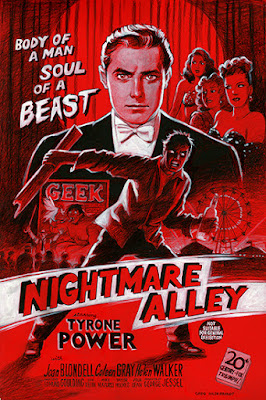
4. Nightmare Alley (1947), directed by Edmond Goulding - Based on a novel by William Lindsey Gresham (whose real life seemed like a mirror to the hard drinking and pessimistic outlook of many of the film's characters), "Nightmare Alley" seems to fit in a variety of genres. It's been called horror (as one scene towards the end certainly has "The Innocents" vibes), film noir (where it seems to be slotted most of the time) and postwar thriller since its release in 1947. For my money, its unclassifiable because it handles so many of its twists and turns with mastery. As the wanderer-turned-mentalist-conman, Tyrone Power is perfect, and Goulding treats the entire affair with the utmost sincerity. Thinking back several days after absorbing this bleak psychological thriller, I don't recall a single ray of sunlight penetrating its mass. Even the opening carnival scene- typically a sun drenched affair for families to frolic and glare at the attractions- takes place at night. We'll ultimately get the Hollywood remake in a couple of months (and I only hope it half as good as the original), but this late 40's version stands as one of the great films of the period. And even though the ending is telegraphed a bit, it still resonates with chilling vibrancy about the comeuppance it provides its suave men and women.


3. Captain Conan
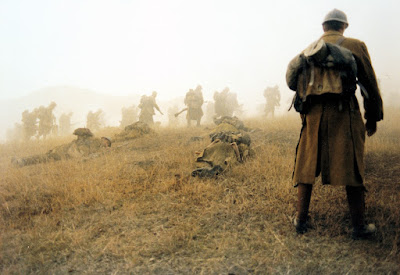
(1996), directed by Bertrand Tavernier - Towards the very end of Bertrand Tavernier's rambling but masterful "Captain Conan", the titular character (played with bull headed narcissism  by Phillippe Torreton), tells his sometimes adversary/mostly war buddy lawyer (Samuel Le Bihan) that the people in his small village where he's retired to "should have seen him when he was alive".  Alive- in the mind and soul of Conan- involves his reckless bravery during World War I and the eventual French occupation along the Russian border when he and his small band of troops would run headfirst into gun fire and attack the enemy at close range, taking an almost gleeful pleasure in killing with knives and detached bayonets. The first third of the film deftly follows this in choreographed long takes up hills, around explosions, and into the shadowy depths of smoke and fire. In this role, Conan is a god. Things shift a bit in the second part of the film when the violence is largely over and Conan and his French soldier cohorts are charged with occupying and maintaining order in Belarus. It's here that Tavernier's real motives emerge. The glorification of violence in the muddy, treaded trenches and hills of World War I turns inward and the film asks questions about masculinity and the toxic attitude that pervades during peacetime. Some of my favorite films are about this murky point in history when the war is over, occupying lines are crossed and no one seems to understand (or care) about the norms of society. Think of Christian Petzold's "Phoenix" (2014). Rosselini's "Germany, Year Zero" (1948) or Carol Reed's "The Third Man" (1949)- all films that exquisitely map the rubble existence of black marketing, self debasement and moral compromise in a world where everyone's scratching for something. Conan throws himself into this void of morality with the same ferocity he did in war, covering up for his soldiers when they commit atrocities or burying himself in alcohol. Tavernier directs the hell out of this film.


2. Pillaged
(1967), directed by Alain Cavalier - 
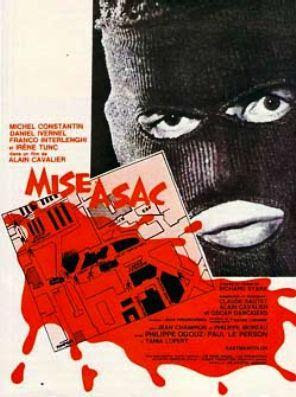
The French sure had a way of regurgitating film. Taking the stellar heist films of the 50's such as John Huston's "The Asphalt Jungle" and Jules Dassin's "Riffifi" and metastasizing them into a lurid sub-genre all their own, there lies so many hidden gems (and outright classics of their own) in the decades to come. From Jean Pierre Melville's ice-cold treatises on betrayal and meticulous technique to the bruised energies of the many Alain Delon titles, there's always a surprise to be had. Released in 1967, the film stars a who's who of French character actors (Michel Constantin, Daniel Ivernel, Phillipe Moreau and Irene Tunc) as a motley group of safe crackers, stick-up men and underworld roustabouts tossed together for the sole purpose of surveying a gorge-village town and robbing the bank, the local steel mill cash holdings and anything else that crosses their paths. Each man has a distinct job and within 20 minutes, "Pillaged" is knee deep in the overnight heist, carefully establishing its plan and then observing as most things go like clockwork. Of course, being a French film noir, something unexpected crops up and the job goes incrementally wrong before the sun rises. This is a film that deserves to be discovered on DVD. Or, if we're lucky, perhaps a big screen revival of some type of French crime film. I really need to own a movie theater.
 
 
1. Songs My Brother Taught Me (2015), directed by Chloe Zhao


What a year for Chloe Zhao. From winning the Oscar to helming a mega budget Marvel film, it was definitely an arrival for the mainstream. But, as this debut film proves, she's been here all along. 
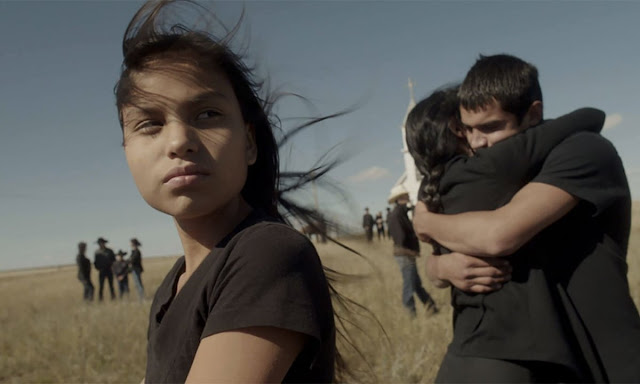
Like she did with her sophomore film "The Rider" (2018), "Songs My Brothers Taught Me" takes place with people mostly portraying themselves.... or at least thinly veiled fictional recreations of themselves. And it wouldn't be far off to wonder if that later film didn't rise out of the barren-land ashes of this film as Zhao's camera often becomes much more interested in the rodeo bucking community that fraternally rubs against her Indian reservation-set debut. But regardless of its foundations, "Songs My Brothers Taught Me" is an amazing film for the way it never seems to be in a rush of narrative. Things happen and great developmental arcs occur, but the film just captures a sense.... a time... and a place with generous acuity. And, like most of her films, it's a mood thing. Zhao often frames the activity around the reservation in long shot, allowing for streaks of lightning to cascade in the background or curtains of sunset light to bathe the screen. The mixture of nature and man- that is so prevalent in all her work- gets first attention here. It's a beautifully rendered atmosphere for her characters to bounce around this big sky country with dour, internalized permutations of angst and trepidation. We feel for them because although they reside in a place largely foreign to my experience, the emotions and depth of confusion in growing up are universal. Zhao seems to excel in creating these types of stories and I look forward to following her long and beautiful career.


Sunday, November 28, 2021

Conspiracy Theories: "City of Lies" and It's Unloved Status

Unceremoniously dumped into barely recovered pandemic-era theaters earlier this year after almost 28 months on the shelf, Brad Furman's "City of Lies" probably didn't deserve that fate. It's also a film probably not bolstered by the presence of a socially embattled Johnny Depp. However, despite all these pejorative factors, "City of Lies" is a smart and involving police procedural that swims in conspiracy theories and haunted Los Angeles megalopolis intrigue. Oh, and it features a host of good performances, led mostly by a restrained Depp as the embodiment of real life L.A. detective Russell Poole who sacrificed his career and livelihood trying to legitimately solve the infamous 1997 murder of Christopher Wallace, aka Biggie Smalls. 

Now the stuff of urban legend and jailhouse rumors, "City of Lies" is based on the book by Randall Sullivan, which purports that the infighting between rival rap labels resulted in the death of both Smalls and singer Tupac Shakur weeks before. And not only was this a war waged between high profile music industry types, but aided and abetted by the Los Angeles police department itself. All of this is vaguely digestible since the specter of malice and distrust that hung over L.A. law enforcement was so fresh in the minds of the world, from the Rodney King case to the Rampart division corruption that came to light just six months after the Smalls/Tupac murder.

I say it's easily digestible in theory, but what Furman does in "City of Lies" (alongside a script by also actor Christian Contreras) is blend all of this professional treason and moral distrust into 110 minutes of highly entertaining drama.

 
Invoking a temporal structure that begins with the now retired Poole virtually living in the evidential waste of his investigation 15 years later, his babbling constructs of truth are given some legitimacy when a journalist (Forrest Whitaker) doing an anniversary piece on Biggie Smalls comes calling. Given an ear to rehash his story, "City of Lies" bounces back and forth in time as Poole explains the many routes and byways his investigation took, and the frustration of always hitting a departmental roadblock when his clues led him too close to the actual truth.

As Poole, Depp gives a fine turn. From the moment he walks into a fresh crime scene where an undercover cop (a particularly scuzzy Shea Whigham) has shot and killed another undercover cop (Amin Joseph), the confidence and intelligence is on display. Naturally, the iconic template for any great Los Angeles crime film is the glacial sauntering of Al Pacino in "Heat" (1995), and while Depp doesn't quite reach that plateau here, the sense the film gives his curiosity is striking..... from the way he takes methodical control of the scene to the way he carefully steps and curls his body to take his own Polaroid shot of the murder scene interior without disturbing anything around him. It's the kind of tactical care rarely seen in films today where the process of solving murder is nothing more than visceral browbeating.

From that innocuous event, Poole is drawn into a netherworld of corruption that will see him taking down crooked cops, bank robbers, and eventually destroying himself in the jagged process of law enforcement. Also good is Whitaker as the innocent reporter who thinks he has a grasp on the events of late 1997, but finds himself in way deeper (and more emotionally connected) than expected. His role is the classic avatar for the audience, absorbing the abundance of information as Poole tells it in episodic fashion each time they meet. In fact, if anything's problematic for "City of Lies", it's the amount of story it has to tell. Bleeding into the Rampart corruption and the host of ideas around who actually killed Smalls threatens to sink the film in its second half, and the event that brought Poole into the picture at the beginning (i.e. the cop on cop road rage) only come into clear focus if one has done research on these stories to begin with. For the first time in a while, I hesitantly feel a limited series (yes, I know, be damned Netflix) would be the template to give this story an exhaustive treatment.

Regardless, what "City of Lies" does have to reveal is continually fascinating and peppered with the perfect casting. Hey, look the great Peter Greene! And even if the truths Poole sought will probably never be discovered, the rabbit hole of conspiracy theories, tangential whispers, and has-been ideas is probably more interesting than closure anyhow. As the films ensures to point out in a remarkably tender scene between Depp and Biggie Smalls' real producer/actress mother Voletta, we realize the relationship between the actual Poole (who died in 2015 of a heart attack while visiting the L.A. police department about new leads) and those who are now cultural ghosts extends far beyond recognition and attention. He wants the truth and she understands that. I can't think of a more altruistic path for a good police procedural than that. 


Monday, November 01, 2021

Freaks and Geeks: Nightmare Alley (1947)

Thinking back several days after absorbing Edmund Goulding's bleak psychological thriller "Nightmare Alley", I don't recall a single ray of sunlight penetrating its mass. Even the opening carnival scene- typically a sun drenched affair for families to frolic and glare at the attractions- takes place at night. And this is where we first meet carny Stan (Tyrone Power) and his single minded intention to ascend to the very top of society. First, we think it'll be with the charismatic and clairvoyant Zeena (Joan Blondell). Then his attraction turns to perky Molly (a wonderful Coleen Gray, and pretty much the central person we root for to crawl out with her sanity). But no matter who he chooses, the darkness of night has already penetrated our souls and we seem to understand that no one will get out of the carnival alive.

Based on a novel by William Lindsey Gresham (whose real life seemed like a mirror to the hard drinking and pessimistic outlook of many of the film's characters), "Nightmare Alley" seems to fit in a variety of genres. It's been called horror (as one scene towards the end certainly has "The Innocents" vibes), film noir (where it seems to be slotted most of the time) and postwar thriller since its release in 1947. For my money, its unclassifiable because it handles so many of its twists and turns with mastery. 

After certain events have temporarily but successfully removed Stan from the humdrum of carnival maintenance to his own stage in a respectable town, the real mind screw begins. Favored by wealthy clients in the club who believe "Stanton the Great" actually can read minds, he comes in contact with psychologist Lilith (Helen Walker) and the deception grows deeper.The duo hatch a scheme that's more complex than a carnival scam, but whose consequences have even deeper tragic consequences. Just because there aren't tents and barkers angling for one's money, the deception is just as real. Everyone has an ulterior motive and everyone is playing some sort of game. "Nightmare Alley" juggles all this psychological warfare with precision.

Since sleight of mind is the central deceit in the film, "Nightmare Alley" seems like the perfect vehicle for a modern day re-imagining, which is exactly what we'll get in a couple of months, courtesy of even more Big Time Stars. Hopefully, it will maintain the original film's spirit of ironic sympathy and hardened immoralism that makes it such an amazing feat.


Monday, October 18, 2021

The Current Cinema 21.3

 Titane

I'm a sucker for dance sequences in movies, where narrative stops and the only thing that exists is the inebriated will of a filmmaker to melt body and sound in a swirl of motion. Julia Ducournau's "Titane" has 2 or 3 of them. But beyond the stop downs of muscular/shirtless firemen dancing to Future Islands or a woman throbbing to the techno beat on the hood of a hot rod, "Titane" is also immensely buried in the pathos of the people doing the dancing. Toggling between a slasher film, then a psychological thriller and ending on something akin to body horror, she never loses touch with any of the touch points as to why something is happening. As Alexia- the hugely troubled and on the run young woman who may be carrying the demon spawn of a car- Agathe Rouselle is tremendous, speaking with her eye and pummeled body as she forms a perverse but tender relationship with Vincent (Vincent Lindon), also reeling from recent trauma. Ducournau holds it all together with a clear vision, and although the film is described as extreme, "Titane" ultimately tackles some of the most simplest emotions of all- inclusion, forgiveness and acceptance- and in its own sublime way makes everything else the extreme.


Cry Macho 

There's not much complexity in the late career films of director Eastwood. Even the ones I love, such as "Mystic River" (2003) and "Million Dollar Baby" (2004), handle their themes with a sledgehammer rather than a fine pen. It's beginning to work against Eastwood, as his latest about an ex-rodeo rider sent into Mexico to retrieve the young son (Eduardo Minett) of his boss (Dwight Yoakem), follows the same beats as his other less-than-stellar efforts about hard edged men seeking forgiveness in a world that seems to have passed them by. Like the worst tangents of "The Mule", Eastwood can't resist the awkward progression of a possible love interest in restaurant owner Natalia Traven. Borne from either tone deaf solipsism or stubborn vanity, "Cry Macho" does the least to preserve the grit-toothed cinematic visage of Eastwood the Great through terrible choices, risible acting and a narrative that lurches along with pretend subtlety.


Bergman Island

What begins as a film about the looming spectres of cinema soon turns heartbreaking and reflective as writer-director Mia Hansen-Love explores the relationship between a filmmaking couple (Vicky Krieps and Tim Roth) and their venture to a Swedish island. In what feels like her most autobiographical film to date in a career of achingly prescient explorations of first loves, family, and childbirth, "Bergman Island" also could be read like a rebuke to everything, charting instead how she overthrew her past and became her own person. It's a film full of small moments (what exactly is so amusing to Krieps in the first half, giggling but never explaining) that shifts between layers of meta-fiction with astounding grace. This fiction is the second half where Krieps' idealized script becomes real and embodied by Mia Wasikowska and Anders Danielsen Lie as their stories fold into reality with delicacy. How much of the film overlays Hansen-Love's own entanglements is debatable, but the fact that "Bergman Island" dangles these threads with a keen sense of character and place is telling. It's a film that feels personal and lived-in and all the more beguiling for the things it doesn't say.


Lots of new reviews available at Dallas Film Now including Amazon horror films, Dallas VideoFest roundups and films "The Rescue" and "I'm Your Man".


Saturday, October 02, 2021

The Current Cinema 21.2

The Card Counter 


Playing as mannered as one would expect from a Paul Schrader film about self-imposed loneliness and twisted redemption, "The Card Counter" hooked me from the beginning when it explains how counting cards works, and then spends the rest of the film with a gambler named William Tell (Oscar Issac) who fails to accurately read all the cards being turned up in front of him. When Tell meets a young man (Tye Sheridan in a role equally as elusive) bent on vengeance, he takes him under his wing. Along with an entrepreneur (Tiffany Haddish) who bankrolls Tell's entrance in the World Series of Poker, the trio form a kindred family against the nocturnal backdrop of casinos and gambling halls across the country. Rarely stepping into the real world where people have families, go to work or simply enjoy themselves, Schrader has crafted a hermetic universe just as enthralling as that of New York's Times Square in the 70's or the cloistered, hushed reverences of upstate east coast churches that have dotted his previous masterworks. Everything about this film has a purpose.... even the way Isaac tidies up his room with sheets or the way Haddish holds her various drinks. It all builds to a quietly devastating finale that, in typical Schrader fashion, denies the audience flash and gore of a climactic standoff, choosing instead to hold on fingers as they touch glass. Always the Bresson devotee, "The Card Counter" does right by him.


Blue Bayou

Director Justin Chon's films trade in high sentimentality. "Blue Bayou" is no exception, but his instincts as a filmmaker and the folds of humanity built into the margins of his sometimes stereotypical characters are what makes his films feel earnest but not forced. I loved his previous film, "Ms. Purple" for the way it etched survival and poignancy into the troubles of an immigrant family just trying to survive in the California wasteland. "Blue Bayou" shifts its perspective to the humidity of the Gulf Coast, but survival is still the goal as adopted Korean Antonio (Chon himself) tries to keep his head above water (literally) by outlasting his past and creating a thriving future for his family (played perfectly by Alicia Vikander and newcomer Sydney Kowalski). Pushing headlong into overtly melodramatic territory as deportation and echoes of his criminal past loom, "Blue Bayou" expertly weaves together a secondary narrative thread as Antonio meets a sickly Vietnamese woman (Linh Dam Pham) and forms a relationship that not only feels authentic, but gives its finale an extra amount of oomph. I've long been a fan of Chon's work since being introduced to "Gook" at the 2017 Dallas International Film Festival. "Blue Bayou" may be his most widely distributed work so far, but the heart-on-his-sleeves urgency of his preoccupation with the immigrant experience has never felt quite so electric.

Sunday, August 29, 2021

An Appreciation: Anthony Mann

Dr. Broadway (1942) ** - Mann's debut film is more of an hour long comedy that doesn't quite hit all its marks as a lawyer has a very busy couple of days, saving a woman from jumping off a ledge and then dealing with local crooks. It all feels more like a pilot for zany adventures of said Dr. Broadway than a fully realized effort.


Strangers In the Night (1944) *** - Mostly interesting for the way it blends soap opera dramatics with glimmers of small town noir as a war veteran comes home expecting to meet his beautiful pen pal, then getting wrapped up in a mysterious relationship with the girl's scheming mother. It never quite breaks the way one expects which is refreshing.


The Great Flamarion (1945)  ***1/2 - Erich von Stroheim is characteristically stiff as the titular showbiz whiz caught up in a black-hearted tale of female duplicity and murder. Hiding nothing from the viewer and taking place as a deathbed confession, "The Great Flamarion" is ultimately a terrific little gem hiding under its abysmal title.


Two 'o' Clock Courage (1945) **1/2 - Amnesiac thriller/comedy in which a cabgirl (Ann Rutherford) helps a confused man (Tom Conway) piece together the fuzzy remnants of his evening. Far less concerned with any reality around the mystery and aiming for broad laughs and generic stereotypes, it lands awkwardly due to its bipolar tone.


Sing Your Way Home (1945) ** - The musical numbers aren't stagey and the characters are even less interesting as a New York journalist is assigned to chaperon a musical troupe back across the Atlantic after the end of WW2. It all feels like a Mann-for-hire job.


Strange Impersonation (1946) *** - It hustles through a variety of genres pretty early on- from doppelganger crime thriller to body horror, even managing to work in romance!- and shows the nimbleness Mann controls as each furtive plot twist falls into the next. Entertaining and dare I say an influence on later psychological thrillers like "Eyes Without a Face" and "The Face of Another".


The Bamboo Blonde (1946) ** - Another musical/romance hybrid, this one just as lackluster as "Sing Your Way Home" for the way it tries to place a rainbow temperament over everything from the trials of war to the oscillations of love. A WW2 pilot (Ralph Edwards) meets cute a singer (Frances Langford) and then inadvertently has her image painted on his bomber plane, which becomes a good luck charm and earns them national acclaim. More distressing than the facets of war, however, is the war for the pilot's heart that erupts once back at home between the cabaret singer and his gold-digging fiancee. I'm sure this was meant as a charming balm for the post-war era, but it just comes off hollow.


Desperate (1947) *** - With tinges of noir creeping into his work for the past couple of years, Mann goes full out with "Desperate", including expressionistic and menacing close ups and the omniscient swinging overhead lamp scene for good measure. Visuals aside, the narrative isn't as compelling when innocent truck driver Steve Brodie becomes embroiled in a robbery and manhunt that causes him and his newlywed (Audrey Long) to make some dubious choices along the way. Raymond Burr is excellent is as the pursuing gangster, but overall, the film is much more interesting for its immersion in the young noir aesthetic.


Railroaded (1947) ** - Mann's predilection for an innocent rube to get drawn into criminal clutches appears here again as a young man (Steve Ryan) gets framed for a robbery and cop murder. Unlike his previous efforts, "Railroaded" isn't successful because of the completely unbelievable segues it follows as the man's sister (Sheila Ryan) inserts herself into the investigation.


T-Men (1947) ***1/2 - After a series of fairly lightweight crime thrillers (from "Strange Impersonation" to the previous year's "Railroaded"), "T-Men" is something altogether more proficient. It also signals a shift in his career to the more grimy noirs that would instill him as a master of the genre. This film is lean- oozing shadows and hard nosed characters who may or may not make it out intact- and its procedural roots feel revolutionary as two men (Dennis O'Keefe and Alfred Ryder) stalk a counterfeiting ring from Detroit to Los Angeles.


Raw Deal (1948) **1/2 - Tough but ultimately forgettable crime drama in which escaped prisoner Dennis O'Kefee gets to act like a jerk to not one but two women who've been roped into his on-the-lam scamper against the law.


He Walked By Night (1948) ***1/2 - Solid procedural about the hunt for a criminal who kills a cop, shifting easily between the sweaty psychology of the killer and the level headed thinking of the cops on his trail.


Border Incident (1949) **** - Made right before his run of noirs would be over and he'd embark on a series of westerns throughout the 50's, Mann's "Border Incident" feels especially dark, full of heroic compromise and real-world nihilism that cancel each other out. It's also quite the prescient film. If not for a somewhat tacked-on voice over that closes the film with a hint of optimism, "Border Incident" could be released today and we'd all nod and agree that the problem is as divisive and violent as ever.


Reign of Terror (1949) **** - Though taking place within the Robespierrian subterfuge of late 18th century France, Anthony Mann's "Reigh of Terror" walks, talks and looks like a 40's American noir. With barely a frame of sunlight to brighten the elusive motivations of its various double and triple agents- all searching for a little black book of names that could derail or save France's future- the film is heavy in both mood and tempo. It's also a white-knuckle ride of close calls and searching deception. One of Mann's best films. 


Side Street (1950) *** - Evocative use of night and shadow, which of course epitomizes most of the great film noirs, but Mann really spins it here as the darkness seems to be encroaching on the hapless man (Farley Granger) who makes a very bad decision.


The Furies (1950) *** - Beginning to transition from noir to nifty westerns, "The Furies" is an interesting bridge between both styles of film, keeping some of the arched melodrama of film noir against the expanse of the open range. Highly watchable.


Winchester '73 (1950) ***1/2 - The west as seen through the passing of a death maker (a Winchester rifle) and all the greed, blood and jealousy it holds. Interesting for how it stars Jimmy Stewart and then basically forgets about him for half of the film, instead focusing on the parameters of violence that ensue once he loses his prized possession. It's easy to see why this is a landmark 50's film, let alone a landmark western.


Devil's Doorway (1950) *** - What's most dispiriting about "Devil's Doorway" is the modern cancel culture shade of lens that has to be cast upon the film for using a pretty standard buff white male (Robert Taylor) as the lead in the film's otherwise sharp portrayal of society's  greedy/burning desire to eliminate Native Americans (and specifically the land of Taylor's Indian homestead) from the Wyoming landscape. The film looks terrific.... features some especially thorny characterizations, but ultimately suffers every time it chooses to elevate Taylor as the brooding, sacrificial "red man".


The Tall Target (1951) ***1/2 - Applying the same veneer of shadowy film noir to an historical drama like he did with "Reign of Terror", this film pits an officer of the law tracking down a supposed assassin of Abraham Lincoln the night before a big speech. Taking place solely aboard a train and the steam-filled shadows of various midnight stops along the way, "The Tall Target" is expressive for how Mann maneuvers in tight quarters and pinches the tension to excessive heights. 


Quo Vadis (1951) *1/2 - It's debatable how much of this Mann directed (credited fully to Mervin LeRoy), but regardless, it's a stodgy and infinitely boring recollection of the troubles in Rome just after the persecution of Jesus and Emperor Nero's bamboozled reign. Overacting is just one of the many problems, including a stolid Robert Taylor performance that see him as a protagonist we don't care about in a setting that feels like a cardboard stage. Pretty atrocious all around.


Bend of the River (1952) *** - Interesting for the way its more of an ensemble film about western expansion and how greed and politics rapidly divided the virgin territory. As a cowboy escorting a group of land squatters in the deep Northwest, Stewart is able again and "Bend of the River" continually surprises for the relationships built (and destroyed) by avarice and greed.


The Naked Spur (1953) **1/2 - Another in a line of westerns Mann made with Jimmy Stewart, "The Naked Spur" feels like the weakest of them yet (admittedly seen out of order with "The Man From Laramie" before this one). Yes, Stewart is tortured and relentless in his search to return outlaw Robert Ryan while romancing Vivian Leigh along the way, but all the beats of repressed guilt and laconic racism have been better expounded upon in far better films... and far better ones by Mann himself.


Thunder Bay (1953)- ***1/2 - More so than the Jimmy westerns, I much prefer this (never mentioned) oil-infested tale of Stewart as a wildcatter coming to the bayou of Louisianan and stirring up volatile tempers and long shot romance as he builds an off shore oil rig. The close-up of his face with electric eyes and a huge crooked smile as oil cascades over his entire body, was surely an inspiration for the single-minded fury of Daniel Day Lewis in "There Will Be Blood".


The Glenn Miller Story (1954) ** - Quite the rosy portrait of big band pioneer Glenn Miller. No warts at all, it's almost sunshine to the point of nausea.


The Far Country (1954)  ***1/2 - A sense of jazz infects most of Mann's westerns with this one and after. It follows a certain plot (this time sees Jimmy Stewart trying to homestead in Alaska with the gold rush) but sort of drifts along as a tale of anti-hero protection as more corrupt forces impinge along the virgin landscape and threatens its honest citizens. Of course, Stewart finds himself doing the protecting. Characters drift in and out.... situations arise and fall back.... it's all handled very delicately and deliberately with a fine sense of landscape and hushed heroism.


Strategic Air Command (1955) ** - Re-teaming fictional husband and wife duo Jimmy Stewart and June Allyson from "The Glenn Miller Story", "Strategic Air Command" is all about the shuffling and dangerous duty of a 50 year old baseball player (?!) called back into active duty. Stewart seems especially in full Stewart shrift here and the film never raises above low-level pulse.


The Man From Laramie (1955) ***1/2 -  Continuing on his amazing run of morally shaded westerns, "The Man From Laramie" is unique for how Mann (and actor Jimmy Stewart) manipulates the simple story of a drifter arriving in a new location into a complex examination of said man's influence on the society's black hole of greed, violence and contemptible familial lineage. 


The Last Frontier (1955) ** - Victor Mature is poorly cast as a fur trader wrangled into the US Army as a scout during a territorial dispute with warring Indian tribes. It's said to be Mann's interpretation of "Fort Apache", but it's a film that sputters and stops every time Mature's maniacal interpretation sidles onto the screen. 


Serenade (1956) ** - Following the life of a field worker who ascends to great heights as a vocalist (Mario Lanza), "Serenade" was probably a great film for all those mob guys to take their girlfriends to see on Saturday nights. For everyone else, not so much as flat acting and sleepwalking direction pretty much sinks everything else here.


Men In War (1957) *** - Tough vision of war that feels like a step brother to the films of Sam Fuller.


The Tin Star (1957) ***1/2 - Henry Fonda just adds gravitas to everything he touches. And so he does here in "The Tin Star" as a bounty hunter who saunters into town and ends up helping it and its green sheriff (Anthony Perkins) discover a moral compass. It's filmed efficiently and its themes of incorruptible manhood rank alongside the best of Mann's other films starring Jimmy Stewart.


God's Little Acre (1958) **1/2 - A prickly Southern soup of high emotions and sweaty horniness as a family comes apart at the seams while digging on the family farm for treasure. Robert Ryan is gruff as the patriarch trying to hold things together, and of course, it all goes bad.


Man From the West (1958) ***1/2- Revisiting the strong/silent type savior complex that's buried within most of Mann's westerns, "Man From the West: sees Gary Cooper embody the role as an ex-outlaw forced to protect a schoolteacher from his old gang. Lots of shifting tensions and cinematography that propel this film as one of the late highlights of Mann's fading interest in the genre.


Cimarron (1960) **1/2- Epic idea about the Oklahoma land settling rush starring a miscast Glenn Ford playing the all good hero fighting both Old West bullies and the array of problems that comes with starting a new life in an old land. Oddly, the film's supporting characters seem to draw more attention than its main ones.


El Cid (1961) ** - Bloated and tedious, "El Cid" suffers from old Hollywood and its penchant for telling ancient stories with old white men playing the leads. This time its Charlton Heston as the titular Cid, becoming a whitewashed hero of both Chrisrians and Moors. I'm over this type of thing.


The Fall of the Roman Empire (1964) **1/2 - Mann continues his foray into big budget Hollywood spectacle with this telling of ancient history mirrored through the glances of glamorous superstars and impeccable set design. I liked it a bit more than the others, but its still an example of heartless storytelling mired in early 60's spectacle.


The Heroes of Telemark (1965) ***1/2  -Sturdy men-on-a-mission war film starring Kirk Douglas and Richard Harris that takes place in a part of the world rarely shown during WWII- the snow-covered landscape of Norway and military subterfuge as the duo try to take out a key outpost for the Germans. Featuring some thrilling set pieces and a narrative that starts and stops with energetic action and framing, "The Heroes of Telemark" should be mentioned more often when talking about war 'actioners'.


A Dandy In Aspic (1966) *** - Mann's final film as he died during production. It's a shame because this spy film is a cold hearted blend of groovy techniques and stone cold emotions as Laurence Harvey plays both sides of the law trying to hunt down (or protect?) a double agent during the Cold War. With Mann adapting to some of the swinging 60's aesthetics, it would have been neat to see how he marched into the early 70's and the burgeoning New Wave of American cinema that found the old Hollywood stalwarts fumbling (Otto Preminger) or thriving (Nicholas Ray).


Unable to view: Moonlight In Havana, Nobody's Darling, My Best Gal

Sunday, August 22, 2021

When the Bad Men Came to Town: Alain Cavalier's "Pillaged"

The French sure had a way of regurgitating film. Taking the stellar heist films of the 50's such as John Huston's "The Asphalt Jungle" and Jules Dassin's "Riffifi" and metastasizing them into a lurid sub-genre all their own, there lies so many hidden gems (and outright classics of their own) in the decades to come. From Jean Pierre Melville's ice-cold treatises on betrayal and meticulous technique to the bruised energies of the many Alain Delon titles, there's always a surprise to be had.

Alain Cavalier's "Pillaged" (1967) is one of them. If there weren't twenty more years of such films coming down the pipeline, I'd wager that "Pillaged" was a capsized attempt to wave down all the other entries. The very plot- about a group of men taking hostage an entire town over the course of one long night in order to rob all its cash dispensaries- seems like the stuff of graphic novels. It plays bold, fast, and tense and it deserves a wider audience (are you listening Shout Factory! or Code Red???)

Released in 1967, the film stars a who's who of French character actors (Michel Constantin, Daniel Ivernel, Phillipe Moreau and Irene Tunc) as a motley group of safe crackers, stick-up men and underworld roustabouts tossed together for the sole purpose of surveying a gorge-village town and robbing the bank, the local steel mill cash holdings and anything else that crosses their paths. Each man has a distinct job and within 20 minutes, "Pillaged" is knee deep in the overnight heist, carefully establishing its plan and then observing as most things go like clockwork. Of course, being a French film noir, something unexpected crops up and the job goes incrementally wrong before the sun rises.

Filmed by workmanlike director Alain Cavalier (and only his third film after the aforementioned Delon vehicle "The Unvanquished" and his startling debut "Le Combat dans I'il") "Pillaged" doesn't ascribe many sympathies to its robbers.... and with the exception of a Stockholm-syndrome induced female abductee, very few other personalities are brought to the forefront. This is a film that excels in examining the steps of a crime. It's hugely believable (at least in the mid 60's when all it took to kill any communication was a snip of the wire) and executed with keen skill and style.

Sunday, August 08, 2021

On "Lonely Are the Brave"

In David Miller's "Lonely Are the Brave", the wild west isn't in conflict with the modern world. It's already past... a distant, dusty memory as technological advances and "civilization" has already encroached on its manifest destiny boundaries. Cowboy Jack Burns (Kirk Douglas) is the one who refuses to relent. He's still playing a cowboy while- in the opening few minutes and a furtive harbinger for the finale- his horse tentatively makes it across a busy highway to arrive at his destination where he can kick off his chaps and settle into the role of maverick savior for his old friend Jerry (a wonderfully complex Gena Rowlands). And while he agrees to help spring her husband (and his mutual friend) from a local jail cell, "Lonely Are the Brave" never forgets it's dichotomy of something stuck in the past century. One side uses a horse, while the other uses helicopters and off road vehicles. The dye is set early on, but Douglas and filmmaker Miller do a fabulous job of drawing out the tension in mutating a simple idea into a lethargic lament.

As Jack, Douglas is all gristle and clenched jaw. He accepts the challenge of helping his friend with the gusto of an outlaw, first picking a (hilariously staged) fight with a one-armed drunkard in a saloon, then acting like the pied-piper savior for a cell full of locked up guys. Even that scenario goes sideways, further deflating the mythic qualities of the wild west anti-hero riding in and saving the day. From there, the second half of the film is a glorious cat and mouse chase in the mountains as the sheriff (Walter Matthau) tries to locate the escaped convict. As Dalton Trumbo's precise script belies, neither man seems to be taking the game very seriously, even as gunfire is exchanged and freedom (or failure) is just mere inches away.

Released in 1962, "Lonely Are the Brave" can, I suppose, be called a western. Like John Huston's equally brilliant "The Misfits" just a year earlier, both films represent a moment in time when the landscape was truly shifting beneath the feet of so many cultures. Some embraced the change with open arms while others remained fixated in the roots of their past, no matter how abruptly the winds were blowing. Both Matthau as the law and Douglas as the "outlaw" completely believe their outlook is correct. Even in the film's final, mournful moments, both men nod supremely that they're right. Honestly, it's hard to deny their worldview. "Lonely Are the Brave" posits that both can exist at the same time.

Saturday, July 24, 2021

The Current Cinema 21.1

 No Sudden Move

An ironic title for a film that involves so many stunning little shifts in loyalty between its characters, Steven Soderbergh's "No Sudden Move" is his best film in years. Beginning as a modest crime picture in which three men (Don Cheadle, Benecio Del Toro and Kieran Culkin) are assembled to conduct a straightforward kidnapping and extortion gig in 1950's Detroit and ending as a (naturally) cynical exploration of criminals who think they've got it all figured out, Soderbergh and screenwriter Ed Solomon wring so much subtle electricity out of the genre that the film ends up feeling downright revelatory. Co-starring David Harbour, Amy Seimitz, Brendan Fraser, Jon Hamm, Ray Liotta and Julia Fox as people spinning on the edges of the mistrust and deceptively-lined noir frame, "No Sudden Move" is the perfect project for Soderergh, at once a puff-piece of big star entertainment before it lines up all the cool whiffs of genre and settles into a brilliantly choreographed example of the genre's best.


Summer of Soul 

I was already entranced by Questlove's sewing together of the long forgotten footage from the 1969 Harlem Cultural Festival- partly from the crisp footage of soul, gospel and R&B acts that danced their way across the hearts and minds of those present and partly for the immense joy in discovering such an event lost in time- but the moment Sly and the Family Stone took the stage, "Summer of Soul" became a transformative film. And as one of the people interviewed recollects, it seems right to call that one performance the crash-through of barriers from the old-school doo-wop paradigm of entertainment to the modern age of funk 'hippieness'. Beyond just a performance film, Questlove has surrounded this amazing documentary with reflective cultural significance. Yes, we get the music, but he also instills a deep sense of shifting history in the moment, from the sour celebration of the have-nots in America to the joyous walk on the moon to the overshadowing by Woodstock. "Summer of Soul" is a terrific film.


My review of "Val" can be found at Dallas Film Now


Monday, July 05, 2021

On Ettore Scola's "A Special Day"

Ettore Scola's "A Special Day" features an enthralling camera shot that does a lot more than map out the geographical terrain of the film's two central characters. It also establishes that Scola is deadly serious about making a statement on the serpentine nature of the historical and the personal colliding at the same time. The aforementioned shot happens early in the film after an introductory newsreel footage that shows Hitler and his Third Reich parading into Italy to meet Benito Mussolini and forge a relationship that would last until the end of World War II.  The camera begins in the courtyard of a tall apartment building complex, spinning upwards to reveal the concrete and windows that almost block out the sun before carefully panning across a row of windows and doors, finally settling on an illuminated opening where a woman (Sophia Loren) goes about her early morning chores in the kitchen. As we watch her dutifully wiping dishes and occasionally brushing the hair from her eyes, the camera glides into the apartment through the open window and proceeds to follow the woman around as she gets her children moving and wakes her husband (American actor John Vernon in a small role). This unbroken shot is not only a technical marvel for the way it slices through seemingly immovable objects, but reveals a typical woman in Italian society who will become irrevocably changed at the end of the picture.

Taking place over the course of just one day, "A Special Day" soon dispenses with every other character as they disappear into the streets to wave and cheer Hitler and Mussolini. The apartment building is empty, except for a solitary man working in his apartment directly across from Loren's view. When her pet bird escapes his cage and flies to his windowsill, the man (Marcello Mastroianni) and woman meet, talk, flirt and exchange ideas about the maelstrom of history swirling around them. While she chose not to go because she simply doesn't care about Italy's political strategy, he can't go anywhere for reasons that will become crushingly obvious before the end.

Loren and Mastroianni, who've been paired so many times before, have a casual elegance about them as they come together and fall apart, their dialogue rolling between them with the ease of professionalism both continually exhibit in all their work. Mastroianni, especially, is tasked with a conflicted character, at once attracted to Loren for her ideals and then forced to confront emotions that are hidden behind his true self.... emotions that have him writing with one hand and keeping a pistol close by with the other. And Loren, in the final image as she watches something across the courtyard, gives a full performance that suggests an alternate life would suit her perfectly.

It's not ironic that these two people meet and share each other's company on such a unique day. The film is a coded example of two people finding and accepting one another in a world increasingly redolent of tolerance and unity. That they ultimately can't live together happily ever after is the biggest tragedy of them all.