Aka the year of the female.
Less music here than usual because, quite frankly, I listened long and hard and found very little to enjoy. It seems like most of my favorite bands took the year off and the music that was produced alternated between mindless pop-rock or new variations of hip-hop/alt rock that does nothing for my senses. Still, there were a few gems in the rough, and here are five of my favorite acts in 2015:
As an unabashed fan of The National, I didn't immediately cling to lead singer Matt Beringer's side project, El Vy, but after a couple of listens, I stopped expecting the searching, pained lyrics that dot the landscape of the usual National songs and allowed this one some slack. Playful, loose and sincere, "Return to the Moon" is a great little album.
Country? Yes. Folk? Yes. Straight up female vocalist? Yes. Brandi Carlile covers it all with warmth, passion and a clear sense of pop lyrics that cut right to the bone. Her sixth album, "The Firewatcher's Daughter" also displays this wide-ranging talent and has been on my playlist since early in the year.
Formed from the ashes of the indie rock band Women, Cindy Lee is like listening to Tommy James and the Shondells with a bit of Nico and 60's girl groups thrown into a blender. Constantly staggering in the way their music shifts tempos and moods, the album "Act of Tenderness" is a heartbreaking experiment.
On any given day, Hop Along's album "Painted Shut" could be in the number 1 spot on this list. I love it that much. As I said earlier in the year, lead singer Frances Quinlan's voice sounds as if its going to shatter into a million pieces at any minute, giving every song a pensive edge.
I completely understand Bjork is an acquired taste. She's been surprising and challenging me for over 20 years now. Her latest album, "Vulnicura", continues that fascination with a streak of artistry that's melodic, frustrating, brilliant and moving. And, like the best albums, it just grows and grows on repeat listens.
Wednesday, January 06, 2016

Thursday, December 31, 2015
Thursday, December 24, 2015
The Current Cinema 15.10
Youth
I said it last year after seeing his complete oeuvre, but Paolo Sorrentino is the finest European director working today and with his latest film, "Youth", that definitive statement still rings true. It's starting off point is the mundane relaxation stay of two life long friends Michael Caine and Harvey Keitel, but Sorrentino's penchant for specks of life and perfectly coiffed image making soon become a visual poem all to itself. As if the men were trapped in a haunting purgatory full of ghosts past and present, "Youth" is certainly not an ironic title. It's a film that understands life and art sometimes should be messy and beautifully unkempt. And its dedicated to the great Francesco Rosi. How beautiful is that?
The Danish Girl
I have nothing against Eddie Redmayne. Seriously, I don't. It's just his last two films (this one and "The Theory of Everything" which garnered him an Oscar) feel like real acting from someone who knows he's really acting. Plus the fact "The Danish Girl" deals with themes of transgender identity that are front and center in both the cultural and political arena these days, and it all feels a bit much. Every smirk or canvased grin he flashes feels premeditated and actually dishonest. The best moments, such as when the film focuses on the intimate struggle for identity between Redmayne and wife Alicia Vikander, are overshadowed by the need to check mark every big drama plot point. External prejudice in the form of gay bashing? Got it. Weepy sentimentalism in the final reel? Check. Cloistered period piece atmosphere? Yep. "The Danish Girl" is a film that understands its weighty significance and then hammers the point home every chance it gets.
Peggy Guggenheim: Art Addict
A documentary that focuses on the curator rather than the creator. Full review here.
Chi-Raq
While not all of Spike Lee's latest film, "Chi-Raq" is successful, one can't deny the very angry and potent place it derives from. The opening- with the lyrics of its self titled song sprayed across the screen in bright red letters followed by a foghorn warning of "this is an emergency" - certainly places one in the uncomfortable framework of a conscientious filmmaker trying to change something... anything... in this fucked up society. By grafting a Greek tragedy, poetry dialogue and all, onto the shoulders of a gang war in modern day Chicago, it takes some getting used to at first, but the lead performance of Teyonah Parris soon commands attention as she tries to lead her fellow women in a sex strike until the bloodshed ends. Social satire, Lee's continual breaking of the fourth wall and straight up comedy blend into a fascinating mess that signals Lee hasn't quite given up on utilizing his cinema for more than entertainment.
I said it last year after seeing his complete oeuvre, but Paolo Sorrentino is the finest European director working today and with his latest film, "Youth", that definitive statement still rings true. It's starting off point is the mundane relaxation stay of two life long friends Michael Caine and Harvey Keitel, but Sorrentino's penchant for specks of life and perfectly coiffed image making soon become a visual poem all to itself. As if the men were trapped in a haunting purgatory full of ghosts past and present, "Youth" is certainly not an ironic title. It's a film that understands life and art sometimes should be messy and beautifully unkempt. And its dedicated to the great Francesco Rosi. How beautiful is that?
The Danish Girl
I have nothing against Eddie Redmayne. Seriously, I don't. It's just his last two films (this one and "The Theory of Everything" which garnered him an Oscar) feel like real acting from someone who knows he's really acting. Plus the fact "The Danish Girl" deals with themes of transgender identity that are front and center in both the cultural and political arena these days, and it all feels a bit much. Every smirk or canvased grin he flashes feels premeditated and actually dishonest. The best moments, such as when the film focuses on the intimate struggle for identity between Redmayne and wife Alicia Vikander, are overshadowed by the need to check mark every big drama plot point. External prejudice in the form of gay bashing? Got it. Weepy sentimentalism in the final reel? Check. Cloistered period piece atmosphere? Yep. "The Danish Girl" is a film that understands its weighty significance and then hammers the point home every chance it gets.
Peggy Guggenheim: Art Addict
A documentary that focuses on the curator rather than the creator. Full review here.
Chi-Raq
While not all of Spike Lee's latest film, "Chi-Raq" is successful, one can't deny the very angry and potent place it derives from. The opening- with the lyrics of its self titled song sprayed across the screen in bright red letters followed by a foghorn warning of "this is an emergency" - certainly places one in the uncomfortable framework of a conscientious filmmaker trying to change something... anything... in this fucked up society. By grafting a Greek tragedy, poetry dialogue and all, onto the shoulders of a gang war in modern day Chicago, it takes some getting used to at first, but the lead performance of Teyonah Parris soon commands attention as she tries to lead her fellow women in a sex strike until the bloodshed ends. Social satire, Lee's continual breaking of the fourth wall and straight up comedy blend into a fascinating mess that signals Lee hasn't quite given up on utilizing his cinema for more than entertainment.
Wednesday, December 16, 2015
Friday, December 04, 2015
Regional Review: Jackelope
Any film that features several fleeting shots of landmarks and buildings that stood just a few hundred yards from my childhood home is bound to enamor itself to my heart, which is exactly what Kenneth Harrison's 1976 documentary "Jackelope" has done. Those images- captured while one of the film's subjects is making a pilgrimage down I-35 from Dallas to Austin- only last a second or two, but they serve as a monochrome reminder that no matter what happens to those structures later in life (one of which now has been torn down), they'll be preserved in the cinematic ether for a brief instant... somewhere. Beyond that tangential personal connection, the film also excels because it's an eccentric time capsule of early 1970's Texas through the visionary work of three diverse artists who mold, cut, paint or fabricate their "outsider" folk art. Rarely does a documentary so neatly blend interesting people with the atmospheric poise of the times.
Originally prepared and shown on Dallas' public access channel, KERA, in 1976, "Jackelope" recently received a restoration and became one of the many great entries presented at the 2015 Dallas VideoFest. I wrote in the primer to the festival about "Jackelope", calling it aimless, entrancing and fascinating and a film that highlights the against-the-grain philosophy of the snooty art world paradigms. Patting myself on the back, that's about as apt a description one can muster for it.

Opening on artist James Surls as he scavenges and ultimately finds the perfect tree within an overgrown field on one of those obviously blistering hot summer days we're known for here in Texas, "Jackelope" follows a certain procession of creativity. In Surls' portion, more attention is given with the actual sawing down of the tree and its eventual shape through his endless whittling of the wood into a tall figurine. We're shown the birth of his art from idealized vision to tactile representation. The second portion of "Jackelope" picks up with painter George Green in his Houston studio as he hobknobs with friends and reflects on his past. Glimpses of his art are shown, but the focus in this middle portion lies within the comfortable surroundings of an artist content and at peace with his lot in his life. The third and most rambunctious portion of the film follows sculpture Bob Wade as he roadtrips to Austin, making a pit-stop in Waco, Texas to enjoy a friendly round of shotgun mayhem and car explosions. Just like his art (which has graced so many Central Texas institutions and businesses over the years, including my college grounds), Wade is a colorful and country-funky-steampunk figure who gives "Jackelope" a boundless energy. In this third and final portion, its as if director Harrison is saying that art- come full circle- is an experience that doesn't need to be constipated or retained for a certain percentile of people. It can be wild, joyous and a completely passionate expression of someone who lives life the same way.
An obvious crowd favorite at the festival, my only regret was not hooking up with director Harrison for a chat about his work and the film. I'm sure his memories of crafting such a loving documentary are just as infectious as the buoyant personalities shown on-screen.
Originally prepared and shown on Dallas' public access channel, KERA, in 1976, "Jackelope" recently received a restoration and became one of the many great entries presented at the 2015 Dallas VideoFest. I wrote in the primer to the festival about "Jackelope", calling it aimless, entrancing and fascinating and a film that highlights the against-the-grain philosophy of the snooty art world paradigms. Patting myself on the back, that's about as apt a description one can muster for it.

Opening on artist James Surls as he scavenges and ultimately finds the perfect tree within an overgrown field on one of those obviously blistering hot summer days we're known for here in Texas, "Jackelope" follows a certain procession of creativity. In Surls' portion, more attention is given with the actual sawing down of the tree and its eventual shape through his endless whittling of the wood into a tall figurine. We're shown the birth of his art from idealized vision to tactile representation. The second portion of "Jackelope" picks up with painter George Green in his Houston studio as he hobknobs with friends and reflects on his past. Glimpses of his art are shown, but the focus in this middle portion lies within the comfortable surroundings of an artist content and at peace with his lot in his life. The third and most rambunctious portion of the film follows sculpture Bob Wade as he roadtrips to Austin, making a pit-stop in Waco, Texas to enjoy a friendly round of shotgun mayhem and car explosions. Just like his art (which has graced so many Central Texas institutions and businesses over the years, including my college grounds), Wade is a colorful and country-funky-steampunk figure who gives "Jackelope" a boundless energy. In this third and final portion, its as if director Harrison is saying that art- come full circle- is an experience that doesn't need to be constipated or retained for a certain percentile of people. It can be wild, joyous and a completely passionate expression of someone who lives life the same way.
An obvious crowd favorite at the festival, my only regret was not hooking up with director Harrison for a chat about his work and the film. I'm sure his memories of crafting such a loving documentary are just as infectious as the buoyant personalities shown on-screen.
Friday, November 27, 2015
The Current Cinema 15.9
Brooklyn
Navigating all the emotional turbulence magnificently, John Crowley's film is a richly observed tale about a young woman's tenuous emergence into both a startling new culture and her own awkward adulthood. Anchored by the heartbreakingly real performance of Saoirse Ronan as Eilis, the newly minted New Yorker by way of Ireland in 1952, "Brooklyn" traces all the usual setups of such a film (homesickness, tragedy, young love) and then proceeds to defy commonplace logic and craft a film that's absorbing and luminous despite its very classical roots. The relationship between Ronan and Italian boyfriend Tony emits a certain wild innocence reminiscent of Eva Saint Marie and Marlon Brando in "On the Waterfront". They're that good together. But it's Ronan's face and eyes that carry the film, often holding the camera's gaze as the world and its uncontrollable impulses of love, regret, confusion and expectation bounce off her.
Spotlight
Infuriating is not normally the adjective one would apply towards one of the year's best films, but it fits Tom McCarthy's "Spotlight". Raised in the Catholic faith, I'm not the most devout practitioner these days, but it still serves as a guiding force in my life to try and do right. Watching the fictional rendering of the 2001 Boston Globe journalist team that brought to light the systematic issue of child abuse by priests for decades, "Spotlight" is a crackling, intelligent journey littered with amazing performances from top to bottom. In fact, some of the characterizations by actors in single scenes (such as now adult victims played by Neil Huff or Michael Creighton) reverberate long after they're gone and provide articulate points of reference for the evil committed years ago. There's no fancy camera work. The pacing is taut and every inflection or eye twitch (especially from Mark Ruffalo) suggest just as much internal intelligence as outward. This is simply great ensemble filmmaking. And the part that got to me the most- watching the way Rachel McAdam's beloved and devout grandmother slyly asks for a glass of water upon reading the story her daughter helped to break. The victims of the actual abuse deserve the closure, but "Spotlight" also reveals the abuse of trust penetrates worldwide.
Victoria
Oh those Germans. First "Run Lola Run" and now this. Full thoughts on Dallas Film Now.
Theeb
Like an Arabian Robert Louis Stevenson adventure story. Very good stuff. More shameless self promotion at Dallas Film Now.
Navigating all the emotional turbulence magnificently, John Crowley's film is a richly observed tale about a young woman's tenuous emergence into both a startling new culture and her own awkward adulthood. Anchored by the heartbreakingly real performance of Saoirse Ronan as Eilis, the newly minted New Yorker by way of Ireland in 1952, "Brooklyn" traces all the usual setups of such a film (homesickness, tragedy, young love) and then proceeds to defy commonplace logic and craft a film that's absorbing and luminous despite its very classical roots. The relationship between Ronan and Italian boyfriend Tony emits a certain wild innocence reminiscent of Eva Saint Marie and Marlon Brando in "On the Waterfront". They're that good together. But it's Ronan's face and eyes that carry the film, often holding the camera's gaze as the world and its uncontrollable impulses of love, regret, confusion and expectation bounce off her.
Spotlight
Infuriating is not normally the adjective one would apply towards one of the year's best films, but it fits Tom McCarthy's "Spotlight". Raised in the Catholic faith, I'm not the most devout practitioner these days, but it still serves as a guiding force in my life to try and do right. Watching the fictional rendering of the 2001 Boston Globe journalist team that brought to light the systematic issue of child abuse by priests for decades, "Spotlight" is a crackling, intelligent journey littered with amazing performances from top to bottom. In fact, some of the characterizations by actors in single scenes (such as now adult victims played by Neil Huff or Michael Creighton) reverberate long after they're gone and provide articulate points of reference for the evil committed years ago. There's no fancy camera work. The pacing is taut and every inflection or eye twitch (especially from Mark Ruffalo) suggest just as much internal intelligence as outward. This is simply great ensemble filmmaking. And the part that got to me the most- watching the way Rachel McAdam's beloved and devout grandmother slyly asks for a glass of water upon reading the story her daughter helped to break. The victims of the actual abuse deserve the closure, but "Spotlight" also reveals the abuse of trust penetrates worldwide.
Victoria
Oh those Germans. First "Run Lola Run" and now this. Full thoughts on Dallas Film Now.
Theeb
Like an Arabian Robert Louis Stevenson adventure story. Very good stuff. More shameless self promotion at Dallas Film Now.
Saturday, November 21, 2015
Monday, November 16, 2015
The Last Few Films I've Seen, November edition
1. Love (2015)- A sobering elegy about the disastrous decisions made just before and after sex. Close to Noe's masterpiece, "Irreversible". Full review on Dallas Film Now.
2. Polytechnique (2009)- Denis Villenevue's black and white dramatic retelling of the 1989 Montreal Tech school massacre is austere and shocking, but most surprising is the way it ends on a somewhat uplifting note that defies the misogynistic reasons for the shooter's rampage. Weaving back and forth in time to follow several students before and after the incident, "Polytechnique" was made just before Villenevue began to score in Hollywood with "Prisoners", "Enemy" and now "Sicario" and its worth tracking down. Like these other films mentioned, it delves into aspects of damaged psychology that, ultimately, ends on a pitch perfect resonance and proves one of the victims (played wonderfully by Karine Vanesse) chooses not to be defined by the tragedy itself but the decisions she makes with her life after the violence.
3. Heaven Knows What (2015)- Belonging up there with "White Star" and "Christiane F.", Josh and Benny Safdie's heroin-junkie drama is filled to the brim with hollow eyed people and a pervasive atmosphere of desperation that (I only imagine) must encompass this lifestyle. Based on the memoir and starring the ex-junkie herself Arielle Holmes, "Heaven Knows What" starts on a histrionic note and never quite lets up after that. It's strong cinema though and lingers in your mind.
4. Armor of Light (2015)- Documentary on two hot button topics (gun control and religious rhetoric) that never quite fully develops into a cohesive whole. Reviewed on Dallas Film Now.
5. Marfa Girl (2014)- Larry Clark's latest film tones down the risque teenage sex a bit, but it's no less incisive into what makes his awkward protagonists click beyond smoking pot and hanging out. I suppose I should quit looking for substance in his films. But the greatest omission "Marfa Girl" makes is completely alienating the wondrous West Texas landscape of Marfa in favor of shabby home interiors and concrete skate parks. His hippy characters nip at the edges of the progressive lifestyles there yet it fails to leave an indelible impression.
6. Dark Places (2015)- After the success of "Gone Girl", the scramble to 'cinematize' more Gillian Flynn novels ensued and this was the next. Not in a position to judge its relevance to the novel, the film itself is a hodge-podge of thriller aspects that feels overwrought. Also, the lead character played by Charlize Theron, tries to come off as some sort of moody, empowered 'everywoman' but the nuance isn't realized.
7. The Wicked Go To Hell (1955)- Robert Hossein's directorial debut is a cool blend of prison escape drama and crime exploits once the two escapees hole up with a beautiful hostage in her seaside home. Like a dry run for his later film "Falling Point", Hossein is obviously enamored by the languid darkness that hides just beneath the pleasant surface as the beach itself, eventually, literally swallows the men whole.
8. Truth (2015)- The problem with James Vanderbilt's journalism drama about 60 Minutes producer Mary Mapes and anchor Dan Rather's flawed reporting on W. Bush's war record isn't the backlash it's received since, but its utter sense of self importance. Every scene between Rather (Robert Redford) and reporter Topher Grace is monumentally strained. The usually wonderful Cate Blanchett acts as if the entire effort is a noble act of self sacrifice. Director Vanderbilt telegraphs every emotion and scene with sledgehammer authority. A huge disappointment.
9. Fedora (1978)- Billy Wilder's swan song is a terrific inversion of the noir genre.... the scandalous Hollywood darkside drama.... and one of William Holden's finest performances as the private dick caught in the middle.
10. Lan Yu (2001)- Working my way through most of Stanley Kwan's films. I can see why he never gained major international acclaim and overshadowed by the more prolific Wong Kar Wai, but "Lan Yu" (and even more specifically "Everlasting Regret") are interesting explorations of identity and shifting cultural paradigms that he probably should have gotten more notice.
2. Polytechnique (2009)- Denis Villenevue's black and white dramatic retelling of the 1989 Montreal Tech school massacre is austere and shocking, but most surprising is the way it ends on a somewhat uplifting note that defies the misogynistic reasons for the shooter's rampage. Weaving back and forth in time to follow several students before and after the incident, "Polytechnique" was made just before Villenevue began to score in Hollywood with "Prisoners", "Enemy" and now "Sicario" and its worth tracking down. Like these other films mentioned, it delves into aspects of damaged psychology that, ultimately, ends on a pitch perfect resonance and proves one of the victims (played wonderfully by Karine Vanesse) chooses not to be defined by the tragedy itself but the decisions she makes with her life after the violence.
3. Heaven Knows What (2015)- Belonging up there with "White Star" and "Christiane F.", Josh and Benny Safdie's heroin-junkie drama is filled to the brim with hollow eyed people and a pervasive atmosphere of desperation that (I only imagine) must encompass this lifestyle. Based on the memoir and starring the ex-junkie herself Arielle Holmes, "Heaven Knows What" starts on a histrionic note and never quite lets up after that. It's strong cinema though and lingers in your mind.
4. Armor of Light (2015)- Documentary on two hot button topics (gun control and religious rhetoric) that never quite fully develops into a cohesive whole. Reviewed on Dallas Film Now.
5. Marfa Girl (2014)- Larry Clark's latest film tones down the risque teenage sex a bit, but it's no less incisive into what makes his awkward protagonists click beyond smoking pot and hanging out. I suppose I should quit looking for substance in his films. But the greatest omission "Marfa Girl" makes is completely alienating the wondrous West Texas landscape of Marfa in favor of shabby home interiors and concrete skate parks. His hippy characters nip at the edges of the progressive lifestyles there yet it fails to leave an indelible impression.
6. Dark Places (2015)- After the success of "Gone Girl", the scramble to 'cinematize' more Gillian Flynn novels ensued and this was the next. Not in a position to judge its relevance to the novel, the film itself is a hodge-podge of thriller aspects that feels overwrought. Also, the lead character played by Charlize Theron, tries to come off as some sort of moody, empowered 'everywoman' but the nuance isn't realized.
7. The Wicked Go To Hell (1955)- Robert Hossein's directorial debut is a cool blend of prison escape drama and crime exploits once the two escapees hole up with a beautiful hostage in her seaside home. Like a dry run for his later film "Falling Point", Hossein is obviously enamored by the languid darkness that hides just beneath the pleasant surface as the beach itself, eventually, literally swallows the men whole.
8. Truth (2015)- The problem with James Vanderbilt's journalism drama about 60 Minutes producer Mary Mapes and anchor Dan Rather's flawed reporting on W. Bush's war record isn't the backlash it's received since, but its utter sense of self importance. Every scene between Rather (Robert Redford) and reporter Topher Grace is monumentally strained. The usually wonderful Cate Blanchett acts as if the entire effort is a noble act of self sacrifice. Director Vanderbilt telegraphs every emotion and scene with sledgehammer authority. A huge disappointment.
9. Fedora (1978)- Billy Wilder's swan song is a terrific inversion of the noir genre.... the scandalous Hollywood darkside drama.... and one of William Holden's finest performances as the private dick caught in the middle.
10. Lan Yu (2001)- Working my way through most of Stanley Kwan's films. I can see why he never gained major international acclaim and overshadowed by the more prolific Wong Kar Wai, but "Lan Yu" (and even more specifically "Everlasting Regret") are interesting explorations of identity and shifting cultural paradigms that he probably should have gotten more notice.
Wednesday, November 11, 2015
The Francesco Rosi Files: La Sfida
Two of my favorite films from the 1970's- Robert Mulligan's "The Nickel Ride" and John G. Avildsen's "Save the Tiger"- contain a similar theme about the dogged determinism of a business entrepreneur to keep his business afloat. They're exhaustive, fluid films that feature stressful performances by Jason Miller and Jack Lemmon, respectively, and certainly accentuate the oncoming tide of later 70's films that wallow in the American recession and "New Brat" school of thought. And even though both men in these films straddle the line between moral and decent business practice, they signify upright men trying to maintain control of their visions, regardless of the legality of their trade.

A straight line can be drawn back to Francesco Rosi's 1958 "La Sfida" (aka "The Challenge"). Not only does it enable the simple Italian Neorealist themes of a lowly person desperately trying to overcome a singular hurdle, but it feels like a direct interloper to the films of Coppola, Scorsese and the above mentioned pair in its scope and intimate ambition. Sarring Jose Suarez as Vito, "La Sfida" observes his growth from the town hustler to fruit and vegetable mogul in short order. Setting up trucking routes, organizing his men to make deliveries and, eventually coming into conflict with the local crime boss, Vito seems to have it all figured out. Things get even better when he marries young Assunta (Rosanna Schiaffino). And, like all great Italian films, their wedding day becomes a lengthy affair that not only takes up a good portion of the film's final half, but morphs into a cerebral exercise of power and control as Vito's enemies decide to attack his interests.

"La Sfida" was Rosi's first solo directorial effort after co-directing an anthology film in 1952 and assisting actor Vittorio Gassman with his project entitled "Kean" (which isn't a bad film, but ultimately a comedic 'audience pleaser' that looks and feels like nothing else Rosi would do). Stunning in its assured measures and complex in the way it manages to highlight the almost bureaucratic steps ambitious Vito has to take to build his hard-pressed empire, "La Sfida" is really a film about the in-between moments of Italian Cosa Nostra culture and the uncontrollable fits and starts of creating something out of nothing. Like the long walks Jason Miller takes around the dilapidated warehouse district of Los Angeles or the sweaty, out-of-breath decisions Jack Lemmon has to make on the fly, "La Sfida" raises a strong case that the effort is hardly worth the pensive payoffs. But, Vito does it anyway. Partly out of neighborhood pride, but mostly because he enjoys the nice cars and pampering beautiful Assunta, "La Sfida" follows his trek through the good and bad. If it's ironic that he initially gave up peddling cigarettes for the more expensive and healthy produce shipping, "La Sfida" shows no favoritism. The end result is the same. And like the rest of Rosi's career, his anti-hero rarely walks away unscathed, beaten either by the system or his own ambitions. "The Challenge" could be the title of any later Rosi work, and I imagine he liked it that way.

A straight line can be drawn back to Francesco Rosi's 1958 "La Sfida" (aka "The Challenge"). Not only does it enable the simple Italian Neorealist themes of a lowly person desperately trying to overcome a singular hurdle, but it feels like a direct interloper to the films of Coppola, Scorsese and the above mentioned pair in its scope and intimate ambition. Sarring Jose Suarez as Vito, "La Sfida" observes his growth from the town hustler to fruit and vegetable mogul in short order. Setting up trucking routes, organizing his men to make deliveries and, eventually coming into conflict with the local crime boss, Vito seems to have it all figured out. Things get even better when he marries young Assunta (Rosanna Schiaffino). And, like all great Italian films, their wedding day becomes a lengthy affair that not only takes up a good portion of the film's final half, but morphs into a cerebral exercise of power and control as Vito's enemies decide to attack his interests.

"La Sfida" was Rosi's first solo directorial effort after co-directing an anthology film in 1952 and assisting actor Vittorio Gassman with his project entitled "Kean" (which isn't a bad film, but ultimately a comedic 'audience pleaser' that looks and feels like nothing else Rosi would do). Stunning in its assured measures and complex in the way it manages to highlight the almost bureaucratic steps ambitious Vito has to take to build his hard-pressed empire, "La Sfida" is really a film about the in-between moments of Italian Cosa Nostra culture and the uncontrollable fits and starts of creating something out of nothing. Like the long walks Jason Miller takes around the dilapidated warehouse district of Los Angeles or the sweaty, out-of-breath decisions Jack Lemmon has to make on the fly, "La Sfida" raises a strong case that the effort is hardly worth the pensive payoffs. But, Vito does it anyway. Partly out of neighborhood pride, but mostly because he enjoys the nice cars and pampering beautiful Assunta, "La Sfida" follows his trek through the good and bad. If it's ironic that he initially gave up peddling cigarettes for the more expensive and healthy produce shipping, "La Sfida" shows no favoritism. The end result is the same. And like the rest of Rosi's career, his anti-hero rarely walks away unscathed, beaten either by the system or his own ambitions. "The Challenge" could be the title of any later Rosi work, and I imagine he liked it that way.
Sunday, November 01, 2015
Hacktober #3
Crimson Peak

The best film I've seen in this month of October horror movie binging, "Crimson Peak" is a Gothic romance horror couched brilliantly against del Toro's demented landscape of ominous ghosts, histrionic emotions and Escher-like collapsing mansions. That pale-skinned Mia Waskowski is at the center of the madness only makes it more bittersweet as she's the perfect innocent reflection of the malevolent gestures of Jessica Chastain. Even though its antique idea of a murderous/incestuous couple is anchored in cliche trappings of 20th century tragedy, the film's wonderful visuals, art design that seems to be lacquered down to the inch and some truly scary images make this film one of del Toro's most fully realized works.
The Nightmare

It's a bit disingenuous to label Rodney Ascher's "The Nightmare" a documentary on sleep paralysis since it not only dispenses with any critical examination of the topic, but resolutely refuses to do anything beyond vividly fictionalizing the subject. If you want any explanation on the idea, listen to Coast To Coast AM or look elsewhere. Regardless of that, the "documentary" does contain its share of scary imagery and hammers home the fact that there are so many unexplained phenomenon out there.
Alleluia

From the screwed-up mind that brought us "Calvaire" a few years back, Belgium filmmaker Fabrice du Walz returns with more provocative subject matter, updating the 1940's "Lonely Hearts Killer" case to modern times as Lola Duenas and Laurent Lucas are the murderous couple who pass themselves off as brother and sister and systematically kill the women he shacks up with. Pieces of fetishism and Duenas carefully unhinged performance strike the right balance of morbid and strange and du Walz again proves his blunt and dirty gaze during the act of murder are some of the more bone-chilling realizations out there.
Wednesday, October 28, 2015
Hacktober #2
We Are Still Here

Deceptively simple but effectively creepy, Ted Geoghegan's haunted house horror relies on old tales and careful framing to elicit its jumps and thrills. It does follow some inane genre techniques (i.e. the now infamous Ebert coined BADF theory) but its heart and mind feel like they're in the right place.
Stephen King's It

Even though millions of people suffer from coulrophobia, there's still plenty of other things to really freak someone out in "Stephen King's It". I'm honestly not sure how I managed to avoid this miniseries based on King's 1986 novel, but it's well worth the wait. Marrying his two beloved thematic tendencies- one being childhood reverie of growing up during the 1960's and the second being his innate ability to terrify- King (and director Tommy Lee Wallace) have delivered a solid visual translation. The idea of a malevolent being taking the form of a clown and using a quiet New England town as his 30 year feeding ground is a spellbinding idea, and while parts of the movie are deadened by their television soap opera bearings, it more often than not succeeds. And, even more impressive is the basic idea about seven young friends suffering from psychological horror and then reuniting 30 years later to deal with them together. Those sections of the film alone would be enough to satisfy a full movie. But the real star here is Tim Curry as Pennywise the Clown.... a character that's alternately full of cheap one liners and sublimely nightmarish. Alongside Wes Craven's "Nightmare on Elm Street" franchise, these are two primo efforts about the hellish reaches of our subconscious and the mind-bending ways in which reality and fantasy often overlap.

Dust Devil

Cult director Richard Stanley isn't really all that interested in making an outright horror film. Most of his stuff is a casserole of genres, and "Dust Devil" is a unique horror western with some South African mysticism tossed in. Besides its strong visual style, I can sense he was reaching for a franchise here as a shape-shifting devil runs amok on the desert highlands and local police try to decipher the grisly crime scene images. It's not always successful and suffers from the sorta-bad-early-90's costume theatrics, but its different.
Saturday, October 24, 2015
The Current Cinema 15.8
Steve Jobs
As a straight biography of the man, Danny Boyle's "Steve Jobs" is woefully neglect. As a pulsating backstage drama play to some of the most influential electronics products of the past half century- complete with conniving secondary characters, tainted relationships, high tension, and some serious daddy/daughter issues- it's a masterpiece. And honestly, how many more straight biopics do we really need? By capturing all the promotional hysteria and personal conflicts in three distinct realms of Steve Jobs' influential life (1984, 1988 and 1998), the film tightens its focus on the almost maniacal side of Jobs. Unrelenting in his purpose, unable to glorify anyone else but himself and yet still slicing up shimmers of humanity and emotional grandeur within him, Boyle and screenwriter Aaron Sorkin have crafted a film that zings with intelligence while maintaining a three-dimensional sense of the man. One may not like Jobs (brought to life by an Oscar worthy performance by Michael Fassbender), but it's a film that demands our attention and dares to steer away from the obvious inventions of the mind and instead examine the mechanism of power, regret, ownership and forgiveness.
The Walk
What could be more invigorating and informative than James Marsh's 2008 documentary "Man On Wire" about the tightrope walk of French performance artist Philippe Petit? Not much. So it seems a bit reductive (and borderline insulting) when Robert Zemeckis takes A-list actor Joseph Gordon Levitt, who is usually quite good, and dresses him up in faux 70's clothes and lets him run wild with an awful French accent in retelling the same events. Shrouded in 3D imagery and green screen theatrics, even the final third of the film which deals with the vertigo inducing walk between the Twin Towers, falls flat as if the film has morphed into some sort of Disney-like drama fun for the whole family. Terrible.
Field Niggas
Khalik Allah's "Field Niggas" was one of the last films to play at Dallas VideoFest last weekend, given a late Sunday night time slot because, frankly, not many people would probably know what to do with it. Sheer visual poetry in every sense of the word, Allah's mesmerizing hour long film would make a terrific art exhibit as well. Following the aimless, nocturnal denizens of homeless and scattered people on the streets of New York City, Allah plays with sound and image. Sometimes the people on-screen are the ones talking, but more often than not, its just the voices of the night overlapped onto the brightly saturated faces of those who happen to be in front of the camera. Holding steadfast on their scarred, weary and disquieted bodies, "Field Niggas" is a lament for those who don't have a voice, wandering the rainy night and rambling about police brutality, life on the streets and the daily grind of survival.
As a straight biography of the man, Danny Boyle's "Steve Jobs" is woefully neglect. As a pulsating backstage drama play to some of the most influential electronics products of the past half century- complete with conniving secondary characters, tainted relationships, high tension, and some serious daddy/daughter issues- it's a masterpiece. And honestly, how many more straight biopics do we really need? By capturing all the promotional hysteria and personal conflicts in three distinct realms of Steve Jobs' influential life (1984, 1988 and 1998), the film tightens its focus on the almost maniacal side of Jobs. Unrelenting in his purpose, unable to glorify anyone else but himself and yet still slicing up shimmers of humanity and emotional grandeur within him, Boyle and screenwriter Aaron Sorkin have crafted a film that zings with intelligence while maintaining a three-dimensional sense of the man. One may not like Jobs (brought to life by an Oscar worthy performance by Michael Fassbender), but it's a film that demands our attention and dares to steer away from the obvious inventions of the mind and instead examine the mechanism of power, regret, ownership and forgiveness.
The Walk
What could be more invigorating and informative than James Marsh's 2008 documentary "Man On Wire" about the tightrope walk of French performance artist Philippe Petit? Not much. So it seems a bit reductive (and borderline insulting) when Robert Zemeckis takes A-list actor Joseph Gordon Levitt, who is usually quite good, and dresses him up in faux 70's clothes and lets him run wild with an awful French accent in retelling the same events. Shrouded in 3D imagery and green screen theatrics, even the final third of the film which deals with the vertigo inducing walk between the Twin Towers, falls flat as if the film has morphed into some sort of Disney-like drama fun for the whole family. Terrible.
Field Niggas
Khalik Allah's "Field Niggas" was one of the last films to play at Dallas VideoFest last weekend, given a late Sunday night time slot because, frankly, not many people would probably know what to do with it. Sheer visual poetry in every sense of the word, Allah's mesmerizing hour long film would make a terrific art exhibit as well. Following the aimless, nocturnal denizens of homeless and scattered people on the streets of New York City, Allah plays with sound and image. Sometimes the people on-screen are the ones talking, but more often than not, its just the voices of the night overlapped onto the brightly saturated faces of those who happen to be in front of the camera. Holding steadfast on their scarred, weary and disquieted bodies, "Field Niggas" is a lament for those who don't have a voice, wandering the rainy night and rambling about police brutality, life on the streets and the daily grind of survival.
Tuesday, October 20, 2015
Christian Petzold, Part 2: The Mainstream (Sort of)
Released in 2007, "Yella" was the first real Petzold film to see a larger than limited release both here and in the U.K. And by that I mean outside of film festivals and into the elitist paying public of the 300 or so "art-house" theaters around the country. Again starring muse Nina Hoss, "Yella" is a frigid, tempered effort that begins with a woman being stalked by her ex husband and ends just as morosely. In fact, the title of Petzold's previous film, "Ghosts", is probably the more apt title here as Yella and her co-stars are moribund in some sort of steel and glass purgatory... a world where everyone's hotel room doors are inexplicably left ajar for anyone else to walk inside and the antiseptic offices where many of the inhabitants square off are sealed from the exterior sights, sounds and smells. It's an extremely interior and hermetic film, both physically and emotionally. See, Yella (Hoss) narrowly escapes the suicide attempt by this unhinged ex-husband when he drives his car off the road with her in it. Landing in water, Yella awakens on the water's edge and stalks off, seemingly unfazed, towards the new job awaiting her in a nearby town. Once that opportunity crumbles, new connections are made with Phillipp (Devid Striesow) and Yella's whip smart attributes to quickly size up accounting balance sheets comes in extremely handy for him, who happens to make his living bailing out fiscally unwise companies and turning their assets to his benefit. But all is not as it seems as Yella's ex-husband (also unconscious next to her when she awoke on dry land) begins to appear and disappear in her new life and odd sounds randomly pierce her fragile state.

"Yella" plays by its own dream logic for good reason. Why does she never remove the same red shirt and gray dress for the duration of the film? Why does no one seem to notice her immobile fits when she breaks a glass on the desk next to her? How does her ghostly ex suddenly appear next to her one moment when he seemingly wandered right past her the second before? Again fixated by economic mobility or the lack thereof, "Yella" is a tight yet unsettling psychological drama that bears all of Petzold's thematic stamps, especially his fascination with a loner couple awash in the German countryside that links the larger cities. But the real synonymous factor is the wide-eyed, graceful performance of Nina Hoss who feels as if she's just hitting her stride under Petzold's dour, nihilistic moods. And as the film winds to its somewhat expected but still striking finale, that mood prevails. And Petzold's vision doesn't even allow his characters to dream good thoughts.
Just as Petzold's vision on-screen became more confident and tantalizing, for the first time in his career, these visions were given confidence by numerous eyes around the globe as well. His next film, "Jerichow" (2008) even got a proper art-house release and did favorably well financially and even better critically. Loosely echoing the film noir classic "The Postman Always Rings Twice", Petzold dispenses with the potboiler atmosphere of the original, which is something the 1981 remake starring Jack Nicholson and Jessica Lange dramatically amps up, creating a a wild and sweat-filled lust-noir that verges on camp. But in "Jerichow", everything is sedate and highly plausible. Even as the wife (Hoss) and her new workmate/lover Thomas (Benno Furmann again) engage in secret dalliances behind the back of her husband and his boss Ali (Hilmi Sozer), the canvas of blame is democratic. And, yet, when the duo plot to kill the husband, Petzold has built up such a shifting allegiance of paranoia and dead-end decisions that we almost don't blame the couple for conspiring to commit murder. Further still, the revelations in the final moments from Ali complete a triangle of casual acceptance that again shifts our preconceptions about the film noir genre itself and push "Jerichow" into a human drama more than a token genre name.

Reflecting back on it now, and having watched it again in the last few months after my initial theatrical viewing seven years ago, "Jerichow" strikes me as the summation of Petzold's evolving work. It's a film that, like the worn out cowboy boots that Nina Hoss dons beneath her lilting flowery dresses, consistently upends our expectations and presupposes there are invisible boundaries between 'good' and 'bad'. In "Jerichow", everyone is a shade of both these identifiers and their actions against each other are organic reactions to their situations. It's a marvelous tightrope walk of a film.
After a short stint in TV work again (which will be covered in the third and final installment here), it was four years before Petzold would grace the big screen again. Released in the fall of 2012 after a hearty film festival circuit tour, "Barbara" continues Petzold's fascination with stasis. Again placing Nina Hoss at the center of the drama, she plays a Berlin doctor ostracized to the East German country after an unknown incident with the authorities. Living out her days in solitude and looking forward only to the clandestine meetings with her West German lover (who promises to help her defect), Barbara slowly finds her self worth in this rural community. But at a cost. Continually monitored by German authority figure Klaus (Rainer Bock) and completely unsure of the genuineness exuded by fellow doctor Andre (Ronald Zehrfeld), Hoss gives her best performance to date for Petzold. Virtually holding her breath in many scenes, unwilling to compromise her inner thoughts or show weakness to a society virtually holding her hostage, she gives the film a powerfully mute force with her eyes and constricted body movement. If there were justice, she would have gotten an Oscar nomination that year.

The first film by Petzold to reflect openly on a specific time in Germany's past, "Barbara" feels like a razor sharp exploration of this paranoia and self delusion. In one particular scene, Barbara is waiting in the hotel room for her lover to finish his business meeting downstairs when, from the adjoining room, a young and beautiful girl sneaks into her room and they begin talking. She is the girlfriend of Barbara's lover's partner. The young girl talks about the budding relationship between them and tells Barbara he's going to help her leave. They peruse a magazine full of wedding rings and like little girls, each pick one out and try on the paper fitting. When the young girl asks Barbara "is it hard?", referring to the process of defecting to West Germany, Barbara's cold stare tells her (and us) everything about the daydreamed atmosphere they exist within. It's no surprise that later in the film, Barbara makes a particularly stunning self-sacrifice. This act of unerring kindness and fatalistic settlement back into her rural purgatory (there's that idea again) carry on Petzold's bittersweet outlook on life and its reflection in cinema.

"Yella" plays by its own dream logic for good reason. Why does she never remove the same red shirt and gray dress for the duration of the film? Why does no one seem to notice her immobile fits when she breaks a glass on the desk next to her? How does her ghostly ex suddenly appear next to her one moment when he seemingly wandered right past her the second before? Again fixated by economic mobility or the lack thereof, "Yella" is a tight yet unsettling psychological drama that bears all of Petzold's thematic stamps, especially his fascination with a loner couple awash in the German countryside that links the larger cities. But the real synonymous factor is the wide-eyed, graceful performance of Nina Hoss who feels as if she's just hitting her stride under Petzold's dour, nihilistic moods. And as the film winds to its somewhat expected but still striking finale, that mood prevails. And Petzold's vision doesn't even allow his characters to dream good thoughts.
Just as Petzold's vision on-screen became more confident and tantalizing, for the first time in his career, these visions were given confidence by numerous eyes around the globe as well. His next film, "Jerichow" (2008) even got a proper art-house release and did favorably well financially and even better critically. Loosely echoing the film noir classic "The Postman Always Rings Twice", Petzold dispenses with the potboiler atmosphere of the original, which is something the 1981 remake starring Jack Nicholson and Jessica Lange dramatically amps up, creating a a wild and sweat-filled lust-noir that verges on camp. But in "Jerichow", everything is sedate and highly plausible. Even as the wife (Hoss) and her new workmate/lover Thomas (Benno Furmann again) engage in secret dalliances behind the back of her husband and his boss Ali (Hilmi Sozer), the canvas of blame is democratic. And, yet, when the duo plot to kill the husband, Petzold has built up such a shifting allegiance of paranoia and dead-end decisions that we almost don't blame the couple for conspiring to commit murder. Further still, the revelations in the final moments from Ali complete a triangle of casual acceptance that again shifts our preconceptions about the film noir genre itself and push "Jerichow" into a human drama more than a token genre name.
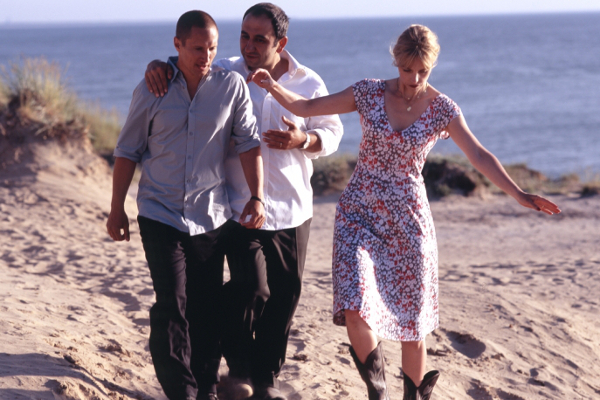
Reflecting back on it now, and having watched it again in the last few months after my initial theatrical viewing seven years ago, "Jerichow" strikes me as the summation of Petzold's evolving work. It's a film that, like the worn out cowboy boots that Nina Hoss dons beneath her lilting flowery dresses, consistently upends our expectations and presupposes there are invisible boundaries between 'good' and 'bad'. In "Jerichow", everyone is a shade of both these identifiers and their actions against each other are organic reactions to their situations. It's a marvelous tightrope walk of a film.
After a short stint in TV work again (which will be covered in the third and final installment here), it was four years before Petzold would grace the big screen again. Released in the fall of 2012 after a hearty film festival circuit tour, "Barbara" continues Petzold's fascination with stasis. Again placing Nina Hoss at the center of the drama, she plays a Berlin doctor ostracized to the East German country after an unknown incident with the authorities. Living out her days in solitude and looking forward only to the clandestine meetings with her West German lover (who promises to help her defect), Barbara slowly finds her self worth in this rural community. But at a cost. Continually monitored by German authority figure Klaus (Rainer Bock) and completely unsure of the genuineness exuded by fellow doctor Andre (Ronald Zehrfeld), Hoss gives her best performance to date for Petzold. Virtually holding her breath in many scenes, unwilling to compromise her inner thoughts or show weakness to a society virtually holding her hostage, she gives the film a powerfully mute force with her eyes and constricted body movement. If there were justice, she would have gotten an Oscar nomination that year.

The first film by Petzold to reflect openly on a specific time in Germany's past, "Barbara" feels like a razor sharp exploration of this paranoia and self delusion. In one particular scene, Barbara is waiting in the hotel room for her lover to finish his business meeting downstairs when, from the adjoining room, a young and beautiful girl sneaks into her room and they begin talking. She is the girlfriend of Barbara's lover's partner. The young girl talks about the budding relationship between them and tells Barbara he's going to help her leave. They peruse a magazine full of wedding rings and like little girls, each pick one out and try on the paper fitting. When the young girl asks Barbara "is it hard?", referring to the process of defecting to West Germany, Barbara's cold stare tells her (and us) everything about the daydreamed atmosphere they exist within. It's no surprise that later in the film, Barbara makes a particularly stunning self-sacrifice. This act of unerring kindness and fatalistic settlement back into her rural purgatory (there's that idea again) carry on Petzold's bittersweet outlook on life and its reflection in cinema.
Wednesday, October 14, 2015
Hacktober #1
The Boogeyman

How one can title a film the Boogeyman and not spend any time or effort inventing some sort of nightmarish imaginary being is beyond me, but that's exactly what director Ulli Lommel has fashioned with this one. Call it an interior horror film since the deaths come at the hands of an invisible presence which seems to transport into this world through fragments of a broken mirror, spurned on by the traumatic childhood of a brother and sister. I call it pretty lame. Outside of this brief description, there's not much else to speak about in a plot that's both nonsensical (one minute they're talking about seeing a long lost mother and then its forgotten, or the killer seems to be targeting everyone except the boy and girl) and forgettable. Let's hope the rest of my October watching is infinitely better.
The Green Inferno

Can't say Eli Roth's "The Green Inferno" is that infinitely better, but at least its straightforward and up front about its intentions- which is to gross out and shock a new generation of fans not familiar with the grisly/sleazy oeuvre of Italian shlocksters like Ruggero Deodato or Lucio Fulci. Basically a loose echo of "Cannibal Holocaust" (complete with New York liberal students receiving their gory comeuppance), Roth dispenses with character development outside of a few juvenile attempts at humor and a stoned, heroin-looking-infused Sky Ferreira playing reactionary friend to star Lorenza Izzo. As a friend of mine put it.... in the first 30 minutes I'm wanting that one to die and then that one. I've given up on Roth. Too amateurish for honest pastiche and too enamored by his own ideas of geekdom to ever really rival others like Kevin Smith or Tarantino (can't believe I just typed that), all of his stuff is torture porn... and not in the best way.

Pieces

Horrible acting and ludicrous plot aside (which seems to be the norm here), "Pieces" is held together (huh-huh) by snippets of extreme gore ala chainsaw mutilations and lots of early 80's let's-have-some-erotica-then-get-killed subplots. Oh, and the killer is consumed by putting together a puzzle in between kills, which I can't say I've ever seen in a gore film before.
Sunday, October 04, 2015
The Current Cinema 15.7
Black Mass
In the final moments of Scott Cooper's "Black Mass"- as the fates of its varied criminals and dirty cops comes to a crashing halt after a decade of unbridled swagger and financial excess- the film reaches the arched, epic tone its been striving for the entire time. It's not a case of too little too late... as the fine acting and Cooper's grasp of mise-en-scene, mood and an almost hushed reverence for the sink bottom atmosphere of South Boston, permeated a good majority of the film up until that point. It all just felt a bit familiar and diffuse, as if too many filmmakers had already walked this darkened path. Still, "Black Mass" is sturdy, professional filmmaking that dares to hold on the menacing face of Johnny Depp as Whitey Bulger, making us stare into the gray eyes of its protagonist with unflinching brutality and dispassionate rigor.
Sicario
Even through the consistent morbidity of Denis Villeneuve's "Sicario", he manages to hone in on the textures of everyday life with dreamy precision. The flakes of dust that linger in the air as rays of sunlight whip through a set of curtains. The jagged exteriors of drywall that hide a mass of murdered bodies in the film's nerve-racking opening scene. And especially the face and eyes of Emily Blunt as she registers confusion, regret and doubt amidst a sea of unchecked masculinity. Over his last few films, Villeneuve has yet to shy away from some pretty dark-hearted matters, but these moments of human fragility set against a backdrop of political, jurisdictional and criminal violence place "Sicario" as an exceptional study on the parameters of justice and its screwed up moral compass. Oh and it's a pretty damn good action film as well, but not in the standard ways. Villeneuve and screenwriter Taylor Sheridan ratchet up the tension scene by scene. Just watch and admire the almost wordless "prisoner extraction" scene from Juarez. Or the razor sharp sweeps of dialogue that tell us little, but amount to so much in the end. "Sicario" may be tale that's played out openly in the media and through CIA skulduggery fairytales for years, but its impact is no less resonant. One of the year's very best films.
Reviews available on Dallas Film Now:
Ashby- Mickey Rourke gives a pretty damn good performance in a rather uneven film.
Mississippi Grind- A somber character study that hinges on the roll of the dice.
Finders Keepers- A storage locker. A severed leg in a charcoal grill inside the locker. Two men and their fight over the leg. That's all I'll say. See this film.
In the final moments of Scott Cooper's "Black Mass"- as the fates of its varied criminals and dirty cops comes to a crashing halt after a decade of unbridled swagger and financial excess- the film reaches the arched, epic tone its been striving for the entire time. It's not a case of too little too late... as the fine acting and Cooper's grasp of mise-en-scene, mood and an almost hushed reverence for the sink bottom atmosphere of South Boston, permeated a good majority of the film up until that point. It all just felt a bit familiar and diffuse, as if too many filmmakers had already walked this darkened path. Still, "Black Mass" is sturdy, professional filmmaking that dares to hold on the menacing face of Johnny Depp as Whitey Bulger, making us stare into the gray eyes of its protagonist with unflinching brutality and dispassionate rigor.
Sicario
Even through the consistent morbidity of Denis Villeneuve's "Sicario", he manages to hone in on the textures of everyday life with dreamy precision. The flakes of dust that linger in the air as rays of sunlight whip through a set of curtains. The jagged exteriors of drywall that hide a mass of murdered bodies in the film's nerve-racking opening scene. And especially the face and eyes of Emily Blunt as she registers confusion, regret and doubt amidst a sea of unchecked masculinity. Over his last few films, Villeneuve has yet to shy away from some pretty dark-hearted matters, but these moments of human fragility set against a backdrop of political, jurisdictional and criminal violence place "Sicario" as an exceptional study on the parameters of justice and its screwed up moral compass. Oh and it's a pretty damn good action film as well, but not in the standard ways. Villeneuve and screenwriter Taylor Sheridan ratchet up the tension scene by scene. Just watch and admire the almost wordless "prisoner extraction" scene from Juarez. Or the razor sharp sweeps of dialogue that tell us little, but amount to so much in the end. "Sicario" may be tale that's played out openly in the media and through CIA skulduggery fairytales for years, but its impact is no less resonant. One of the year's very best films.
Reviews available on Dallas Film Now:
Ashby- Mickey Rourke gives a pretty damn good performance in a rather uneven film.
Mississippi Grind- A somber character study that hinges on the roll of the dice.
Finders Keepers- A storage locker. A severed leg in a charcoal grill inside the locker. Two men and their fight over the leg. That's all I'll say. See this film.
Thursday, September 24, 2015
Stop-Gap
I've been terrible with film writing here lately, but rest assured, more articles are upcoming. The Dallas VideoFest is coming up in a few weeks and I've been given a unique opportunity to cover that this year for Dallas Film Now. 125 features, shorts and special programs should be amazing!
Also, I have been reviewing alot for the above mentioned site so head over there for a dozen or so reviews including "Cop Car", "Ashby", "Sleeping With Other People" and "Z For Zachariah".
Also, I have been reviewing alot for the above mentioned site so head over there for a dozen or so reviews including "Cop Car", "Ashby", "Sleeping With Other People" and "Z For Zachariah".
Tuesday, September 15, 2015
In Praise of Maggie Cheung #3

The following is an ongoing exploration of the prolific work from actress Maggie Cheung
Comrades, Almost A Love Story (1996), directed by Peter Chan
Similar in theme to "Farewell China" made six years prior, Peter Chan's "Comrades, Almost A Love Story" not only provides Maggie the far better role, but it deals with the 'Mainlanders' struggle for social acceptance and financial viability in the hustling urban sprawl of Hong Kong in a much more realistic and less frenetic light than that earlier effort. Here, Cheung and fellow Chinese Leon Lai connect, almost become a couple, and then spend an inordinate amount of time almost connecting as their fates buoy over a decade in Hong Kong. Lushly romantic and heartfelt, Cheung becomes one of those female figures in cinema who seems too good to be true as she orbits around Lai. It's a tribute to her soft eyes and honed performance that she never comes off as anything but sincere. "Comrades, Almost A Love Story" is OOP on home video, but any fan of Maggie deserves the chance to see it.

Police Story 1 and 2 (1985-1988), directed by Jackie Chan
Perhaps the worst roles of Maggie's career in the 1980's is playing second fiddle to Jackie Chan and his Abbott and Costello hi-jinks as the supercop who flips, dives, and smirks his way across Hong Kong busting up organized crime and driving a car through a mountainside village way before the majestic stunt was dreamed up by Michael Bay for "Bad Boys 2". As the girlfriend to Chan, Maggie is either wasted as comic relief or dangerous bait after being captured. Still, it's hard to deny these roles in the megabuster series- both in Asia and here in America- didn't add to her growing popularity and international acclaim.

Eagle Shooting Heroes (1993), directed by Jeff Lau

This is the first time I can admit having to suffer through a film for the performance of Maggie Cheung, which even then is so sporadic and limited, that she probably shouldn't even receive a credit. Lau's "Eagle Shooting Heroes" is emblematic of those 90's HK films that tried extremely hard to win over an entire fanbase on both sides of the ocean. Broad comedy, cartoon slapstick, cross-dressing and high-wire action fights are the common denominator to a fantastic story about queens, wizards, ninjas and magic shoes. Thankfully, by this point, Cheung was becoming well established in the films of Wong Kar Wai and Stanley Kwan, able to abandon these more low-brow efforts for serious minded films.

Tuesday, September 08, 2015
Christian Petzold: Part 1 The Early Films
In what may be the film of the year, Nina Hoss nervously swaggers around the red neon-lit Phoenix bar that gives director Chrisian Petzold's film its ominous title. Leaning against the wall, hoping to catch the eye of her unsuspecting husband who believes her to be dead, an American soldier boldly approaches her and lights her cigarette, leaning in aggressively and flirting with her. She barely flinches, less disturbed at his sexually omnivorous advances and seemingly more upset that this man has blocked her view. It's not long before another soldier comes over and pulls the man away, muttering, "that's the wrong girl." The soldier flicks his cigarette and begins his charade with another woman close by. Petzold's morbid rhetoric about the power vacuum of Europe immediately following World War II and everyone's scuffle to obtain a small piece of it- which his entire powerful film is about- has never felt quite so intimate and haunting. And that's only the beginning of poor Nina Hoss and her troubles in this bombed-out existence. "Phoenix" is Petzold's fourteenth film in twenty years (including TV work), and its taken him this long to break into the quasi-arthouse, but it's well deserved and overdue.
Beginning his career in the mid 90's and hailing from the Berlin School of filmmaking, Petzold's manner is hard to classify because it settles in-between the various styles and influences of his German predecessors. He doesn't employ the hyper-fatalistic style of Fassbinder and is even less concerned with the lethargic poetry of a Wim Wenders. Yet, his films do follow three distinct ideas that classify him as an auteur distilling themes sporadically around his body of work. One, even though some of his films feel aimless at times with characters lost in thought or pondering their social status, they always lead back to a carefully realized progression. His strict diagram of emotions, memory, and painful loss often propel his narratives into sticky emotional territory. Secondly, the idea of one's place both economically and socially often drive his men and women to shadowy depths and morally ambiguous actions. Lastly, and this has been a more common theme in his later films, but a reconciliation with the past has been a major influence on his work, especially life immediately after World War II and Germany's obliteration from major power to shredded nation. Heavy themes, indeed, but ones that have been given devastating personal scope throughout his career.
Cuba Libre (1996)

"Cuba Libre", one of his three early TV films I've been able to see (the other two unavailable include "The Sex Thief" and "Drifters"), pretty much offer all three ideas in one opening salvo. Starring Richy Muller as Tom and Catheine Flemming as Tina, two homeless ex-lovers who precariously intersect at a German bus station, the specter of financial collapse and hopelessness seeps at the edges of every frame. It'd be easy to dismiss the film as yet another dour, stifling expression of German 'miserablism' if it weren't for the unusual streaks of comedy, such as Muller's incessant beatings by another man he keeps running into at the bus station or the keystone cops-like energy towards the end of the film as two thugs try and exact their revenge on Muller. In between those fleeting moments, though, "Cuba Libre" is dour. Eventually, the couple escape their lowly circumstances....Tina via prostitution and Tom with an older man whose initial interest in him seems sexually motivated but turns out to be a murky plot of identity fraud and possible embezzlement. They both end up in a sea-side resort town with hopes of building a better life, but Petzold's moral complexity doesn't allow for such a happy excursion. Like in "Phoenix", the film takes its title from a "Rosebud" type of actual structure (bar in that film, restaurant in this one) that stands mute witness as the malignant forces of humanity shatter any hope of "happily ever after". For most of the film, we sort of root for Tom and Tina to make it out alive. We should know better.
Wolfsburg (2003)

It's only minutes into Petzold's sixth film, "Wolfsburg", that darkness strikes one of its main characters when Philipp (Benno Furmann), distracted by an argument on the phone while driving, hits something with his car. It's only after pulling over that he realizes its a child on a bicycle. Afraid of losing his status as a well-paid car salesman AND the impending marriage to his fiance, Philipp drives away. Learning the child later dies, he slowly insinuates himself into the life of grieving single mother Laura, struggling not only to deal with the residual anger and disbelief of her son's death, but the meager factory job in which she has to spurn the sexual advances of her boss while devising shifty ways to steal food from the production line. Two people on opposite ends of the social spectrum, pulled together by the ghostly remnants of a dead child (albeit with vastly different interests) is the overriding theme in "Wolfsburg".
As Laura, Hoss is excellent...having already paired with Petzold in an earlier TV movie entitled "Something To Remind Me".... and the duo's creative synergy is already present. It would be easy to sink into melodramatic catharsis, but while there are moments of depression and extreme sadness, Hoss also brings a determined air about her aching mother. In between sort of falling for this new stranger Philipp in her life, she continues the search for the car of her son's killer- whose description he gasped shortly before sinking back into a coma he'd never awake from again. "Wolfsburg" becomes a tense treatise of 'will she or won't she' discover the man and it makes for a compelling drama that feels like a blueprint for Petzold's later films that examine the aforementioned "sticky emotional territory" with elegance.
Ghosts (2005)

The best of his early films, "Gespenster" aka Ghosts, dispenses with the middle-aged-miserablism of his earlier films, yet traces the staunch roots of unhappiness in two teenage girls who find each other at vulnerable times in their lives. Locked into a life of orphan status and living out her days in a controlled dorm room type housing, Nina (Julia Hummer) meets Toni (Sabine Timeteo) and the two find themselves attracted to each other. Nina's affection for Toni seems more genuine, though, exemplified by Toni's off-screen tryst with the host of a party they're later invited to and her free flowing independence that causes her to promptly leave Nina whenever she feels like it. Bracketed around this lecherous relationship is Francois (Marianne Baslar), a middle aged woman who comes to believe Nina is her long-lost daughter kidnapped from her when she was just a year old. This merry-go-round of stunted emotions, unspoken bonds and half delirious craziness spins around the narrative of "Ghosts", which gives us the impression Petzold's title is a literal allusion to the dead end hopes of everyone involved. And if that's not enough, the final scene involving Nina, only confirms his status as a filmmaker ennobled with the idea of missed connections and sorrowful circumstances that plague so many of the characters in his universe.
Armed with increasing praise and positive festival exposure, Petzold would next embark on a string of films that finally gave his work some mainstream visibility and audience viability. But the trademarks that marked his earlier work would not go away. In fact, they'd even grow stronger with added dimensions of hurtful history and pure genre infusion. It was an exciting time to be Petzold.
Beginning his career in the mid 90's and hailing from the Berlin School of filmmaking, Petzold's manner is hard to classify because it settles in-between the various styles and influences of his German predecessors. He doesn't employ the hyper-fatalistic style of Fassbinder and is even less concerned with the lethargic poetry of a Wim Wenders. Yet, his films do follow three distinct ideas that classify him as an auteur distilling themes sporadically around his body of work. One, even though some of his films feel aimless at times with characters lost in thought or pondering their social status, they always lead back to a carefully realized progression. His strict diagram of emotions, memory, and painful loss often propel his narratives into sticky emotional territory. Secondly, the idea of one's place both economically and socially often drive his men and women to shadowy depths and morally ambiguous actions. Lastly, and this has been a more common theme in his later films, but a reconciliation with the past has been a major influence on his work, especially life immediately after World War II and Germany's obliteration from major power to shredded nation. Heavy themes, indeed, but ones that have been given devastating personal scope throughout his career.
Cuba Libre (1996)

"Cuba Libre", one of his three early TV films I've been able to see (the other two unavailable include "The Sex Thief" and "Drifters"), pretty much offer all three ideas in one opening salvo. Starring Richy Muller as Tom and Catheine Flemming as Tina, two homeless ex-lovers who precariously intersect at a German bus station, the specter of financial collapse and hopelessness seeps at the edges of every frame. It'd be easy to dismiss the film as yet another dour, stifling expression of German 'miserablism' if it weren't for the unusual streaks of comedy, such as Muller's incessant beatings by another man he keeps running into at the bus station or the keystone cops-like energy towards the end of the film as two thugs try and exact their revenge on Muller. In between those fleeting moments, though, "Cuba Libre" is dour. Eventually, the couple escape their lowly circumstances....Tina via prostitution and Tom with an older man whose initial interest in him seems sexually motivated but turns out to be a murky plot of identity fraud and possible embezzlement. They both end up in a sea-side resort town with hopes of building a better life, but Petzold's moral complexity doesn't allow for such a happy excursion. Like in "Phoenix", the film takes its title from a "Rosebud" type of actual structure (bar in that film, restaurant in this one) that stands mute witness as the malignant forces of humanity shatter any hope of "happily ever after". For most of the film, we sort of root for Tom and Tina to make it out alive. We should know better.
Wolfsburg (2003)

It's only minutes into Petzold's sixth film, "Wolfsburg", that darkness strikes one of its main characters when Philipp (Benno Furmann), distracted by an argument on the phone while driving, hits something with his car. It's only after pulling over that he realizes its a child on a bicycle. Afraid of losing his status as a well-paid car salesman AND the impending marriage to his fiance, Philipp drives away. Learning the child later dies, he slowly insinuates himself into the life of grieving single mother Laura, struggling not only to deal with the residual anger and disbelief of her son's death, but the meager factory job in which she has to spurn the sexual advances of her boss while devising shifty ways to steal food from the production line. Two people on opposite ends of the social spectrum, pulled together by the ghostly remnants of a dead child (albeit with vastly different interests) is the overriding theme in "Wolfsburg".
As Laura, Hoss is excellent...having already paired with Petzold in an earlier TV movie entitled "Something To Remind Me".... and the duo's creative synergy is already present. It would be easy to sink into melodramatic catharsis, but while there are moments of depression and extreme sadness, Hoss also brings a determined air about her aching mother. In between sort of falling for this new stranger Philipp in her life, she continues the search for the car of her son's killer- whose description he gasped shortly before sinking back into a coma he'd never awake from again. "Wolfsburg" becomes a tense treatise of 'will she or won't she' discover the man and it makes for a compelling drama that feels like a blueprint for Petzold's later films that examine the aforementioned "sticky emotional territory" with elegance.
Ghosts (2005)

The best of his early films, "Gespenster" aka Ghosts, dispenses with the middle-aged-miserablism of his earlier films, yet traces the staunch roots of unhappiness in two teenage girls who find each other at vulnerable times in their lives. Locked into a life of orphan status and living out her days in a controlled dorm room type housing, Nina (Julia Hummer) meets Toni (Sabine Timeteo) and the two find themselves attracted to each other. Nina's affection for Toni seems more genuine, though, exemplified by Toni's off-screen tryst with the host of a party they're later invited to and her free flowing independence that causes her to promptly leave Nina whenever she feels like it. Bracketed around this lecherous relationship is Francois (Marianne Baslar), a middle aged woman who comes to believe Nina is her long-lost daughter kidnapped from her when she was just a year old. This merry-go-round of stunted emotions, unspoken bonds and half delirious craziness spins around the narrative of "Ghosts", which gives us the impression Petzold's title is a literal allusion to the dead end hopes of everyone involved. And if that's not enough, the final scene involving Nina, only confirms his status as a filmmaker ennobled with the idea of missed connections and sorrowful circumstances that plague so many of the characters in his universe.
Armed with increasing praise and positive festival exposure, Petzold would next embark on a string of films that finally gave his work some mainstream visibility and audience viability. But the trademarks that marked his earlier work would not go away. In fact, they'd even grow stronger with added dimensions of hurtful history and pure genre infusion. It was an exciting time to be Petzold.
Sunday, August 30, 2015
Tuesday, August 25, 2015
Corpus Criminalities: Abel Ferrara's "Welcome To New York"
(Note- this review is based on the 125 minute "director's cut" of the film)
It just wouldn't be an Abel Ferrara film without some type of controversy. Whether it's the use of an unlicensed Schooly D track ("The King of New York") or the absolute failure to find stateside distribution for his latest work (any of the last half dozen films, basically), Ferrara has settled into the role of a maverick pariah, still as prolific and challenging as ever, but unable to share his unflinching views with a wide audience. However, with "Welcome To New York"- his rendering of the rape charge incident against powerful French bank manager Dominique Strauss Kahn in 2011- Ferrara faced a new obstacle. After being dumped in very limited release earlier this year and surreptitiously released on VOD, Ferrara came out blasting his production company for re-editing the film and tampering with his artistic vision. Having not seen that slimmed down 107 minute version and only reading about the changes through various online sources, it does sound as if some of the story's perspective has been altered. Ferarra has been relentless in his distancing of that version and his motto that the best way to view his films is through nefarious online downloads never felt quite so relevatory. Yet all that rhetoric aside, "Welcome To New York" is not only a slimy, misogynistic character study of a man unable to distinguish between the barriers of decent behavior, but it's one of Ferrara's absolute best works yet and one of the most damning films of the year.

As the Strauss-Kahn like figure, Gerard Depardieu plays him as a base animal, all grunts, groans and deep gestation bubbling up from the bowels of his entitlement. As Devereaux (Depardieu) arrives in New York (under the airport banner that spells out the film's title), he retires to his hotel room where friends are waiting for him with women in tow and the night becomes an orgy of sex, food fights and drinking. It's not long after they leave that two more prostitutes arrive and are ushered upstairs to the sleeping Devereaux, who doesn't fail to miss a beat and embarks on more episodes of ass-slapping, voyeurism and a threesome, all filmed with a murky sense of observation from Ferrara. The bedrooms.... half-lit and cavernous.... feel like partially remembered memories and almost unreal. Alongside this film and "Pasolini" (still unreleased here in the States), DP Ken Kelsch and Ferrara have tapped into the inky margins of their frame even more deliberately than in previous films. Simply put, they look wonderful.
Having immersed himself in this flesh-filled wasteland for the past twelve hours or so, its not surprising that Devereaux crosses a thin line when, the next morning, he emerges from the shower and sees a hotel maid (Pamela Afesi) standing in front of him. We've seen her enter the room and call out "housekeeping" several times with no response. Devereaux approaches, emits more guttural sounds and forces himself on the maid, who manages to fight him off and escape. It's an incredibly sad and disturbing scene for several reasons. Is Ferrara excusing the real life Strauss-Kahn as an unwitting symptom of his excessive environment? Does it simply proliferate Ferrara's well documented sense of male dominance within his films? After all, this is a fictional re-imagination of a real life incident (that was eventually dismissed in court), so how close to the truth does it cut? All of that seems secondary to the main theme of the film which is power corrupts completely. Rest assured, there's no catharsis for Devereaux or release for the audience.
From there, "Welcome To New York" deals with the arrest, court proceedings and house confinement of Devereaux and narrows its focus on the relationship between him and ex-wife Simone (Jacqueline Bissett). Resembling the jagged verbal sparring between James Russo and Madonna in Ferrara's 1993 masterpiece "Dangerous Game", "Welcome to New York" likewise examines the rancid foundation of Devereaux and Simone as they drudge up past indiscretions and their overall lack of faith. Even though he can be accused of extreme misogyny, Ferrara always manages to puncture the tug of war between the sexes with sharp fangs.
While it does have its share of miscalculations, such as an opening self reflexive moment that doesn't quite work, "Welcome To New York" remains an unrepentant look at a deeply flawed individual whose beating heart is as black as the night. This is comfortable territory for Ferrara and even in the final moments, when Devereaux should be thankful for his acquittal, his flirtatious personality emerges again. A leopard can't change its stripes, and a sex-addicted man with the money and means to avoid any penalty surely won't become a saint anytime soon.
It just wouldn't be an Abel Ferrara film without some type of controversy. Whether it's the use of an unlicensed Schooly D track ("The King of New York") or the absolute failure to find stateside distribution for his latest work (any of the last half dozen films, basically), Ferrara has settled into the role of a maverick pariah, still as prolific and challenging as ever, but unable to share his unflinching views with a wide audience. However, with "Welcome To New York"- his rendering of the rape charge incident against powerful French bank manager Dominique Strauss Kahn in 2011- Ferrara faced a new obstacle. After being dumped in very limited release earlier this year and surreptitiously released on VOD, Ferrara came out blasting his production company for re-editing the film and tampering with his artistic vision. Having not seen that slimmed down 107 minute version and only reading about the changes through various online sources, it does sound as if some of the story's perspective has been altered. Ferarra has been relentless in his distancing of that version and his motto that the best way to view his films is through nefarious online downloads never felt quite so relevatory. Yet all that rhetoric aside, "Welcome To New York" is not only a slimy, misogynistic character study of a man unable to distinguish between the barriers of decent behavior, but it's one of Ferrara's absolute best works yet and one of the most damning films of the year.

As the Strauss-Kahn like figure, Gerard Depardieu plays him as a base animal, all grunts, groans and deep gestation bubbling up from the bowels of his entitlement. As Devereaux (Depardieu) arrives in New York (under the airport banner that spells out the film's title), he retires to his hotel room where friends are waiting for him with women in tow and the night becomes an orgy of sex, food fights and drinking. It's not long after they leave that two more prostitutes arrive and are ushered upstairs to the sleeping Devereaux, who doesn't fail to miss a beat and embarks on more episodes of ass-slapping, voyeurism and a threesome, all filmed with a murky sense of observation from Ferrara. The bedrooms.... half-lit and cavernous.... feel like partially remembered memories and almost unreal. Alongside this film and "Pasolini" (still unreleased here in the States), DP Ken Kelsch and Ferrara have tapped into the inky margins of their frame even more deliberately than in previous films. Simply put, they look wonderful.
Having immersed himself in this flesh-filled wasteland for the past twelve hours or so, its not surprising that Devereaux crosses a thin line when, the next morning, he emerges from the shower and sees a hotel maid (Pamela Afesi) standing in front of him. We've seen her enter the room and call out "housekeeping" several times with no response. Devereaux approaches, emits more guttural sounds and forces himself on the maid, who manages to fight him off and escape. It's an incredibly sad and disturbing scene for several reasons. Is Ferrara excusing the real life Strauss-Kahn as an unwitting symptom of his excessive environment? Does it simply proliferate Ferrara's well documented sense of male dominance within his films? After all, this is a fictional re-imagination of a real life incident (that was eventually dismissed in court), so how close to the truth does it cut? All of that seems secondary to the main theme of the film which is power corrupts completely. Rest assured, there's no catharsis for Devereaux or release for the audience.
From there, "Welcome To New York" deals with the arrest, court proceedings and house confinement of Devereaux and narrows its focus on the relationship between him and ex-wife Simone (Jacqueline Bissett). Resembling the jagged verbal sparring between James Russo and Madonna in Ferrara's 1993 masterpiece "Dangerous Game", "Welcome to New York" likewise examines the rancid foundation of Devereaux and Simone as they drudge up past indiscretions and their overall lack of faith. Even though he can be accused of extreme misogyny, Ferrara always manages to puncture the tug of war between the sexes with sharp fangs.
While it does have its share of miscalculations, such as an opening self reflexive moment that doesn't quite work, "Welcome To New York" remains an unrepentant look at a deeply flawed individual whose beating heart is as black as the night. This is comfortable territory for Ferrara and even in the final moments, when Devereaux should be thankful for his acquittal, his flirtatious personality emerges again. A leopard can't change its stripes, and a sex-addicted man with the money and means to avoid any penalty surely won't become a saint anytime soon.
Subscribe to:
Comments (Atom)